The Most Successful Companion Planting Combinations + Free Plan
The eight companion combinations gardeners rely on most — why each works, plus a free, ready-to-use bed plan you can copy for every one.
Quick answer
The most successful companion planting combinations are tomato + basil + marigold, corn + beans + squash (the Three Sisters), carrots + onions, peppers + basil, onions + herbs + flowers, nasturtium as a trap crop, lettuce + radish, and strawberry + borage.
Each pairs a crop with a partner that repels its pests, feeds it, or shelters it — and every one below comes with a free bed plan you can copy.
Every garden has its power couples. Some plants, grown side by side, quietly make each other better. One hides the other from pests. One feeds the soil the other's roots are hungry for. One throws shade at exactly the right hour.
Put the wrong two together, though, and they bicker all season — fighting over the same food, drawing the same bugs, and cropping half as well as they should.
The combinations below are the proven winners: the pairings gardeners come back to year after year because they simply produce.
And because reading about them is one thing and planting them is another, each comes with a bed plan you can copy straight into your own garden.
What Makes a Companion Combination Work
A pairing earns its place for one of four reasons.
One plant repels or confuses the other's pests. One feeds the other — legumes fixing nitrogen for hungry neighbours. One attracts pollinators or predators that protect the whole bed.
Or one shelters the other with shade, support, or ground cover. The best combinations do more than one of these at once. Here are the eight that deliver most reliably.
1. Tomato + Basil + Marigold
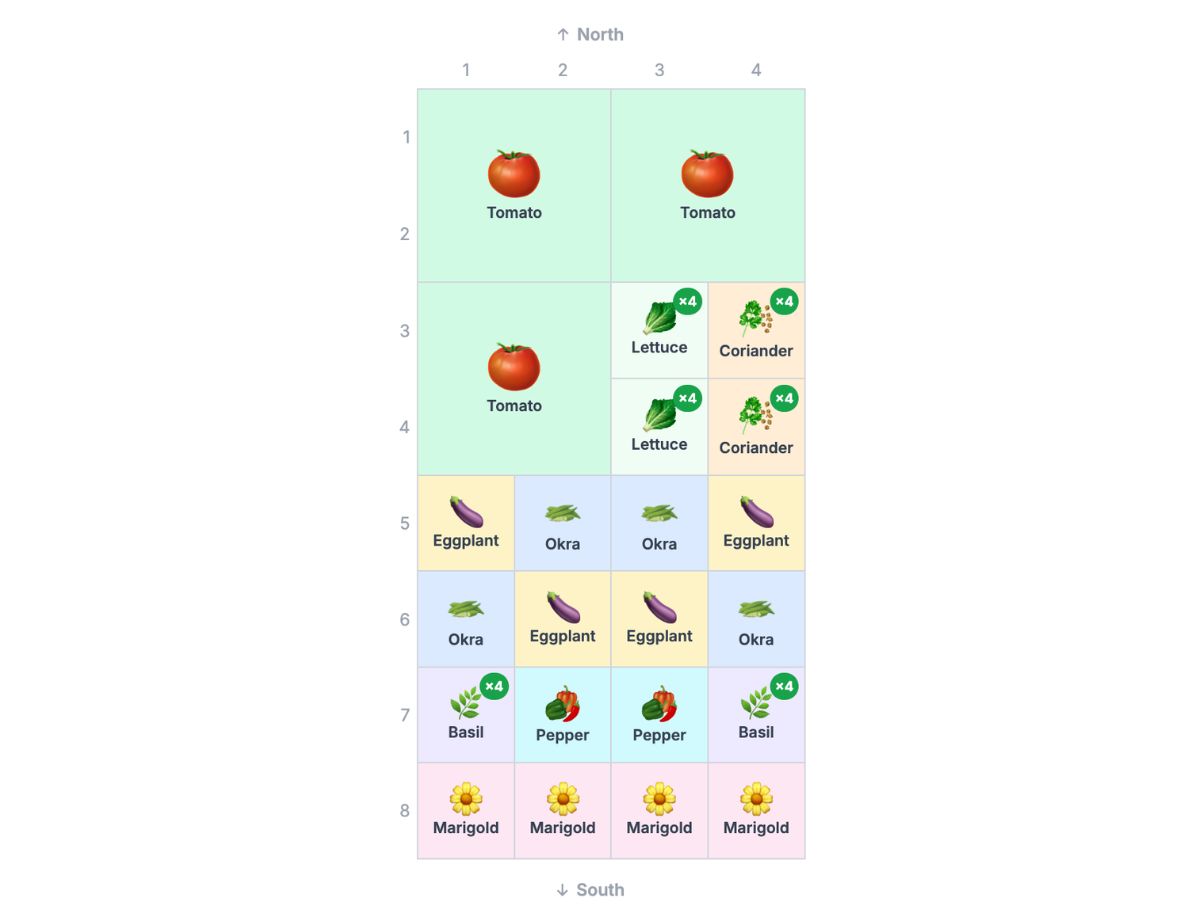
The most famous partnership in the vegetable garden — and it earns the reputation.
Basil planted among tomatoes deters whitefly, aphids and hornworm, and many growers swear it sharpens the fruit's flavour. Marigold rings the bed as a second line of defence: its roots suppress soil nematodes and its flowers pull in the hoverflies that hunt aphids.
Three plants, three jobs — the tomato produces, the basil guards the leaves, the marigold guards the soil.
Ready-to-use plan: a 4×8 Summer Tomato Companion Bed — 3 tomatoes, 2 peppers, 4 okra and 4 aubergine, underplanted with 8 basil, 8 coriander and 4 marigold, plus lettuce along the front edge.
View & Copy This Plan → Free account required2. Corn + Beans + Squash (the Three Sisters)
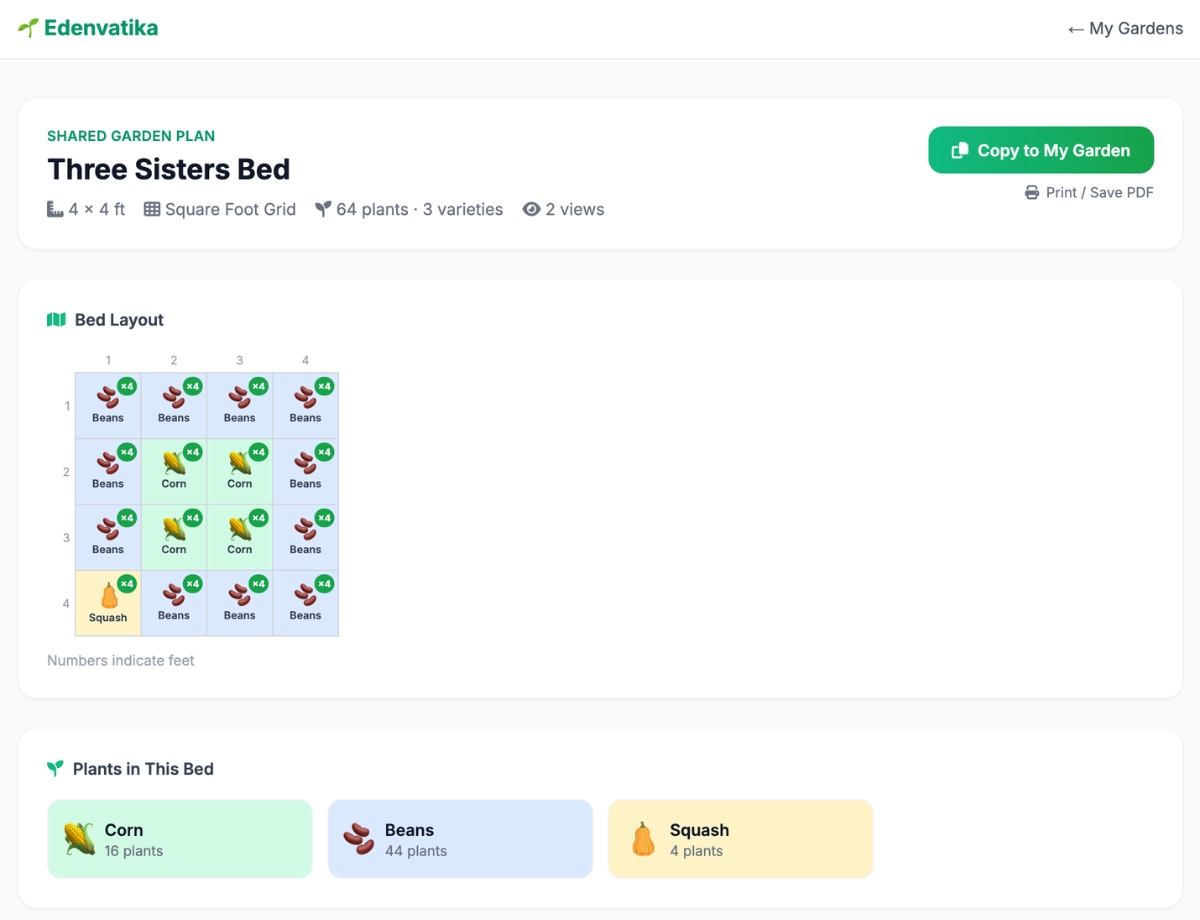
The oldest companion system on record, and still one of the smartest.
Corn grows tall and becomes a living pole. Beans climb it and fix nitrogen into the soil, feeding both the corn and the squash. Squash sprawls across the ground, its broad leaves shading out weeds and holding in moisture.
Three crops, one self-supporting block — no trellis, less feeding, fewer weeds.
Ready-to-use plan: a 4×4 Three Sisters block — 16 corn, 44 beans, 4 squash, planted in the right order.
View & Copy This Plan → Free account required3. Carrots + Onions (Alliums as Bodyguards)
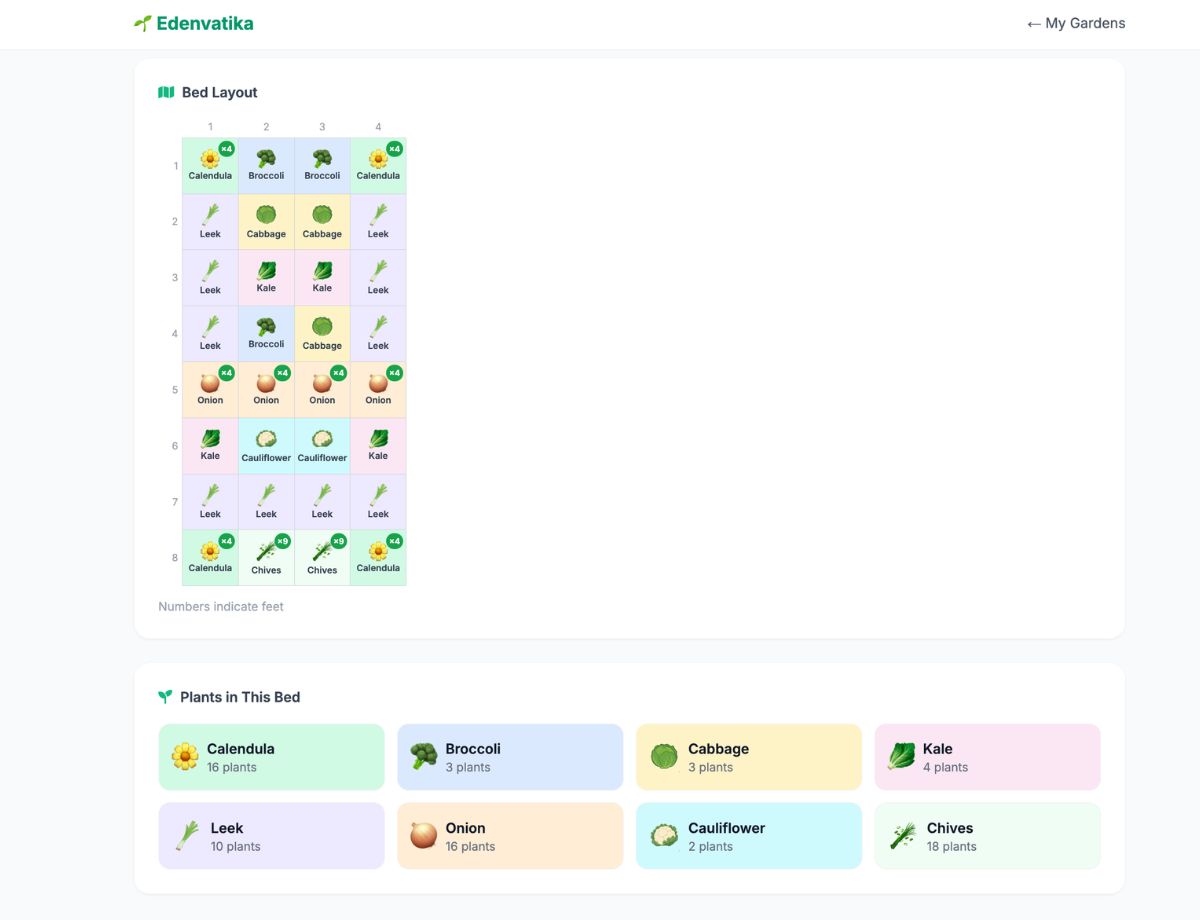
This is a two-way favour. Carrot fly hunts by smell — and the scent of onions, leeks or garlic growing nearby throws it completely off the trail. In return, carrots help mask the smell that draws onion fly.
The same trick guards brassicas. A border of alliums around cabbages and kale confuses the pests that would otherwise home straight in.
The plan below puts leeks and onions to work as living pest barriers running through a spring brassica bed.
Ready-to-use plan: a 4×8 brassica & allium bed — leeks and onions guarding broccoli, cabbage, kale and cauliflower, with calendula on every corner.
View & Copy This Plan → Free account required4. Peppers + Basil
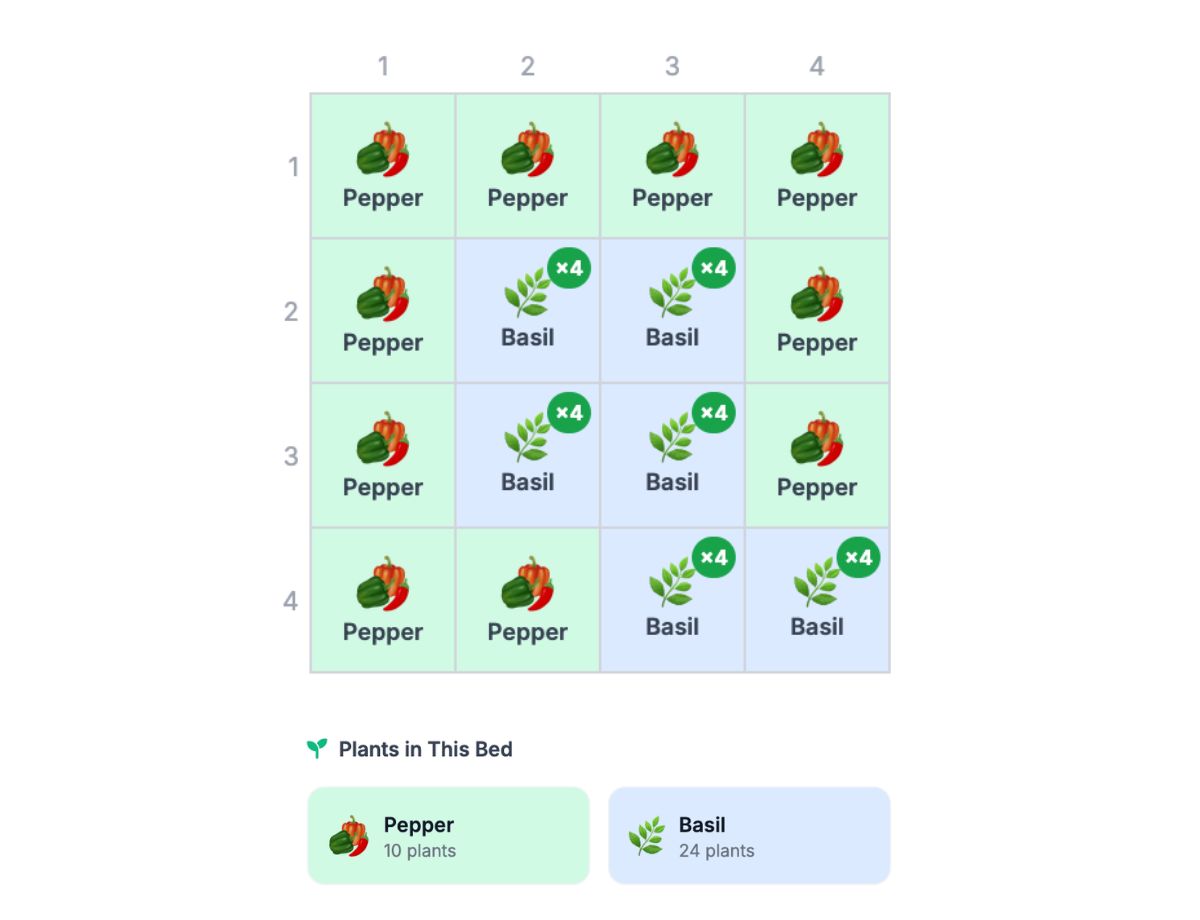
What basil does for tomatoes, it does just as well for peppers.
Aphids are the main pest on pepper foliage, and a dense block of basil woven through the bed works as a living, fragrant aphid deterrent. You get an enormous basil harvest as a bonus.
Ready-to-use plan: a 4×4 pepper bed — 10 peppers around the edge, 24 basil filling the centre.
View & Copy This Plan → Free account required5. Onions + Herbs + Flowers
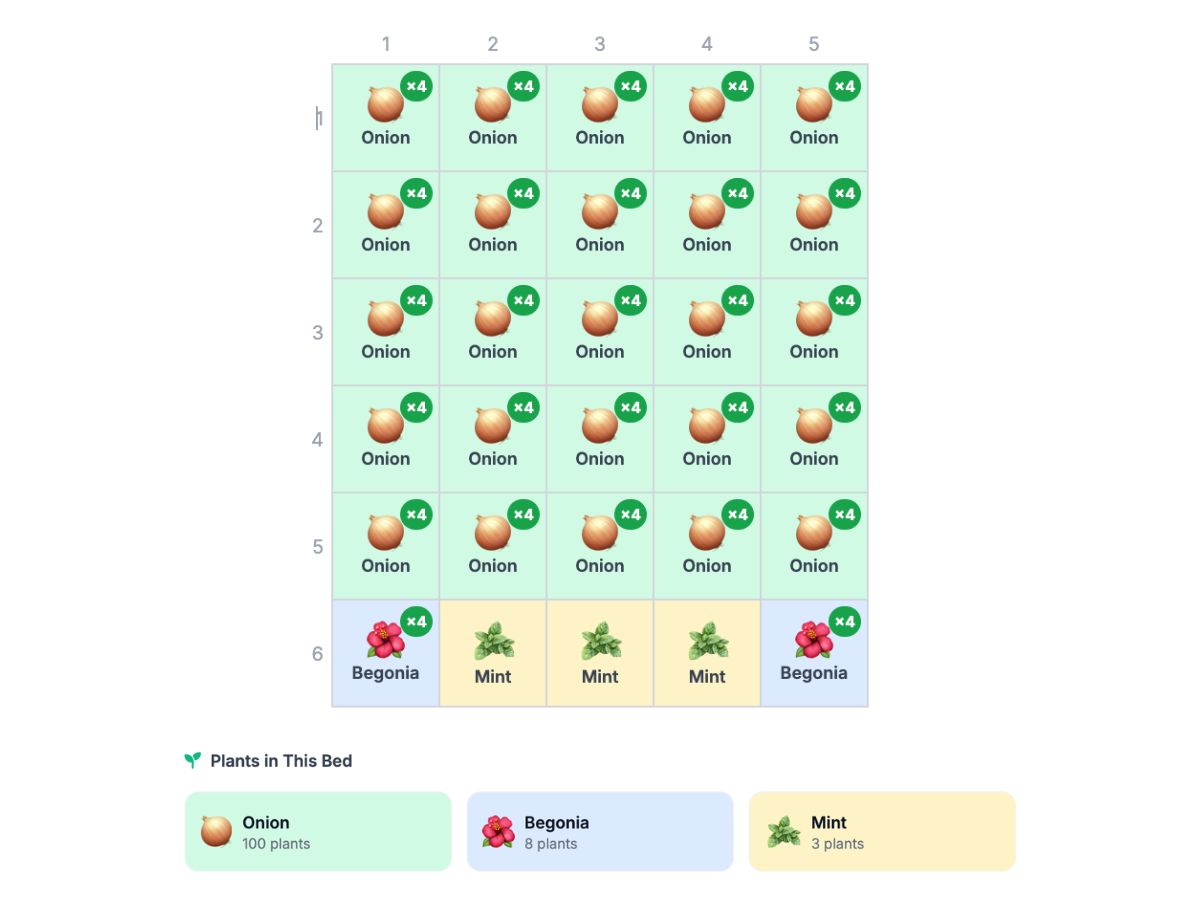
An underrated three-way that's as good-looking as it is useful.
Onions repel aphids and carrot fly across the whole bed. Herbs like mint draw in predatory insects that hunt pests. Flowers bring in the pollinators — and make the bed look deliberate rather than accidental.
Ready-to-use plan: a 5×6 bed — 100 onions at square-foot spacing, begonias anchoring the front corners, mint in the gaps.
View & Copy This Plan → Free account required6. Nasturtium + Almost Anything (the Trap-Crop Trick)
Some companions don't protect their neighbour by repelling pests — they protect it by being tastier.
Nasturtium is the classic sacrificial trap crop. Aphids and blackfly swarm to it and leave your beans, brassicas and cucumbers alone. It's fully edible too, flowers and leaves both.
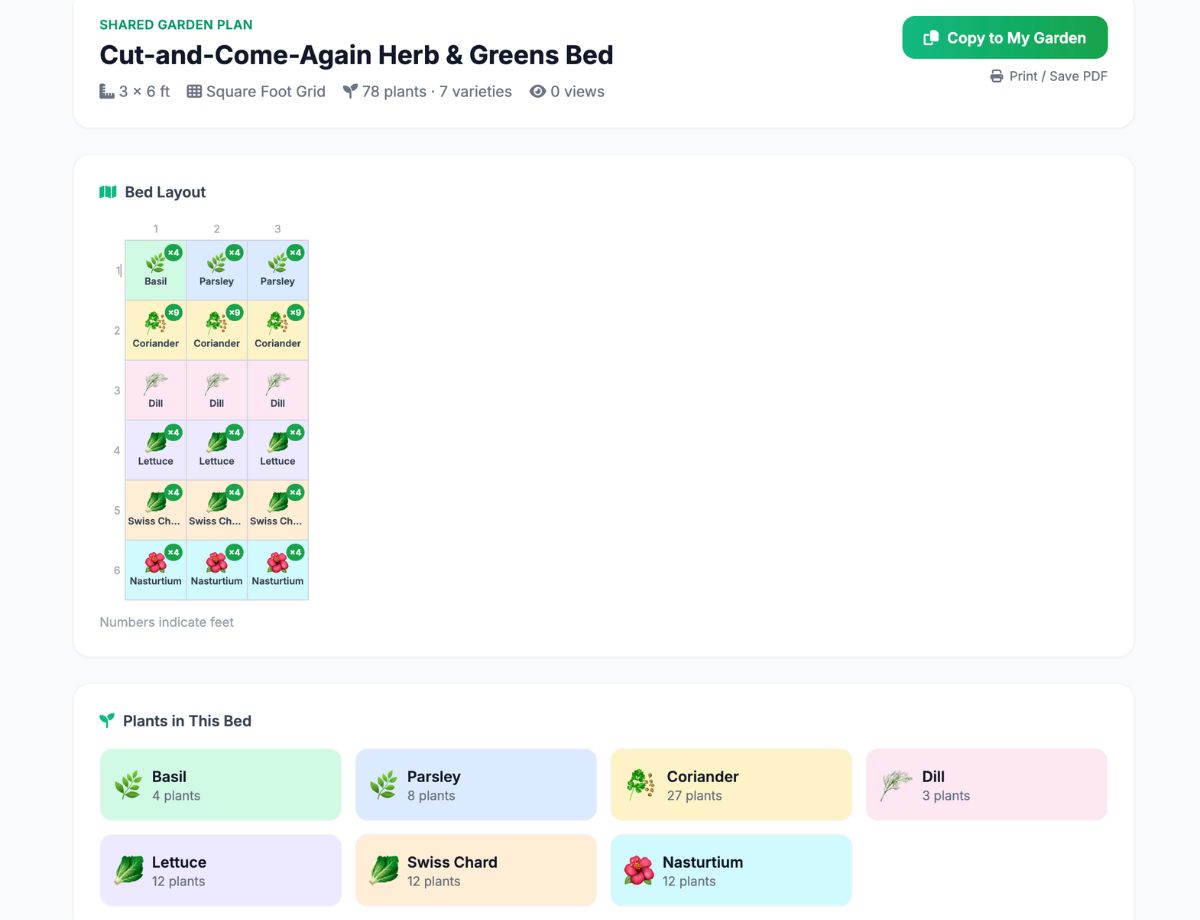
The herb-and-greens plan below uses nasturtium exactly this way, closing the back of the bed as a living pest magnet.
Ready-to-use plan: a 3×6 cut-and-come-again herb & greens bed — basil, parsley, coriander, dill, lettuce, chard and a nasturtium trap row.
View & Copy This Plan → Free account required7. Lettuce + Radish
The perfect starter combination — and a lesson in using time as well as space.
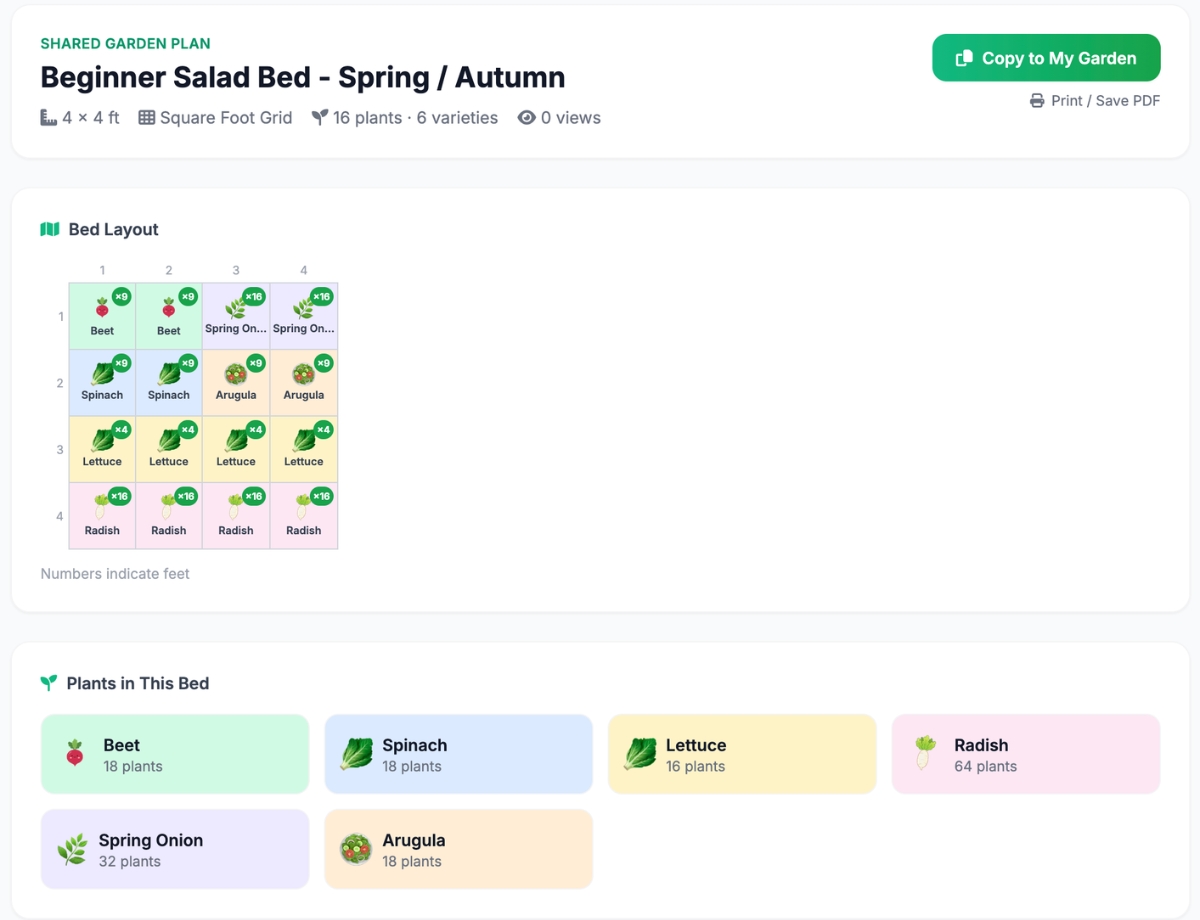
Radishes germinate fast and break up the soil, and they're harvested in three to four weeks, right about when the slower lettuce needs the room. Sow them together and the radishes are long gone before they ever compete.
Ready-to-use plan: a 4×4 beginner salad bed — lettuce, spinach, rocket, radish, spring onion and beetroot for continuous cutting.
View & Copy This Plan → Free account required8. The Fall Harvest Bed (Cool-Season Companions)
Companion planting doesn't clock off when summer does — the same logic carries a bed straight through autumn.
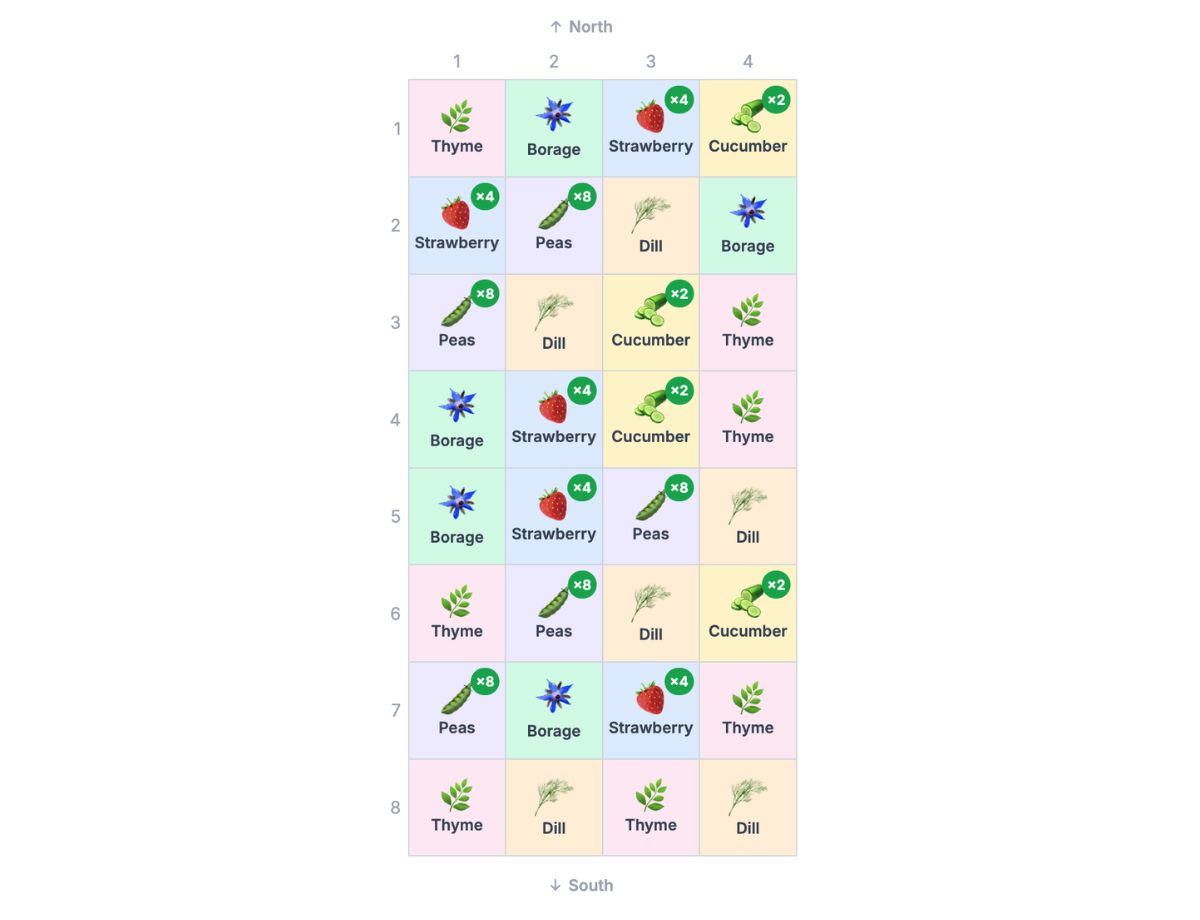
This cool-season fall bed stacks several proven pairings into one 4×8. Peas run through it fixing nitrogen for their neighbours. Borage draws in the bees that set a heavier strawberry crop, while thyme creeps beneath the fruit as an aromatic worm deterrent. Dill sown alongside the cucumbers brings in the hoverflies and lacewings that clear aphids.
One bed, four jobs at once — nitrogen, pollinators, pest predators and ground cover, all working the cool half of the year.
Ready-to-use plan: a 4×8 Fall Harvest Bed (cool-season) — 20 strawberries, 40 peas, 8 cucumber, 7 thyme, 6 dill and 5 borage.
View & Copy This Plan → Free account requiredCombinations to Keep Apart
Just as important as the winners — these are the pairings that quietly cost you a harvest.
- Beans or peas + onions, garlic or leeks — alliums stunt legume growth. The single most common mistake.
- Tomatoes + brassicas — two heavy feeders competing for the same nutrients and sharing disease.
- Tomatoes + corn — both feed the same fruitworm, doubling your pest pressure.
- Potatoes + tomatoes — both are blight-prone, and the disease jumps straight between them.
- Fennel + almost everything — it releases compounds that suppress its neighbours. Give it a pot of its own.
Want the full picture? Our companion planting chart for vegetables maps good and bad neighbours for 26 crops.
Plant These Combinations Without the Guesswork
Remembering which crops love — or loathe — each other while you design a whole garden is the hard part.
EdenVatika's bed designer has every one of these combinations built in. Drop a plant onto the grid and it instantly suggests good companions and flags conflicts, before anything goes in the ground.
Check any two plants in seconds
Use the free Companion Planting tool to look up whether two crops belong together — no signup needed.
Open the Companion Planting Tool →Planning a whole garden? Our vegetable garden layout plans arrange these pairings by bed size, from 4×4 to 20×20.
Plant a bed with companions built in
Create a free account, copy any plan above, and let EdenVatika handle the pairing, spacing and rotation for you.
Create Free Account →