Row Vegetable Garden Layout: 5 Complete Plans You Can Copy
Row gardening is the oldest and most scalable way to lay out a kitchen garden. These five plans cover every size — from a compact 8×5 beginner bed to a 30×20 in-ground plot — with spacing, plant counts, and companion pairings already worked out.
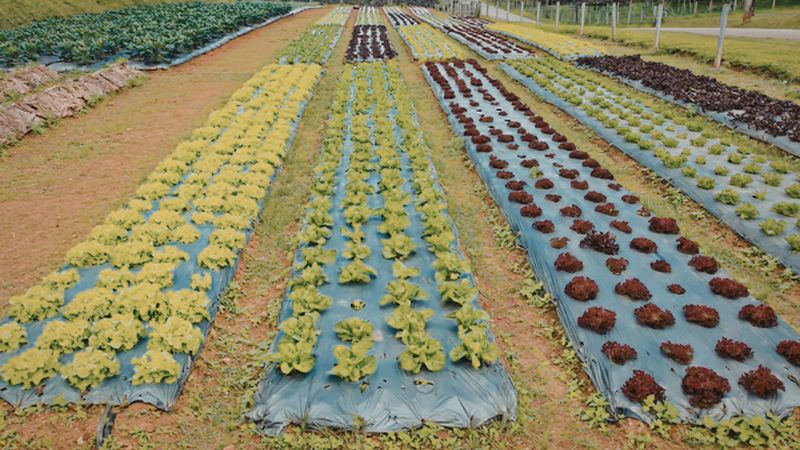
A row vegetable garden is exactly what it sounds like — crops planted in parallel lines, one variety per row, with walking paths or empty rows between them.
It is one of the oldest ways to organise a kitchen garden, and for good reason: rows are simple to build, easy to maintain, and scale from a compact 8-foot patch to a full backyard plot without changing the logic.
The challenge is figuring out how much space each crop actually needs, which rows work well beside each other, and how many plants fit the row length you have. Get that wrong and you end up with crowded plants, pest pressure, and a harvest that underperforms the space.
The five plans below are already solved. Each one gives you the row layout, plant-to-plant spacing, exact quantities, and companion planting notes — built into EdenVatika's free garden planner. Pick the plan that fits your space, open it, and it is ready to plant.
What a Row Vegetable Garden Layout Looks Like
In a row garden, each row runs the full width of the bed. Plants within a row are spaced according to their natural growing needs — tight crops like carrot and coriander can sit 4–7 inches apart, while sprawling crops like tomato or bottle gourd need 18–36 inches.
Empty rows serve as access paths or buffers that reduce disease spread and pest movement between plantings.
Most growers use one of two approaches:
- Planted rows only: Every row contains a crop. Works well for small-space plantings where access is not a concern and crops are maintained from the sides.
- Alternating planted and empty rows: Odd-numbered rows carry crops; even-numbered rows stay clear as walking paths or airflow buffers. The 20×20 Indian kitchen garden and the 30×20 large plot below both use this system.
Both approaches work. The alternating system is better for larger plots where you need to reach the centre of the bed without stepping on plants.
Spacing in These Plans
All five plans use spacing calculated from each crop's natural requirements — not generic guidelines. The table below shows how common row garden crops are typically spaced so you can read any of the plans below at a glance.
| Crop | Typical spacing | Season | Notes |
|---|---|---|---|
| Tomato | 30" | Summer | Needs full airflow; stake or cage |
| Pepper / Chilli | 18–21" | Summer | Compact; good beside onion and basil |
| Eggplant | 15" | Summer | Needs warmth; sensitive to frost |
| Cucumber | 18" | Summer | Train vertically to save row width |
| Beans | 15" | Summer | Fixes nitrogen; good with corn and cucumber |
| Corn | 10" | Summer | Wind-pollinated; plant in blocks not single rows |
| Broccoli | 15" | Spring / Autumn | Cool season; harvest before heat arrives |
| Kale | 15" | Spring / Autumn | Very cold hardy; cut-and-come-again |
| Peas | 15" | Spring / Autumn | Fixes nitrogen; pairs well with radish |
| Lettuce | 9" | Spring / Autumn | Bolts in heat; shade with taller crops |
| Carrot | 4" | Spring / Autumn | Dense rows; avoid compacted soil |
| Radish | 15" | Spring / Autumn | Ready in 3–4 weeks; good row-filler |
| Onion | 15" | Spring / Summer | Universal pest deterrent; plant near tomatoes |
| Garlic | 15" | Autumn planted / Summer harvest | Long season; plant in autumn for best results |
| Potato | 12" | Spring / Summer | Hill soil as plants grow; avoid tomato neighbours |
| Coriander / Cilantro | 7" | Spring / Autumn | Bolts in heat; succession-sow every 3 weeks |
| Basil | 9" | Summer | Boosts tomato flavour; repels aphids |
| Bottle Gourd | 36" | Summer | Sprawling; train on a trellis to control width |
| Turmeric | 15" | Summer | Rhizome crop; needs 8–10 months to mature |
5 Row Vegetable Garden Layouts
Each plan below is live inside EdenVatika. Click through to open the full layout — you will see the exact grid, plant positions, and companion pairing notes.
Copy any plan to your free account to adjust quantities or swap varieties.
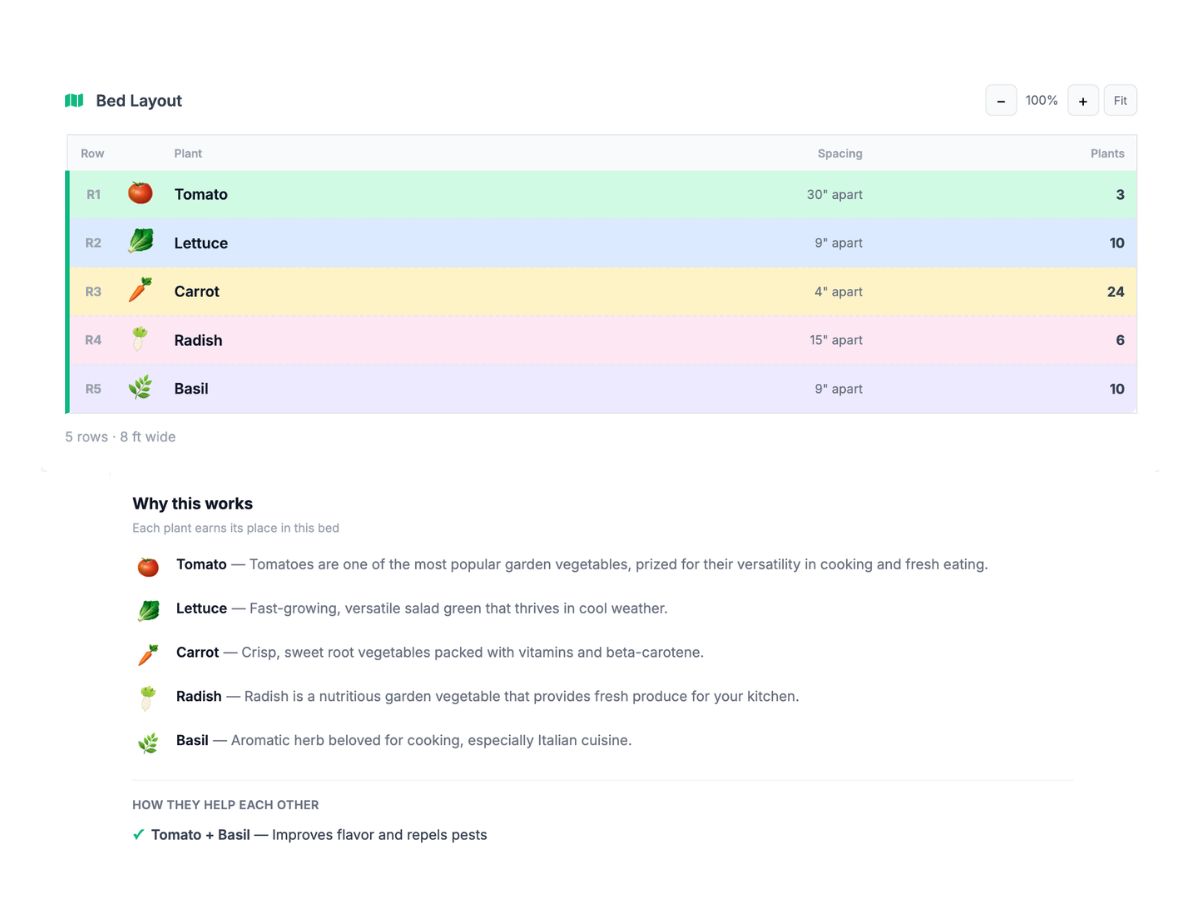
Plan 1 — All Easy Beginner Starter Row Garden (8 × 5 ft)
Five rows, five crops, and every decision already made for you. Tomatoes anchor Row 1 at 30-inch spacing — 3 plants across the 8 ft width, giving each one full airflow and room to cage.
Lettuce fills Row 2; it grows quickly and can be harvested before the tomatoes get tall enough to create shade. Carrots pack into Row 3 at 4-inch spacing, making it the most productive row in the bed by count.
Row 4 puts radish in — ready to pull in three to four weeks, clearing that slot for a follow-on succession crop.
Basil closes the bed in Row 5, benefiting the tomatoes through the whole season: it improves fruit flavour and repels aphids that would otherwise move through the rest of the bed.
What's in it: Tomato, Lettuce, Carrot, Radish, Basil
Best for: First-time row gardeners | Season: Spring into summer
Five crops, zero guesswork. Open the full row layout and copy it to your account.
View & Copy This Plan → Free account required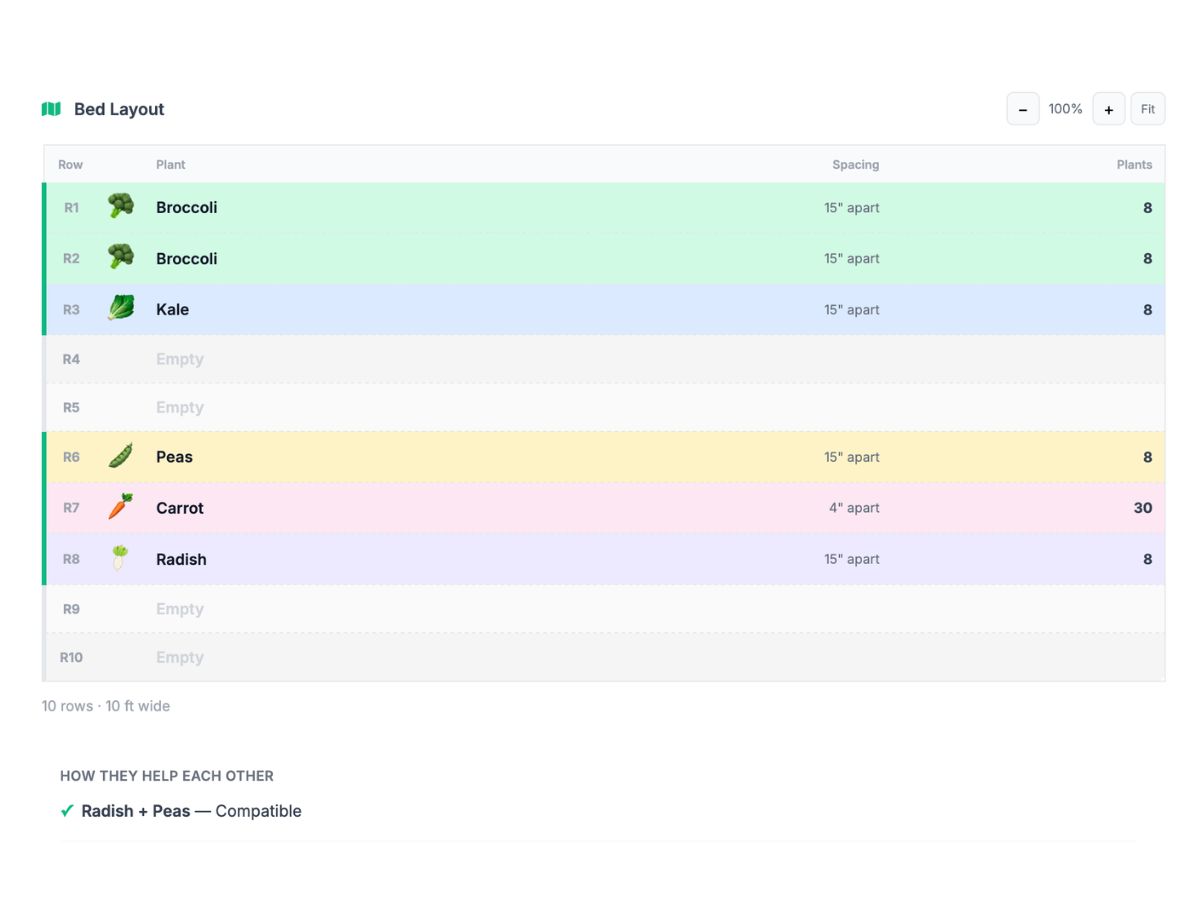
Plan 2 — 10 × 10 Cool Season / Fall Row Garden
All five crops in this plan thrive in cool weather, making it equally effective as a spring starter and a fall finisher. Broccoli takes the first two rows — the tallest, heaviest-feeding crop placed where it will not shade what comes after it.
Kale follows in Row 3; it is one of the most cold-tolerant vegetables you can grow and continues producing through hard frosts that kill everything else.
Rows 4 and 5 stay empty as a wide path and airflow buffer between the brassicas and the root crops below. Peas go into Row 6 and fix nitrogen as they grow, which benefits the carrots that follow in Row 7 — the densest row in the bed by count.
Radish closes Row 8: a fast crop ready in under a month. Rows 9 and 10 remain open for succession plantings later in the season.
What's in it: Broccoli, Kale, Peas, Carrot, Radish
Best for: Spring and autumn growing | Season: Spring or Autumn
See the full cool-season row grid, check companion pairings, and copy this plan before your next planting window.
View & Copy This Plan → Free account required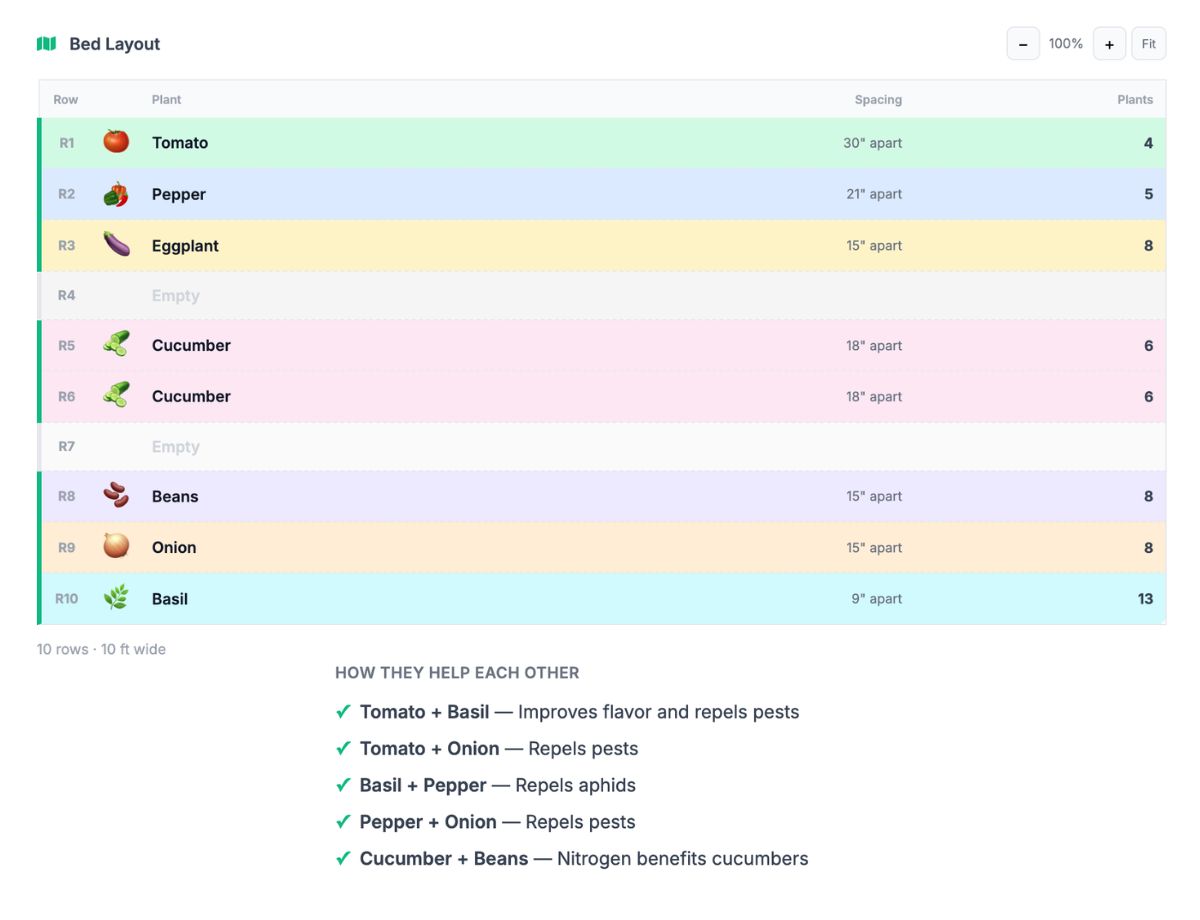
Plan 3 — 10 × 10 In-Ground Classic Summer Row Garden
Seven warm-season crops across ten rows, arranged so that compatible plants sit near each other and problem combinations stay apart.
Tomatoes lead in Row 1, followed by pepper in Row 2 and eggplant in Row 3 — all three warm-season fruiting crops grouped at the top where they share the same heat and fertility needs.
Row 4 stays empty as a walking path. Cucumbers take the next two rows, giving enough volume for regular fresh harvests and pickling batches.
Row 7 stays empty again as a second path. Beans close the lower half of the bed in Row 8, fixing nitrogen into the soil for next season.
Onion in Row 9 and basil in Row 10 round out the companion structure: the basil-tomato pairing improves fruit flavour across the bed, while onion alongside tomato deters mites and aphids.
What's in it: Tomato, Pepper, Eggplant, Cucumber, Beans, Onion, Basil
Best for: In-ground summer kitchen gardens | Season: Summer
Seven summer crops with companion planting already worked out. Open the full layout and copy it to your account.
View & Copy This Plan → Free account required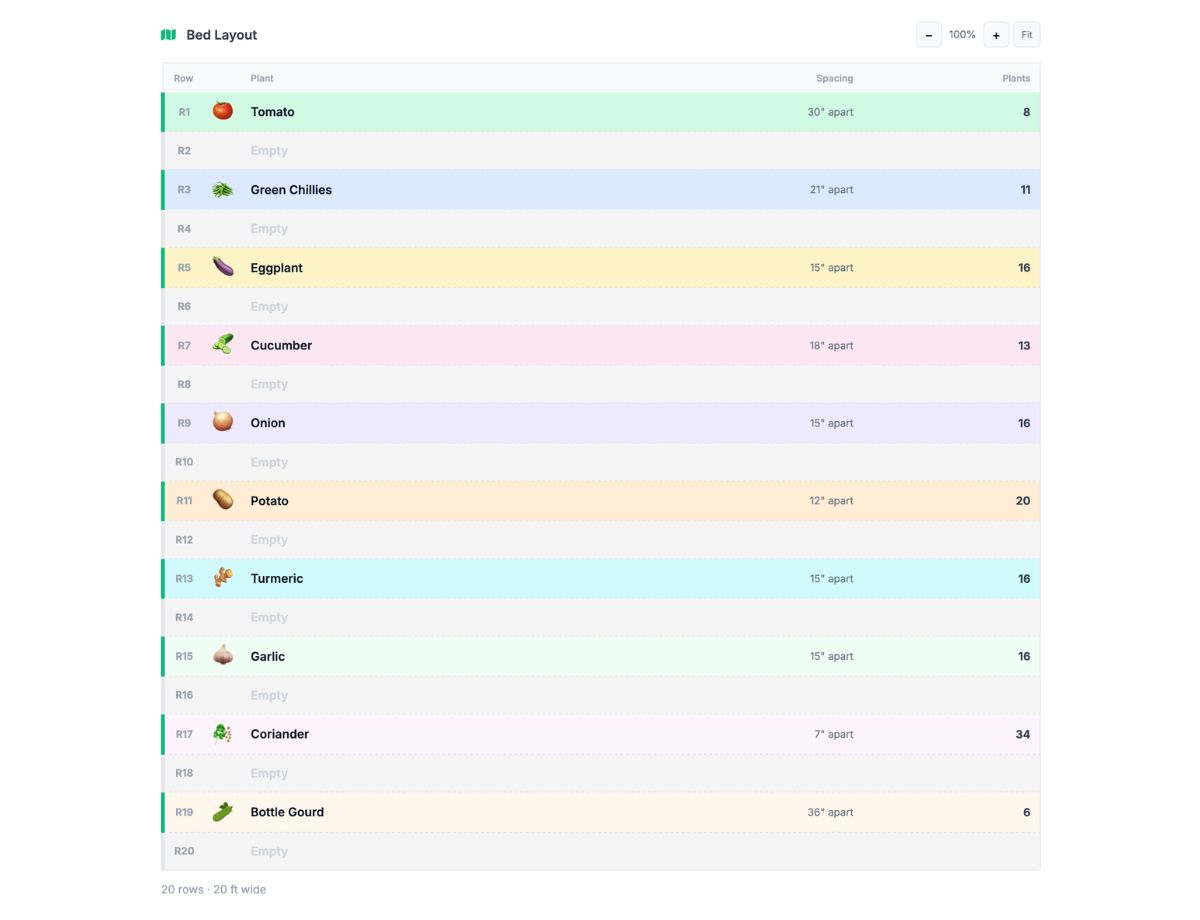
Plan 4 — 20 × 20 Indian / Tropical Kitchen Row Garden
Built around the ten crops that appear in Indian, South Asian, and tropical kitchens most consistently. The alternating-row structure is central to how the plan works: odd rows carry crops, even rows stay empty as paths and airflow buffers.
A pattern that reduces pest movement and keeps a 20-foot-wide bed navigable without stepping on plants. Tomatoes anchor Row 1, with green chillies in Row 3.
Eggplant, cucumber, onion, and potato fill the next four odd rows, each spaced to the 20-foot length. Turmeric and garlic settle into the mid-bed rows — both slow-growing, long-season crops that benefit from a stable position.
Coriander packs into Row 17 at 7-inch spacing, the densest row in the layout because it is typically succession-harvested.
Bottle gourd closes the bed in Row 19, where its vines can be trained along the row without crowding the crops beside it. The companion pairings — tomato with onion and garlic — work on pest deterrence across the whole bed without chemicals.
What's in it: Tomato, Green Chillies, Eggplant, Cucumber, Onion, Potato, Turmeric, Garlic, Coriander, Bottle Gourd
Best for: Indian and tropical kitchen gardens | Season: Summer
Ten kitchen staples across 20 rows. Open the full grid and copy this plan to your account.
View & Copy This Plan → Free account required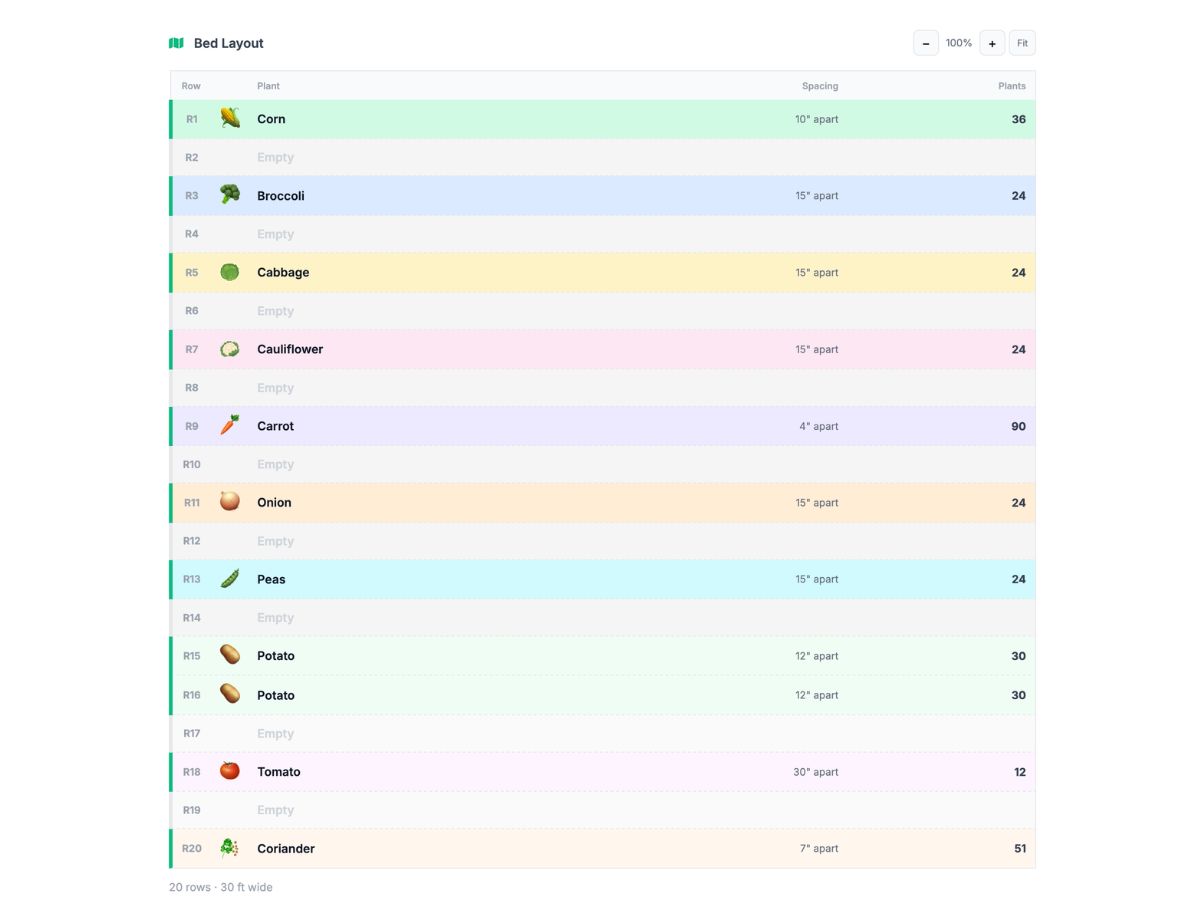
Plan 5 — 30 × 20 In-Ground Vegetable Garden Plot
The largest layout in this guide — twenty rows across a 30-foot width, bringing together cool-season and warm-season crops in a single organised plan. Odd rows carry crops; even rows stay open as walking paths, the same alternating system as Plan 4 but at twice the footprint.
Corn opens the bed in Row 1: 36 plants at 10-inch spacing, enough to support block pollination. Broccoli, cabbage, and cauliflower follow in Rows 3, 5, and 7 — cool-season crops that can be timed to come in before or after the corn beside them.
Carrot fills Row 9 with 90 plants, the highest-yield row in the bed by count. Onion, peas, and potato take the mid-section rows. Tomato arrives at Row 18 — positioned at the far end so its height does not shadow the smaller crops that surround it.
Coriander closes Row 20 with 51 plants at tight spacing for succession harvesting.
Tomato and onion in adjacent sections suppress the mites and aphids that move through warm-season plantings; peas and corn are compatible neighbours, with the nitrogen contribution from peas benefiting the heavy-feeding corn.
What's in it: Corn, Broccoli, Cabbage, Cauliflower, Carrot, Onion, Peas, Potato, Tomato, Coriander
Best for: Large in-ground plots and surplus growing | Season: Spring into summer
Eleven varieties, 399 plants, and every row already spaced. Open the full layout and copy it to your account.
View & Copy This Plan → Free account requiredHow to Use Any of These Plans
Every plan above is live in EdenVatika's garden planner. Click through to open the full layout — you will see the row grid, plant positions, spacing indicators, and companion pairing notes. From there you can copy the plan directly to your free account.
Once it is in your account you can adjust the bed dimensions to match your exact space, swap individual crops while keeping the companion structure intact, and use the planting calendar to see when each crop should go in the ground based on your location.
The spacing and plant counts update automatically when you make changes — nothing to recalculate by hand.
If you are starting from scratch, Plan 1 (the 8×5 beginner garden) is the lowest-risk entry point. Five crops, pre-solved spacing, and a fast return — radish in Row 4 is ready in three weeks.
Plan 5 is the other end of the range: a full-season, full-variety plot with the row structure already in place to keep it manageable.
🌿 All 5 row garden plans above are live in the EdenVatika app.
Open any plan, save a copy to your account, and customise the crops to match your taste, climate, and what's available at your local nursery. The app recalculates row spacing and flags companion conflicts the moment you make a change — so you never place two incompatible plants next to each other by accident.