Container Herb Garden Layout: 7 Pot Plans You Can Copy
Most container herb gardens fail from the layout, not the care — herbs that want different amounts of water end up sharing one watering can. Here are seven pot layouts grouped by what each herb drinks.
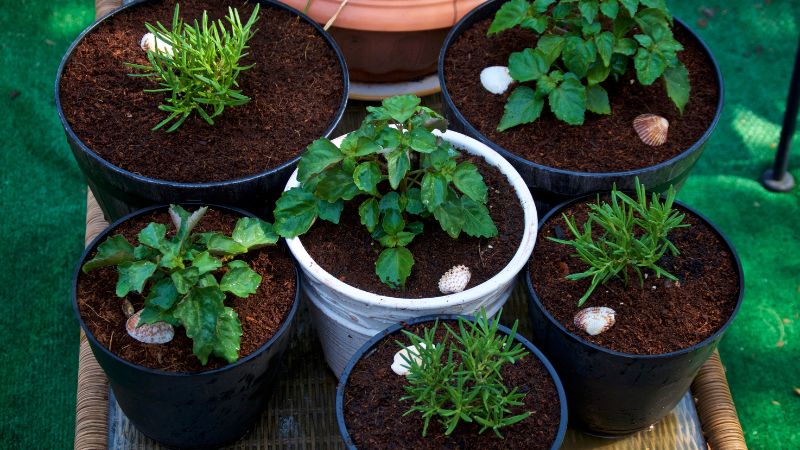
Most container herb gardens die the same way. Not from neglect — from care. You buy four little pots at the nursery, decide they look better as one big arrangement, and plant basil, rosemary, thyme and mint together in a single handsome pot by the kitchen door.
Six weeks later the mint has eaten everything, the thyme has rotted, and the basil is a bare stem with three leaves on top.
Nothing there was a watering mistake. It was a layout mistake. Those four herbs want four different amounts of water, and once they share a pot, they share a watering can — so somebody is always drowning and somebody is always thirsty.
The fix is not more pots or more skill. It is grouping herbs by what they drink before you plant them, and giving the two garden thugs — mint and lemongrass — a container each where they can do no harm.
This guide covers how to group herbs for containers, what each one needs in terms of pot size, sun and water, and seven complete layouts — from a two-herb pot to a nine-herb tiered stand — that you can copy straight into your own balcony, windowsill or doorstep.
The One Rule That Makes Container Herbs Work
In the ground, herbs with different needs can live side by side because roots run where they like and the soil buffers everything. A pot removes both of those escapes.
Every plant in a container shares the same volume of mix, the same drainage, and the same watering schedule, whether it suits them or not.
So the first decision in any container herb garden layout is not which herbs you like — it is which herbs drink alike. There are three groups, and they matter more than any companion planting chart.
The dry group. Thyme, oregano, sage and marjoram are Mediterranean hillside plants. They want full sun, gritty free-draining mix, and to dry out between waterings. Marjoram is properly drought tolerant. Water these on a basil schedule and they get root rot long before they get big.
The thirsty group. Basil wants an inch of water a week in rich, moist soil. Coriander and chervil want soil kept consistently moist and both bolt the moment they dry out — chervil almost immediately. Lemongrass wants more water than any of them.
The middle group. Parsley and chives sit comfortably between the two: moderate water, happy in full sun or partial shade, tolerant of a bit of neglect either way. They are the herbs that make a mixed pot possible.
Group by those three lists and a container herb garden becomes almost difficult to kill. Ignore them and no amount of attention will save it.
What Each Herb Needs in a Pot
Pot size is the second thing people get wrong. A herb sold in a 3-inch nursery pot is not a 3-inch plant — sage reaches 30 inches across, and lemongrass will hit six feet tall if it likes you. Match the container to the mature spread, not the seedling.
| Herb | Water group | Sun | Mature spread | Smallest pot that works |
|---|---|---|---|---|
| Thyme | Dry | Full sun to partial shade | 12–18 in | 6-inch pot — stays low and spills over the edge |
| Oregano | Dry | Full sun to partial shade | 12–24 in | 8-inch pot — trim hard or it sprawls |
| Marjoram | Dry (drought tolerant) | Full sun | 12–15 in | 6-inch pot — the most forgiving of the four |
| Sage | Dry | Full sun to partial shade | 18–30 in | 12-inch pot — the biggest of the Mediterranean four |
| Parsley | Middle | Full sun to partial shade | 12–18 in | 8-inch pot, 10 inches deep for the taproot |
| Chives | Middle | Full sun to partial shade | 12–18 in | 6-inch pot — clumps up, divide every second year |
| Basil | Thirsty | Full sun (6–8 hrs) | 12–18 in | 8–10-inch pot — one plant, not the supermarket clump |
| Coriander | Thirsty | Partial shade (4–6 hrs) | 6–12 in | 8-inch pot — resow every 3 weeks, it bolts |
| Chervil | Thirsty | Partial shade | 6–12 in | 6-inch pot in the shadiest spot you have |
| Mint | Middle | Full sun to partial shade | Unlimited if unconstrained | 10–12-inch pot of its own — never share |
| Lemongrass | Very thirsty | Full sun | 36 in, up to 6 ft tall | 14-inch pot minimum — a solo plant |
| Stevia | Middle | Full sun to partial shade | 18–24 in | 10-inch pot — tender, bring it in over winter |
Two numbers matter more than the rest. Mint's spread is listed as unlimited because in open soil it genuinely is — runners travel under paving and come up on the other side.
And lemongrass at six feet is not a herb you tuck into a trough; it is a small ornamental grass that happens to be edible.
Everything else on that list is a well-behaved container plant, provided the pot has drainage holes and enough depth for the roots.
7 Container Herb Garden Layouts
Each plan below was built in EdenVatika's planner. You can open any of them, see exactly what goes where, and copy it into a free account — the spacing and pairings are already worked out, and every plant can be swapped for something you actually cook with.
The first four are single-purpose pots, grouped by water needs. The last three are mixed layouts for a windowsill, a window box and a vertical stand.
Plan 1 — Mediterranean Herb Pot
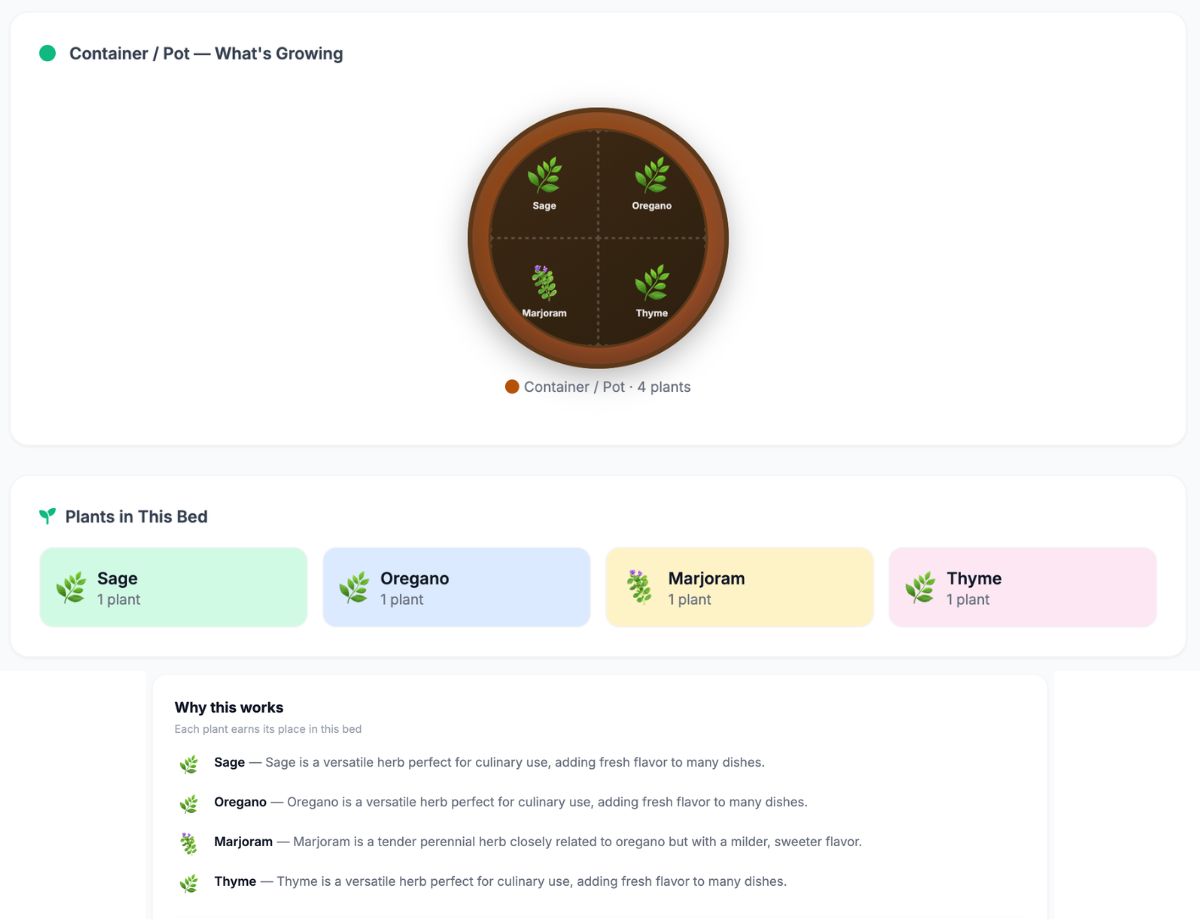
This is the pot that survives a holiday. Sage, oregano, marjoram and thyme all come from the same dry, sunny hillsides, so they want identical treatment: as much sun as you can give them, gritty free-draining mix, and water only when the top inch is dry.
Put it in the hottest, brightest position you have — a south-facing balcony rail, the sunny end of a patio, the spot that scorches everything else. All four are perennials, so this pot is a one-time planting that comes back for years, getting woodier and more productive each season.
Trim it regularly to stop the oregano and sage crowding the thyme.
What's in it: Sage, Oregano, Marjoram, Thyme
Best for: Full sun, low-maintenance perennials, roasts and pasta | Pot: One wide 14–16 in pot, or four small ones
See the full planting and copy this plan to your account.
View & Copy This Plan → Free account required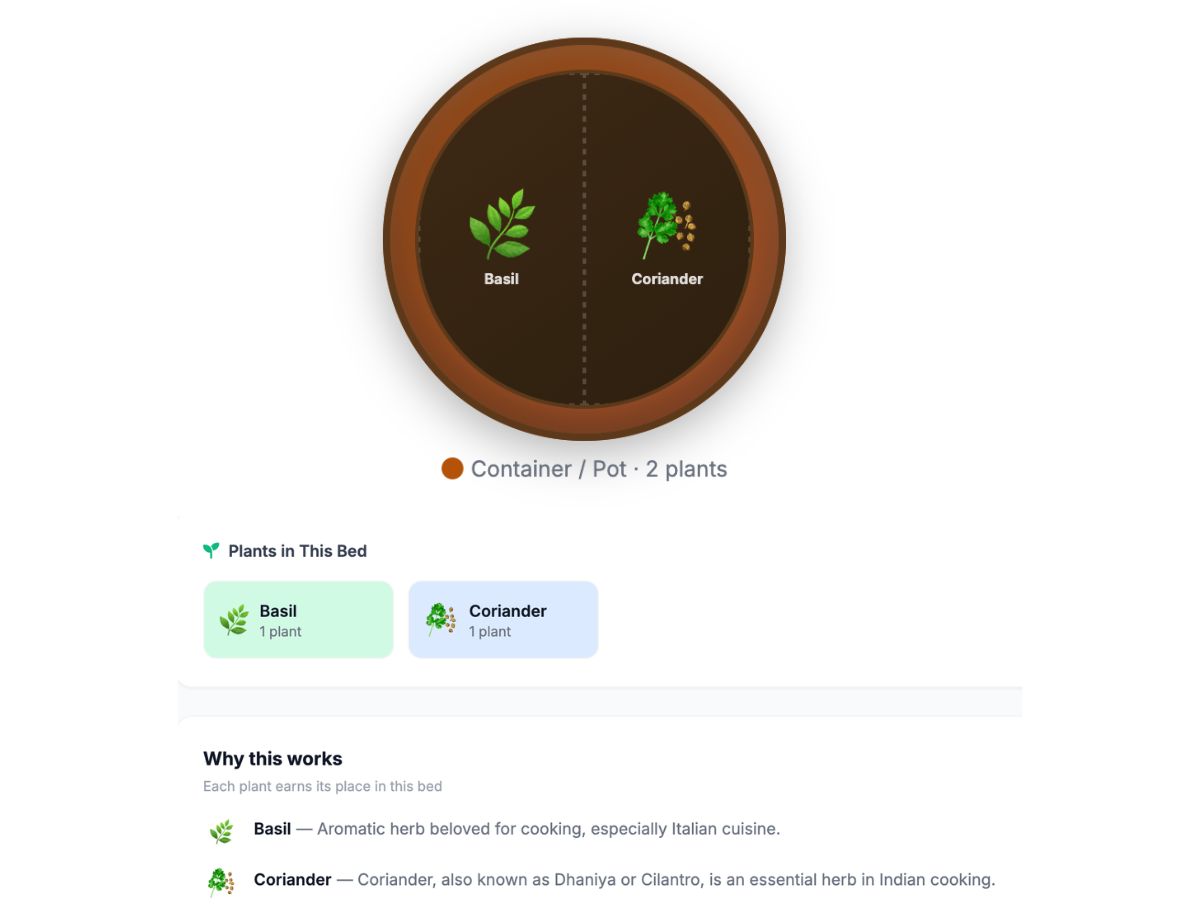
Plan 2 — Fresh & Thirsty Pot
The opposite pot, and the reason the Mediterranean one works. Basil and coriander are the two herbs most people buy most often, and both want rich soil kept steadily moist — never bone dry, never waterlogged.
Housed together, they can be watered generously without putting anything else at risk.
Coriander is ready in about three weeks and bolts fast in heat, so sow a fresh pinch every couple of weeks and give the pot afternoon shade in summer.
Basil is the slower half at around 30 days to first picking; pinch out the growing tips constantly and it will bush out instead of running to flower. Two plants, one watering can, no compromise.
What's in it: Basil, Coriander
Best for: Everyday cooking, generous waterers | Pot: 10–12 in, morning sun and afternoon shade in hot weather
See the full planting and copy this plan to your account.
View & Copy This Plan → Free account required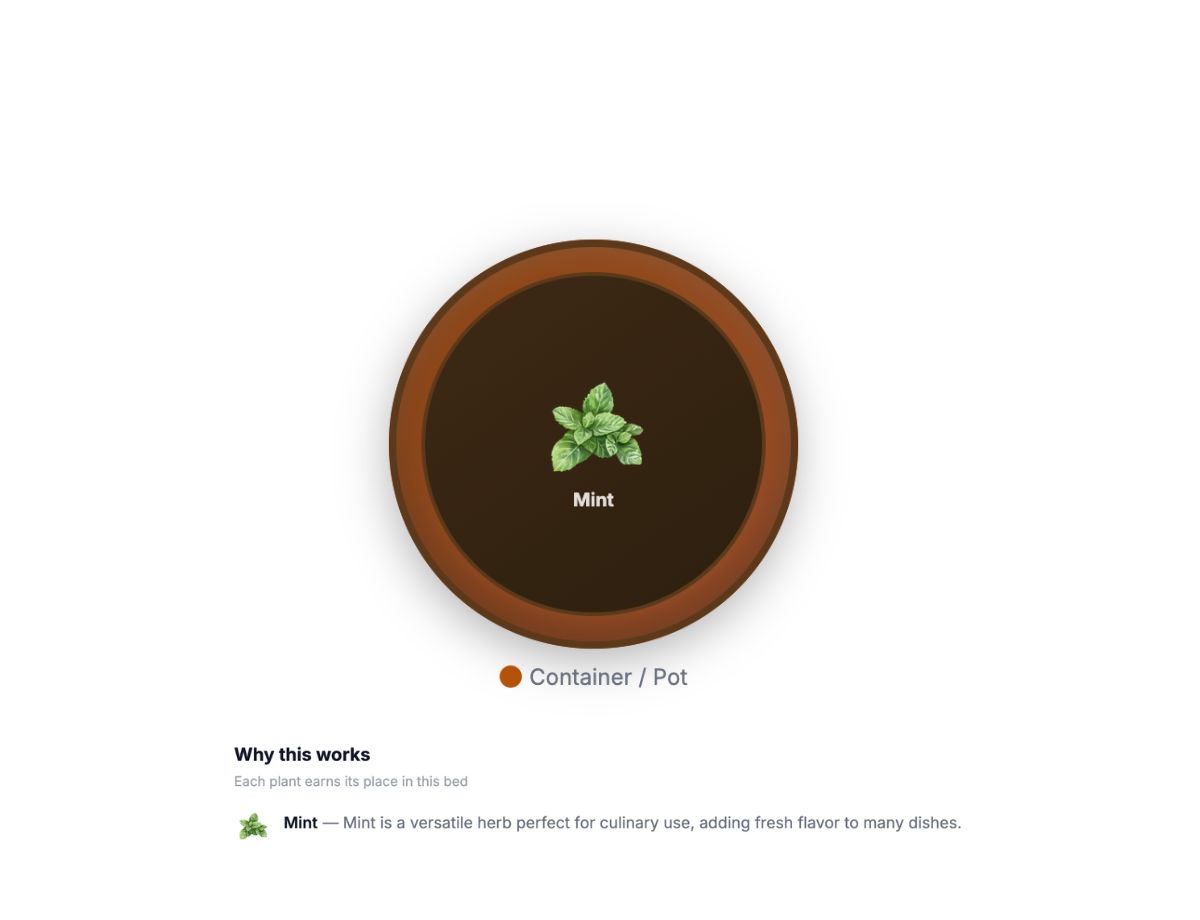
Plan 3 — Mint, Contained
One plant, one pot, and that is the entire layout. Mint is the most useful herb on this page and the single worst neighbour — its spread is effectively unlimited, and in a shared container it will send runners through the root ball of everything else within a season.
Given its own 10–12 inch pot, all that vigour becomes an advantage.
It is nearly impossible to kill, tolerates partial shade, and produces from about 60 days onward for as long as you keep cutting it.
Keep the pot standing on a saucer rather than sunk into a bed, or the roots will escape through the drainage holes and root into the soil below.
Divide and repot every couple of years when it starts to circle.
What's in it: Mint
Best for: Tea, chutney, mojitos — and keeping mint out of everything else | Pot: 10–12 in, standing alone
See the full planting and copy this plan to your account.
View & Copy This Plan → Free account required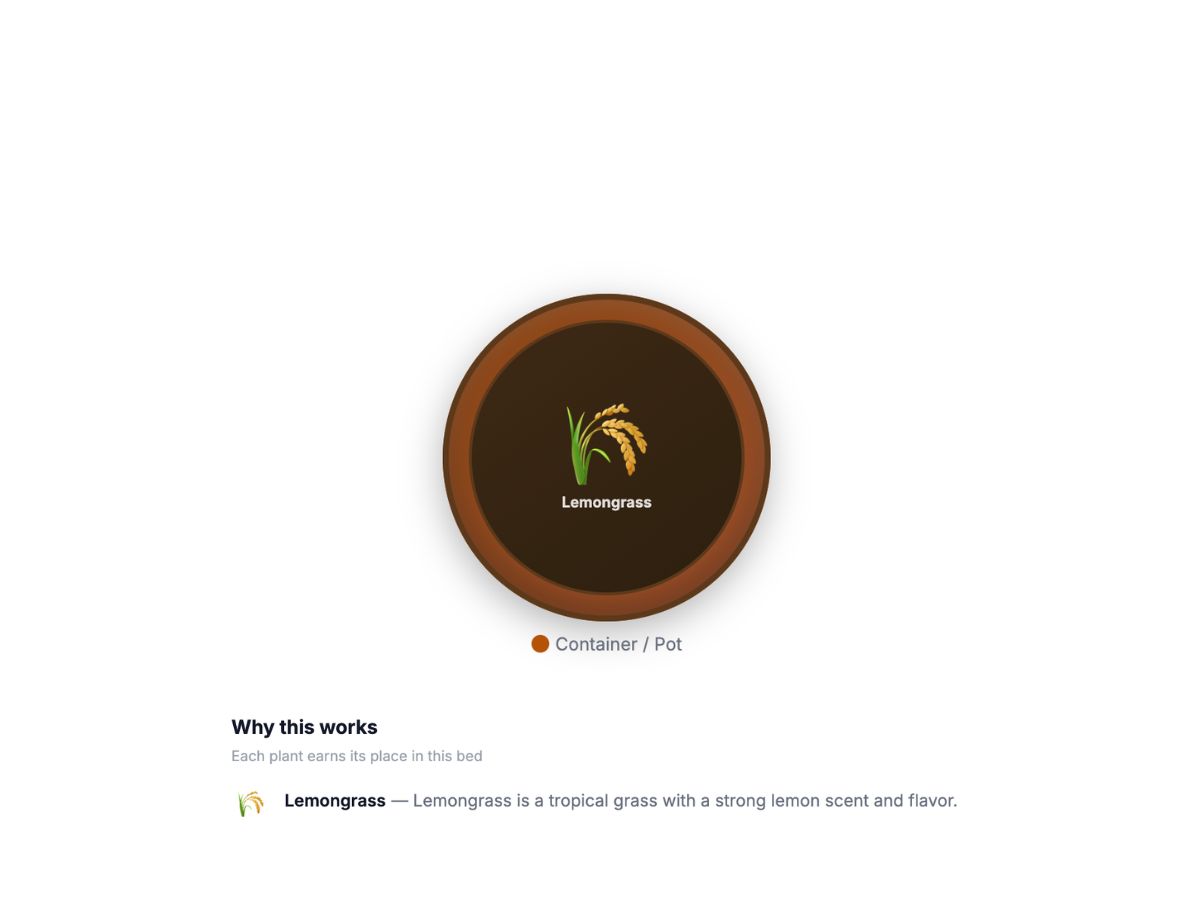
Plan 4 — Lemongrass: One Plant, One Pot
The other herb that needs a container to itself, for a different reason. Lemongrass is a tropical grass that grows in clumps three to six feet tall and wants full sun with soil kept consistently moist. Nothing planted around it gets enough light or water once it is established.
In a 14-inch pot it becomes a genuinely handsome plant — an architectural fountain of foliage that happens to flavour your curries and repel mosquitoes while it stands there.
Give it about 120 days from planting to the first harvest of usable stalks, then cut from the outside of the clump. In cool climates it is not frost hardy, so move the pot somewhere sheltered over winter and cut watering right back.
What's in it: Lemongrass
Best for: Sunny balconies, Thai and Indian cooking, mosquito-prone corners | Pot: 14 in or larger, full sun
See the full planting and copy this plan to your account.
View & Copy This Plan → Free account required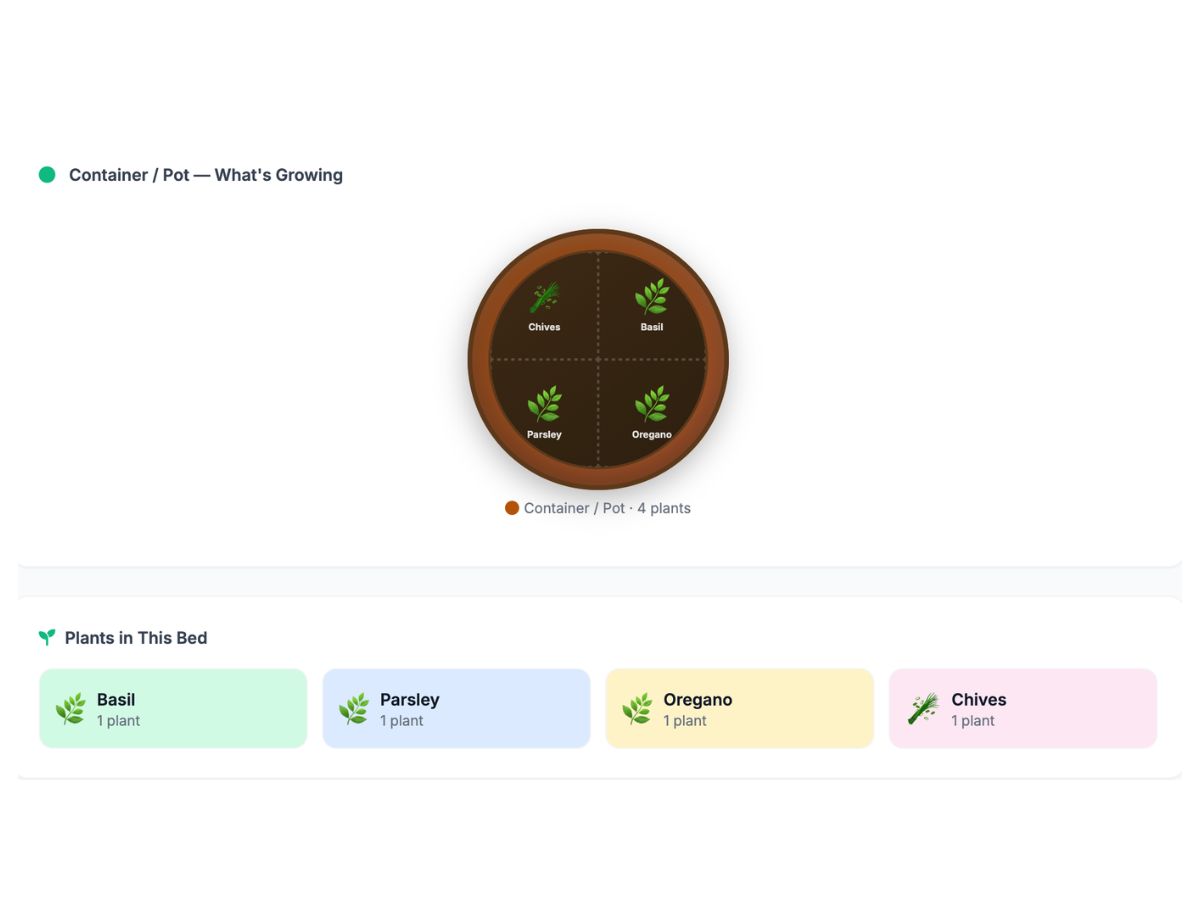
Plan 5 — Windowsill Herb Garden
Four herbs, one pot, and the shortest walk between growing and cooking.
Basil, parsley, oregano and chives are the herbs an everyday kitchen reaches for most, and this is the layout for people who want all four within arm's reach of the chopping board rather than scattered across a balcony.
It does mix water groups, so plant it in a wide trough rather than a round pot and put basil at one end, oregano at the other.
Water towards the basil end and let the oregano end dry between drinks. Parsley and chives sit in the middle and are content either way. It is a small compromise, and in a container this size it works — what does not work is adding mint to the same trough.
What's in it: Basil, Parsley, Oregano, Chives
Best for: Kitchen windowsills, small balconies, everyday cooking | Pot: Trough at least 18 in long, 8 in deep, brightest window you have
See the full planting and copy this plan to your account.
View & Copy This Plan → Free account required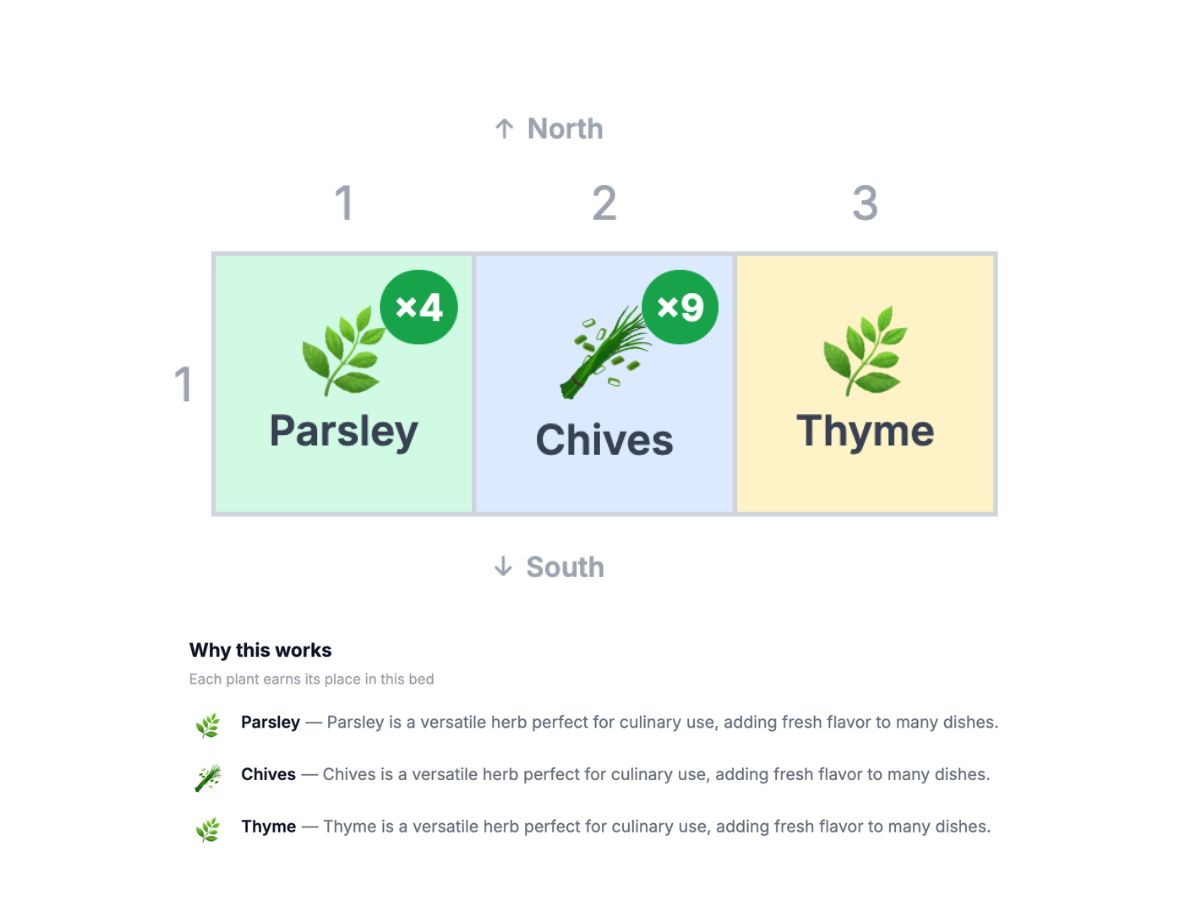
Plan 6 — Kitchen Window Box (3 × 1 ft)
This is the same idea planned properly. A standard three-foot window box is exactly three one-foot squares, which means square foot spacing applies just as it does in a raised bed — and it turns a vague handful of seedlings into fourteen plants that all have room.
The layout runs left to right: four parsley in the first square, nine chives in the second, and a single thyme plant in the third, where it can spill over the front edge.
All three sit in the middle-to-dry water group, so the whole box takes one watering schedule with no compromise at all. Chives and parsley crop within 45 days and keep going; thyme is the perennial backbone that stays put through winter.
What's in it: Parsley ×4, Chives ×9, Thyme ×1 — 14 plants in 3 sq ft
Best for: Window boxes, railing planters, one-schedule watering | Container: 3 × 1 ft box, at least 8 in deep
See the square-by-square grid and copy this plan to your account.
View & Copy This Plan → Free account required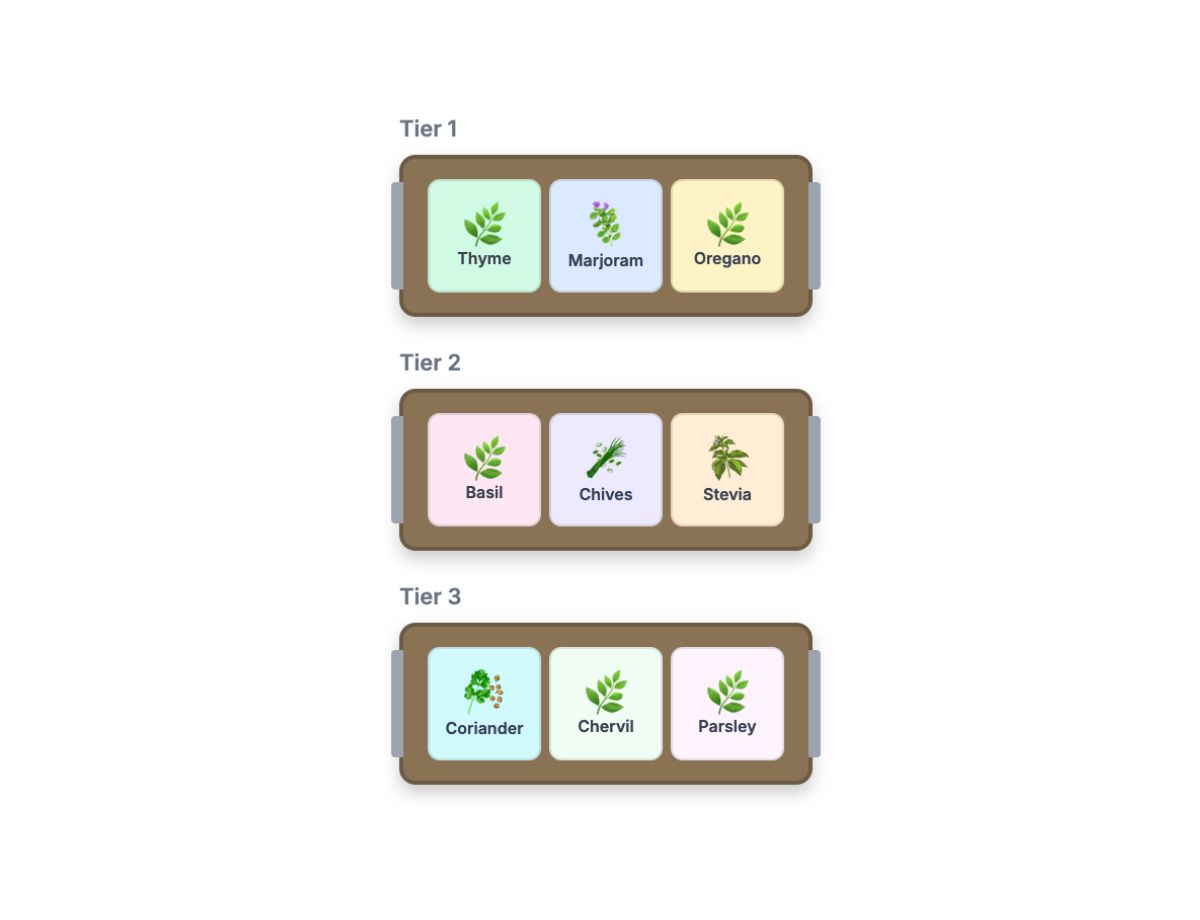
Plan 7 — Tiered Herb Stand
When floor space runs out, the answer is to go up. A three-tier plant stand takes the footprint of a single large pot and turns it into nine separate herbs, each in its own container — which quietly solves the water-grouping problem, because every plant keeps its own schedule.
The tiers are arranged by need. Thyme, marjoram and oregano take the top tier, where the light is strongest and drainage from the pots above never lands on them.
Basil, chives and stevia sit in the middle. Coriander, chervil and parsley take the bottom tier, in the shade of everything above — which is exactly where chervil and coriander want to be, since both bolt in strong sun and last far longer with shade.
Nine herbs in the space of a doormat, and the only real discipline it asks is remembering that the top tier dries out fastest.
What's in it: Top — Thyme, Marjoram, Oregano | Middle — Basil, Chives, Stevia | Bottom — Coriander, Chervil, Parsley
Best for: Balconies, courtyards, small footprints | Container: Three-tier stand, nine pots of 6–10 in
See all three tiers and copy this plan to your account.
View & Copy This Plan → Free account requiredHow to Adapt These Layouts to Your Space
Start with the sun, not the pot. Watch where the light actually falls before buying anything. Six or more hours of direct sun means the Mediterranean pot and lemongrass will thrive.
Three to four hours means you are in coriander, chervil, parsley, mint and chives territory — all of which produce perfectly well in partial shade. Basil in a genuinely shady spot will always be thin and disappointing, however well you water it.
Combine plans rather than merging them. The instinct is to take the best herbs from several layouts and put them in one big container.
Do the opposite: run the Mediterranean pot and the thirsty pot side by side. Two pots on the same shelf look like one herb garden and behave like two, which is the entire point.
Swap within the water group. If you never cook with marjoram, replace it with rosemary or more thyme — anything from the same dry list.
If coriander bolts faster than you can eat it, put a second basil there instead. Substituting inside a group changes nothing about how the pot is watered.
Size up if you water rarely. Small pots dry out in hours in summer heat. If you are away often or forgetful, one larger container holds more moisture and buys you an extra day or two — the single most useful adjustment for a balcony that bakes.
Common Container Herb Mistakes
Mixing water groups in one pot. The mistake that starts this article and ends most herb gardens. Thyme and basil in one container means one of them is always being treated wrongly.
Planting the supermarket pot as-is. A shop-bought basil is twenty seedlings crammed into one small pot, grown for a two-week shelf life. Either split it into two or three clumps and repot, or plant one properly. Left as it is, it collapses within a fortnight.
Pots with no drainage. A decorative container with no hole in the bottom kills herbs faster than any pest. Drill it, or use it as a cachepot with a plain plastic pot inside.
Letting mint or lemongrass loose. Both are excellent plants and both are terrible flatmates. One pot each, always.
Harvesting too politely. Herbs are cut-and-come-again plants — taking a few leaves at a time makes them leggy. Pinch basil tips out hard, shear chives to two inches, and cut oregano and thyme back by a third. They come back thicker every time.
Frequently Asked Questions
How many herbs can you plant in one pot?
It depends on the pot and the herbs, not on a fixed number. As a guide, a 12-inch pot comfortably holds three or four small herbs of the same water group, an 18-inch trough holds four to six, and a 3-foot window box using square foot spacing can hold fourteen plants across three squares. The limit that matters is water compatibility: two herbs that want the same watering will do better in a small pot than six mismatched ones in a large one.
What herbs should not be planted together in containers?
Mint should never share a container with anything — its spread is effectively unlimited and it will overrun the root space of its neighbours within a season. Lemongrass is the same story for different reasons: at three to six feet tall and thirsty, it shades and outdrinks anything nearby. Beyond those two, avoid pairing the dry Mediterranean herbs (thyme, oregano, sage, marjoram) with the moisture-lovers (basil, coriander, chervil), since one group will always be watered wrongly.
How big should a container herb garden pot be?
Match the pot to the herb's mature spread rather than its nursery size. Thyme, marjoram and chives are happy in 6-inch pots; basil, parsley and coriander want 8 to 10 inches with at least 8 inches of depth for parsley's taproot; sage needs 12 inches; mint 10 to 12 inches on its own; and lemongrass at least 14 inches. Every one of them needs drainage holes — depth and drainage matter more than width.
Can you grow a container herb garden indoors on a windowsill?
Yes, with light as the limiting factor. A south or west-facing window with six hours of direct sun will grow basil, thyme, oregano and chives well. A dimmer window still suits parsley, chives, mint, coriander and chervil, all of which tolerate partial shade. Indoor pots also dry out faster than you expect from central heating, so check the top inch of soil rather than watering to a schedule.
Which container herbs come back every year?
Thyme, oregano, sage, chives and mint are perennials and will return for several years in a pot, getting more productive as they establish. Marjoram, lemongrass and stevia are tender perennials — they survive winter only if kept above freezing, so they need to come indoors in cold climates. Basil, coriander and chervil are annuals that need resowing; coriander and chervil in particular are worth sowing in small batches every two to three weeks, since both bolt quickly.
How often should container herbs be watered?
Check the soil rather than the calendar. Push a finger an inch into the mix: water the thirsty group (basil, coriander, chervil, lemongrass) as soon as that inch feels dry, and wait until the top inch is properly dry for the Mediterranean group. In peak summer a small pot in full sun may need water daily, while the same herbs in spring might go three or four days. Grouping by water need is what makes this one simple check instead of eleven separate judgements.
Picking a Layout to Start With
If you want one pot, make it the windowsill four or the thirsty pot — both earn their space in the kitchen within a month. If you want a herb garden that outlasts the season, start with the Mediterranean pot and add the mint and lemongrass pots beside it.
And if space is the constraint rather than time, the tiered stand fits nine herbs into a doormat's footprint without asking you to compromise on any of them.
Whichever you choose, the grouping is the part worth keeping. Herbs that drink alike can share a pot; the rest just need their own.
Each plan above opens in EdenVatika, where you can copy it and swap in the herbs you actually cook with. Free to start — no rush.