How to Choose What Vegetables to Grow in Your First Garden
Watermelon, corn and an artichoke on the April wish list; cherry tomatoes and basil on the August plate. Seven simple tests for choosing first-garden crops, plus four beginner plans to copy.
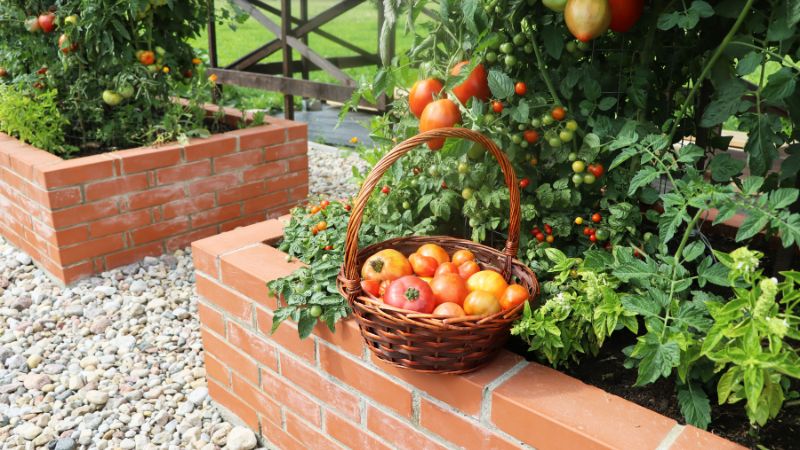
Ask a new gardener in April what they're growing, and you get a wish list.
Watermelon. Two kinds of corn. An artichoke, because it looked amazing on the seed rack. Maybe some celery, just to see.
Ask the same gardener in August what they're actually eating, and the list is a lot shorter. Cherry tomatoes. A few cucumbers. Basil, every single day.
The watermelon gave two fruit the size of softballs. The corn took half the bed for a dozen ears. The artichoke is still a big leafy plant, waiting for next year.
Nothing went wrong. Every one of those plants did exactly what it always does. Some crops are fast and some are slow. Some share space nicely and some take over. Some love your summer, and some quietly hate it.
Choosing crops is the first real decision in a garden, and most of us make it by looking at pictures. Here are the seven questions that turn a wish list into a harvest list.
⚡ The short answer
Choose crops that pass most of these seven tests: you already eat them, they're easy, they fit your space, they're ready this season, they keep producing, they're pricey at the store, and they like your climate.
For most first gardens, that means tomatoes, lettuce, bush beans, cucumbers, peppers, basil, radishes and spinach. Leave corn, melons, cauliflower and asparagus for year two.
What First-Time Gardeners Actually Plant
Before the advice, a peek over the fence. We looked at what gardeners plan in EdenVatika: 57 real gardens, every crop they put in a bed.
| Crop | Share of gardeners who planted it |
|---|---|
| 🍅 Tomato | 47% (almost every other garden) |
| 🥬 Lettuce | 25% |
| 🫘 Beans | 25% |
| 🥕 Carrot | 25% |
| 🌿 Basil | 23% |
| 🥦 Broccoli | 23% |
| 🍓 Strawberry | 23% |
| 🫑 Bell pepper | 21% |
| 🌿 Spinach | 21% |
| 🥒 Cucumber | 21% |
Most of that list is a great start. Tomatoes, lettuce, beans and basil are exactly what we'd recommend.
But look a little further down. 16% of these gardens include corn, and 12% include cauliflower. Both are among the least forgiving crops for a small first bed. By the end of this guide, you'll see why.
1. Start With What You Actually Eat
This sounds too obvious to need saying. It's also the rule beginners break most often.
Seed packets are designed to make you fall in love. Purple carrots! Lemon cucumbers! A tomato called "Mortgage Lifter"! None of that matters if the harvest ends up in the compost.
So before you buy a single seed, try this five-minute test.
- Pull up your last four grocery receipts. Or just open the fridge.
- Write down every vegetable and herb you bought more than once.
- Star the ones you'd be thrilled to eat fresh, still warm from the sun.
The starred items are your shortlist. Everything else is a "maybe next year."
One more question to ask: who else is eating? If your partner hates eggplant, one eggplant plant is plenty. If your kids eat cherry tomatoes like candy, plan for that instead.
Once you know what you eat, the next step is how much. We worked that out crop by crop in How Many Vegetable Plants Do You Need per Person?
2. Choose Beginner-Friendly Crops
A first garden should give you wins. Early, visible, delicious wins. That's what keeps you coming back to water it in July.
Every plant in the EdenVatika library carries a difficulty rating. Here are the "easy" crops that also show up on most shopping lists.
| Crop | Why it's forgiving |
|---|---|
| 🔴 Radish | Ready in about 4 weeks. Grows almost anywhere. |
| 🥬 Lettuce | Fast, compact, and fine in part shade. |
| 🫘 Bush beans | Big seeds, easy to sow, no trellis needed. |
| 🥒 Cucumber | Grows fast in warm weather. Climbs a trellis to save space. |
| 🍅 Tomato | Buy young plants and the hard part is done. |
| 🌿 Basil | Ready to pick in about a month. Keeps going until frost. |
| 🌱 Swiss chard | Shrugs off heat and light frost. Almost impossible to kill. |
| 🥒 Zucchini | So productive that one plant is usually plenty. |
Now the other end of the scale. Our library rates these as hard: cauliflower, celery, artichoke and asparagus.
Cauliflower is the classic heartbreaker. It needs steady cool weather for weeks. One hot spell and you get a loose, bitter head the size of a golf ball. Celery wants constant moisture and a very long season.
That doesn't mean "never." It means "not first." Grow them in year two, when you know your soil and your summers.
And one surprise: carrots are only "moderate." They're easy to grow, but the tiny seeds are slow and patchy to germinate. Sow them, keep the soil damp, and don't panic for two weeks.
3. Watch Out for Space Hogs
Every square foot of a small bed has a job. Some crops do that job brilliantly. Others take up a whole corner and give you a single meal.
The space numbers below use square-foot spacing, the same spacing the EdenVatika designer uses.
| Crop | Space it really takes | What you get back |
|---|---|---|
| 🌽 Corn | A block of at least 16 sq ft, so the plants can pollinate each other | 1–2 ears per plant, all ripe in the same week |
| 🎃 Pumpkin & winter squash | Vines run 10–20 feet | A handful of fruit, after about 4 months |
| 🍉 Melons | Sprawling vines, unless trellised with slings | 2–4 fruit per vine, in a long hot summer |
| 🥦 Broccoli, cabbage, cauliflower | 1 sq ft each, for 2–3 months | One head (broccoli adds small side shoots) |
| 🥬 Lettuce | 4 per sq ft | 4 salads, then the square is free to resow |
| 🫘 Bush beans | 4 per sq ft | Several weeks of picking |
| 🥕 Carrots & radishes | 16 per sq ft | 16 roots from a single square |
Corn is the big one. A single row of corn pollinates badly, so the ears come out patchy and half-empty. To get full ears you need a block, and a block can swallow half of a 4×8 bed.
That's why corn is on our "year two" list, even though it's easy to grow. It's not hard. It's just greedy.
If you love squash, grow one zucchini at the corner of the bed. Let it spill over the edge. Leave the pumpkins for when you have a spare patch of lawn.
Not sure how big your garden should be in the first place? How Much Space Do You Need for a Vegetable Garden? has real numbers for every common bed size.
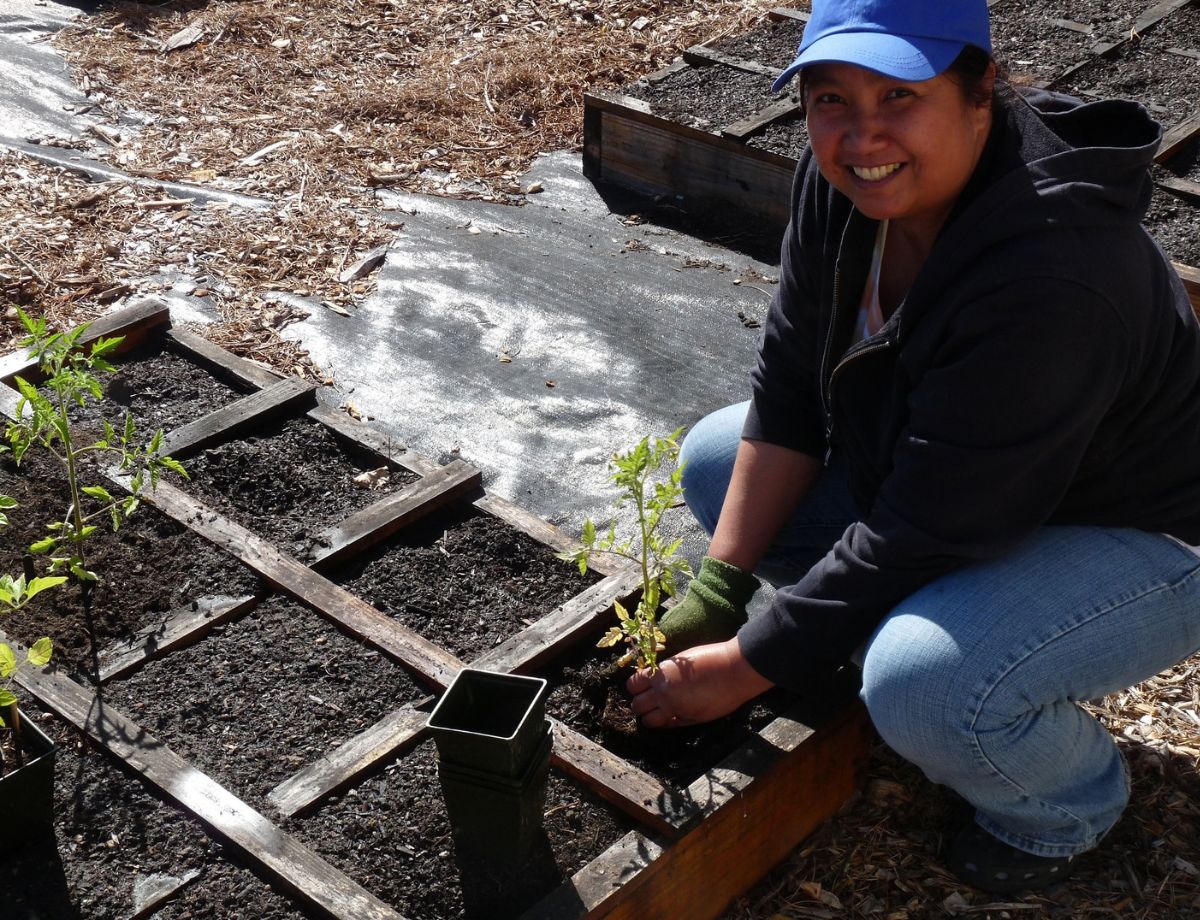
Photo: Pacific Southwest Forest Service, USDA · CC BY 2.0
4. Know Which Crops Take a Long Time
Gardening runs on patience. But a first garden needs a few quick rewards to keep you going.
Here's roughly how long each crop takes from sowing or planting to its first harvest, using the days-to-harvest figures from our plant library.
| Speed | Crops | First harvest |
|---|---|---|
| ⚡ Sprinters | Radish, arugula, basil, spinach, lettuce | 4–7 weeks |
| 🏃 Middle distance | Cucumber, zucchini, bush beans, beets, okra | 7–9 weeks |
| 🚶 Steady | Tomato, pepper, carrot, kale, broccoli, onion | 10–12 weeks |
| 🐢 Marathon | Brussels sprouts, potatoes, melons, pumpkins, sweet potatoes | 14–17 weeks |
| 🦕 Ultra-marathon | Garlic (about 8 months), artichoke, asparagus | Up to 2–3 years for asparagus |
The tomato and pepper times start from transplanting young plants, which is how most beginners grow them. Starting from seed adds another 6–8 weeks indoors.
Slow crops aren't bad. Garlic is one of the easiest things you'll ever grow. But it ties up its space from fall to the following summer.
The trick is balance. Give every first garden a few sprinters. Radishes you pull in week four will carry your motivation all the way to the first ripe tomato.
Want exact dates for your area? The free Crop Timeline Calculator works out sowing and harvest dates for each crop.
5. Favor Crops That Keep Giving
Some vegetables are a one-night stand. You pull a carrot, you eat a carrot, and that space is empty.
Others are a long relationship. Pick a few beans today, and the plant makes more for next week. For a small first garden, these "keep-giving" crops are gold.
| Keep picking for weeks | Pick once, then it's done |
|---|---|
| 🍅 Tomatoes (6–8 weeks) | 🥕 Carrots |
| 🫑 Peppers (6–8 weeks) | 🔴 Radishes & beets |
| 🥒 Cucumbers & zucchini | 🥬 Head lettuce & cabbage |
| 🫘 Beans & peas | 🥦 Cauliflower |
| 🥬 Kale, chard & loose-leaf lettuce | 🧅 Onions & garlic |
| 🌿 Basil, parsley & chives (until frost) | 🌽 Corn & 🥔 potatoes |
| 🌱 Okra (until frost) | 🍉 Melons & pumpkins |
Pick-once crops still belong in your garden. You just grow them differently: a few at a time, every two or three weeks. That's called succession sowing, and it turns "forty lettuces in one week" into "a salad every week."
The keep-giving crops have one rule: keep picking. A bean or cucumber left on the plant to grow huge tells the plant its job is done. Pick every other day, and it keeps producing.
6. Grow What's Expensive to Buy
Here's a question that changes a lot of shopping lists: what would this space be worth at the grocery store?
We combined two numbers from our plant library: how much each plant typically yields, and what that harvest costs at US retail prices. Then we worked out the value of one square foot of bed.
| Crop | Store price | Rough value per sq ft, per planting |
|---|---|---|
| 🌿 Basil | ~$11 per lb | ~$29 |
| 🌿 Chives | ~$11 per lb | ~$33 |
| 🥗 Arugula | ~$5.50 per lb | ~$16 |
| 🌱 Swiss chard | ~$2.70 per lb | ~$16 |
| 🥒 Cucumber (trellised) | ~$1.40 per lb | ~$15 |
| 🌿 Spinach | ~$4 per lb | ~$12 |
| 🥬 Lettuce | ~$2.70 per lb | ~$8 |
| 🍅 Tomato | ~$2 per lb | ~$5 |
| 🌽 Corn | ~$1.10 per lb | ~$3 |
| 🧅 Onion | ~$1.10 per lb | ~$2.40 |
| 🥬 Cabbage | ~$0.90 per lb | ~$2.30 |
| 🥔 Potato | ~$0.90 per lb | ~$2 |
These are rough figures, not a promise. Your harvest depends on your weather, your soil and how often you pick. But the pattern is very clear.
Herbs and salad greens win by a mile. A clamshell of basil or a bag of arugula costs a small fortune at the store, and both grow like weeds. Potatoes, onions and cabbage are cheap to buy, so the space pays you back far less.
Tomatoes look modest here because they take 4 square feet each. But a homegrown tomato tastes nothing like a supermarket one. Some crops earn their space in flavor, not dollars.
Want to try the maths for your own plan? Our free Garden Profit Calculator and Garden Yield Estimator do it for you.
7. Check What Your Climate Can Actually Do
A crop can pass every test above and still fail in your yard. Not because you did anything wrong, but because your summer is the wrong shape for it.
Two climate numbers matter most: how long your frost-free season lasts, and how hot your summer gets.
If your summers are short (roughly zones 3–5)
Long-season heat lovers struggle here. Melons, sweet potatoes and okra need about four months of warmth. Peppers and eggplant ripen slowly, so buy plants instead of starting from seed.
Look for varieties labeled "short season" or "early." A 60-day tomato beats a 90-day one when fall frost comes early.
If your summers are hot (roughly zones 8–10)
Here the problem flips. Cool-weather crops bolt when the heat arrives. Our library flags lettuce from about 79°F, spinach from about 75°F and peas from about 81°F.
The fix is timing, not giving up. Grow them in fall, winter and early spring. Save summer for tomatoes, peppers, okra, beans and basil.
If your summers are mild and cloudy
Lucky you, for salads. Lettuce, peas, kale and chard thrive for months. Tomatoes and peppers need your sunniest spot, and cherry tomatoes ripen far more reliably than big beefsteaks.
Find your first and last frost dates with the free Frost Date Lookup. If you're planning a cool-season garden, our zone 8, zone 7 and zone 9 fall layouts show what to plant and when.
Put It All Together: Score Your Shortlist
Now run your shortlist through all seven tests at once. Here's how some common crops score for a typical small first garden.
| Crop | Easy | Compact | Quick | Keeps giving | Pricey to buy | Verdict |
|---|---|---|---|---|---|---|
| 🌿 Basil | ✅ | ✅ | ✅ | ✅ | ✅ | Must grow |
| 🥒 Cucumber | ✅ | ✅ on a trellis | ✅ | ✅ | ✅ | Must grow |
| 🫘 Bush beans | ✅ | ✅ | ✅ | ✅ | ✅ | Must grow |
| 🥬 Lettuce | ✅ | ✅ | ✅ | ➖ loose-leaf only | ✅ | Must grow |
| 🍅 Tomato | ✅ from plants | ➖ | ➖ | ✅ | ➖ but the flavor! | Grow 2–3 |
| 🥕 Carrot | ➖ | ✅ | ➖ | ❌ | ❌ | A square or two, for fun |
| 🥦 Broccoli | ➖ | ➖ | ➖ | ➖ side shoots | ➖ | Fall or spring only |
| 🌽 Corn | ✅ | ❌ | ❌ | ❌ | ❌ | Year two |
| 🥦 Cauliflower | ❌ | ➖ | ➖ | ❌ | ➖ | Year two |
We left out the first and last tests on purpose: whether you eat it, and whether your climate suits it. Only you can tick those boxes. A crop that scores five ticks but nobody eats is still a "no."
4 First-Garden Plans That Pass the Tests
Here's what a good shortlist looks like once it's in the ground. These four plans come from our layout guides, and each one is built from crops that pass most of the seven tests.
They run from smallest to largest. Pick the one that matches your space, then copy it into your own account and swap in the crops your household actually eats.
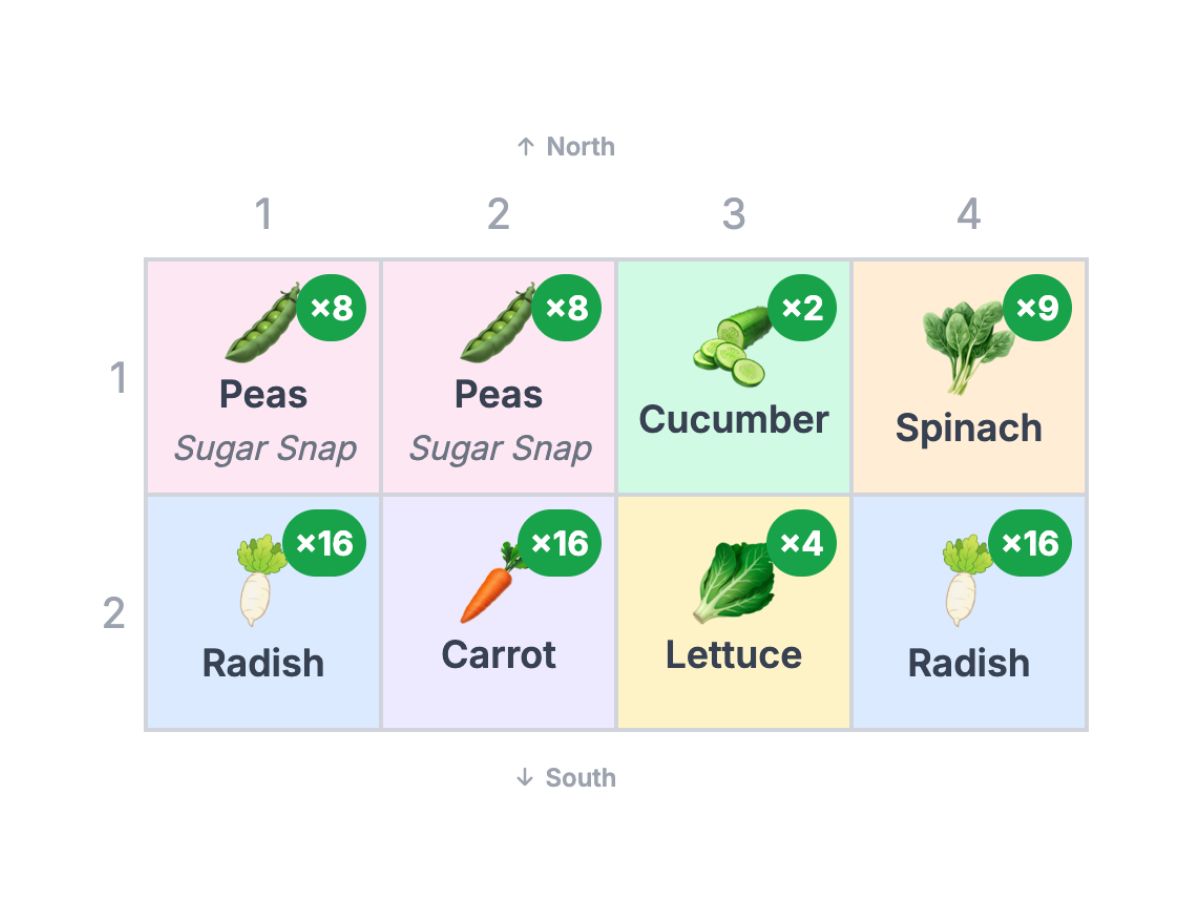
Plan 1 — Kid-Friendly Vegetable Bed (2×4)
The smallest bed here, and the best proof that a first garden doesn't need to be big. Every crop in it is easy, quick, and fun to pick.
Radishes come up in under a month. Sugar snap peas and cucumbers climb a small trellis at one end, so they take almost no floor space.
Spinach, lettuce and carrots fill the rest with a steady, low-drama harvest. Nothing here sulks if you miss a watering now and then.
It passes the "quick" and "beginner-friendly" tests better than anything else on this page. That's why it works just as well for a nervous adult as for a child.
What's in it: Peas (Sugar Snap), Cucumber, Spinach, Radish, Carrot, Lettuce
Best for: Gardening with children, first-time growers | Season: Spring into early summer
View the full grid layout, see companion pairings, and copy this plan to your account.
View & Copy This Plan → Free account required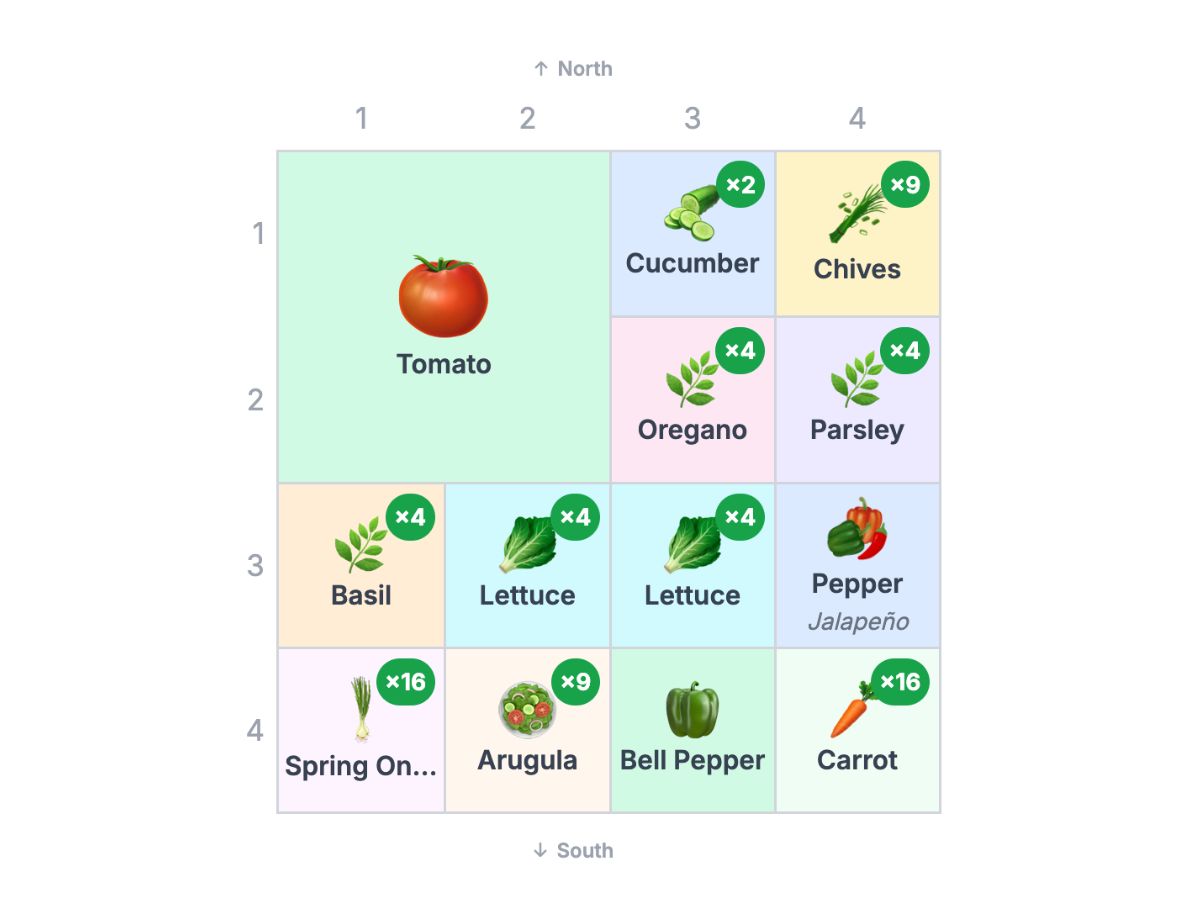
Plan 2 — Fresh Herb & Salad Bed (4×4)
If test 6 caught your eye, this is your bed. It's packed with the crops that cost the most at the store: fresh herbs and salad greens.
Basil, oregano, parsley and chives sit within arm's reach. Pick them often, and they keep coming back all summer.
Lettuce and arugula tuck into the shadier corners, beside the taller tomato and cucumber. Peppers, a jalapeño, carrots and spring onions fill the gaps.
Almost everything in it is a "keep-giving" crop. That's how sixteen square feet can feed a kitchen for months.
What's in it: Tomato, Cucumber, Lettuce, Carrot, Bell Pepper, Jalapeño, Basil, Oregano, Parsley, Chives, Arugula, Spring Onion
Best for: Cooks who want fresh herbs and daily salad greens | Season: Late spring through summer
View the full grid layout, see companion pairings, and copy this plan to your account.
View & Copy This Plan → Free account required
Plan 3 — The Beginner Bed, Feeds 2 People All Summer (4×8)
This is the bed for a couple who wants fresh food from early summer to fall, without a steep learning curve.
Strawberries open the season, fruiting from late spring before the summer crops get going. Basil sits right below them and gives you something to pick almost every day.
Cucumbers and peppers take the middle rows. Both keep producing as long as you keep picking, and both reward a beginner fast.
Radishes sprint through their squares in under a month, then free them for a second sowing. Spinach fills the bottom rows for months of cut-and-come-again leaves.
Look at the crop list, and nothing in it is a space hog, a slow crop or a hard crop. It's a textbook first garden.
What's in it: Strawberry, Basil, Cucumber, Pepper, Radish, Spinach
Best for: First-time gardeners and couples | Season: Late spring through summer
View the full grid layout, see companion pairings, and copy this plan to your account.
View & Copy This Plan → Free account required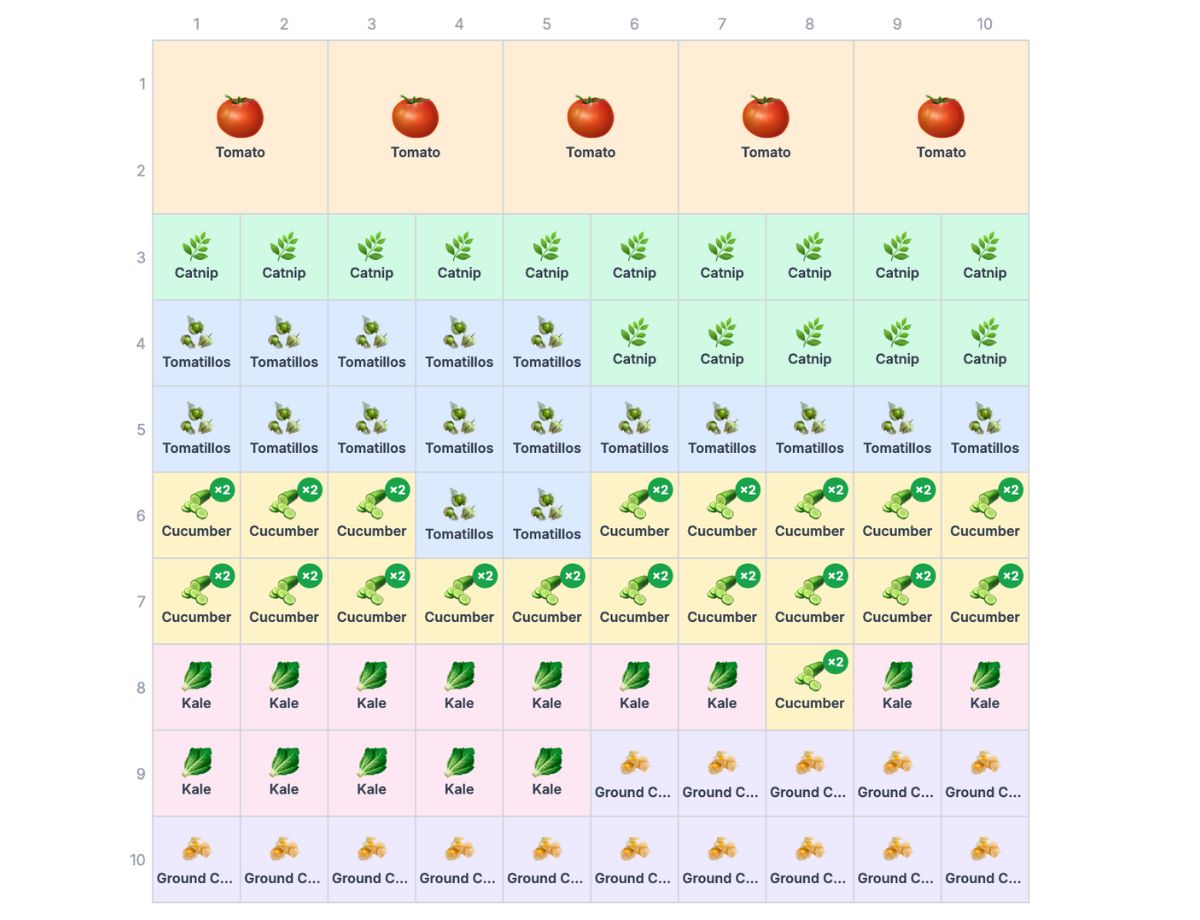
Plan 4 — Beginner's Confidence Bed (10×10)
Have more room? This 10×10 is built entirely around forgiving, high-reward crops, so a bigger first garden doesn't mean bigger risks.
Tomatoes and cucumbers give you the classic summer harvest. Kale keeps producing leaves for months, well into the cool weather.
Tomatillos and ground cherries are the surprises. Both are almost impossible to kill and produce heavily with little care. Catnip pulls in pollinators and helps keep aphids away.
Only make the jump to a plot this size if you can give it a few hours a week. If you're not sure, start with Plan 3 and add a second bed next year.
What's in it: Tomato, Cucumber, Kale, Tomatillos, Catnip, Ground Cherries
Best for: First-time gardeners, anyone who wants reliable results | Season: Summer
View the full grid layout, see companion pairings, and copy this plan to your account.
View & Copy This Plan → Free account required🌱 Want more plans? Browse our 2×4, 4×4, 4×8 and 10×10 layout guides. Have a big plot? See the beginner 20×20 layouts. To check which crops grow well together, use the companion planting chart.
Five Choosing Mistakes to Avoid
- Shopping hungry. Never buy seeds or plants in a garden centre without a list. The impulse kohlrabi is always waiting.
- Growing one of everything. Ten different crops, one plant each, means ten small experiments and no real harvest. Grow more of fewer things.
- Forgetting the sprinters. A garden with nothing ready before August is a garden you'll stop visiting in June. Add radishes and lettuce.
- Ignoring your summer. Spinach in a Texas July, or melons in a Maine summer, will fail no matter how well you grow them.
- Choosing by the photo. Seed packet photos are taken on the plant's best day, in perfect light. Choose by the seven tests instead.
Frequently Asked Questions
What is the easiest vegetable to grow for beginners?
Radishes are the easiest, ready in about four weeks from seed. Lettuce, bush beans, zucchini, Swiss chard and basil are close behind. For tomatoes, buy young plants rather than starting from seed.
How many different vegetables should I grow in my first garden?
Five to eight crops is plenty for a first garden. It's better to grow enough of a few things you love than one plant each of fifteen different crops.
What vegetables should beginners avoid?
Cauliflower, celery, artichokes and asparagus are rated hard in our plant library. Corn, pumpkins and melons are easy enough, but they take far too much space for a small first bed.
Which vegetables save the most money to grow?
Fresh herbs and salad greens save the most per square foot. Basil, chives, arugula, Swiss chard and spinach are expensive to buy but grow fast. Potatoes, onions and cabbage are cheap to buy, so they save the least.
Which vegetables produce all season long?
Tomatoes, peppers, cucumbers, zucchini, pole beans, kale, Swiss chard, okra and most herbs keep producing for weeks if you pick them often. Loose-leaf lettuce also regrows after picking.
What should I grow if I only have a small space?
Grow compact, fast or climbing crops: lettuce, spinach, radishes, bush beans, herbs, and cucumbers or pole beans on a trellis. A 2×4 or 4×4 bed is enough for a first season, like the first two plans above.
From a Shortlist to a Planted Bed
Once you have your shortlist, the next questions come quickly. How many of each? Where does each one go? When do you sow the next round of lettuce?
That's the part EdenVatika was built for:
- 📚 Every test from this guide, in one library. Each of 170+ plants shows its difficulty, days to harvest, spacing and companions. You can check a crop before you buy it.
- 📐 See it fit before you plant. Draw your bed and drop in plants square by square. It's the same designer every plan above was built in, so you'll see exactly how many plants fit and when a bed is full.
- 📅 Dates for your garden. Sowing and harvest dates come from your own frost dates, with succession-sowing tips and task reminders as each job comes due.
Just want a quick answer first? The free Plant Spacing Calculator and Frost Date Lookup need no account.
🌱 Turn your shortlist into a real plan
Pick your crops, drop them into a bed, and get sowing dates for where you live.
Try a Free Demo Garden →No signup, no card. Ready to keep it? Create a free account.