Garden Harvest Tracker: What to Record, How to Track It, and What Your Garden Is Worth
Every gardener remembers the zucchini glut, but few know what their garden really produced. What to record each time you pick, a simple log to copy, and what the numbers tell you.
Every gardener has a zucchini story.
It starts in July. One plant, then a second one "just in case." By August you're leaving zucchini on the neighbor's porch and grating it into everything, including brownies.
Ask that gardener in January how much zucchini they grew, and you get a shrug. "A lot. Way too much." Ask how the tomatoes did, and it's "pretty good, I think?"
That's the problem. Memory keeps the drama: the glut, the hornworm, the one perfect melon. The numbers fade, and so does the answer to next year's big question: what should I plant more of, and what should I drop?
We see it in our own numbers. This season, 57 gardeners planned their beds in EdenVatika. Only 4 of them ever logged a single harvest. Spring planning is fun. By August, nobody's weighing tomatoes, and honestly, our own logging fell off within a month too.
When we asked tomato growers on Reddit about it, the same story kept coming up. "I keep careful track for the first few weeks," one wrote, "then when it reaches its peak, I get overwhelmed." After that, it's estimates only.
A garden harvest tracker fixes that, as long as it's one you can keep up with in August. It doesn't have to be fancy. A notebook by the back door counts. So does a spreadsheet, or an app on your phone.
What matters is what you write down and what you do with it in January. Here's how to do both.
⚡ The short answer
Each time you pick, record the date, the crop and variety, and how much (a weight, a count, or even "one bowl"). Add a quick note on quality if you have time.
Use a notebook, spreadsheet or app, whichever you'll actually keep up with. At season's end, the log shows which varieties earned their space, what your harvest was worth at the store, and how many plants to grow next year.
Why Track Your Garden Harvest at All?
Logging every bean sounds like homework. But a season of records answers three questions that guessing never will.
1. Which varieties are worth growing? Two tomato varieties can look the same in June and end the season pounds apart. Without a log, you'll pick next year's seeds by memory, or by the packet photo.
2. What is your garden worth? A pound of fresh basil costs about $11 at the store. A pound of potatoes costs under $1. Once you know weights, you can see which crops actually save you money.
Some homesteaders turn the yearly total into a game. They weigh everything for one season, then set a goal to beat it the next. A running total is surprisingly good motivation in July.
3. How many plants do you really need? If four zucchini plants gave you 40 pounds and you used 15, two plants will do. If six lettuce plants ran out in a week, double them.
Here's what that looks like in real life. One gardener has logged tomatoes in Google Sheets for four years: 30 plants, 10 varieties, tracked plant by plant. Rolling that up by variety showed them they can grow 5 fewer plants next year and still get about 20% more tomatoes.
Another grew 356 pounds from 18 tomato plants this year, and has per-plant numbers going back a decade. Back in 2020, on a conventional routine with lots of synthetic feed, the same bed gave 125 pounds. Without the log, that change would just be a feeling.
It works in the other direction too. A home canner logged 450 pounds one year, far more than they could put up. They cut their plants by a quarter the next season. Without a record, you can't right-size the garden.
There's a fourth, quieter benefit: timing. Your log shows when each crop really started producing, which is often a week or two off from the seed packet.
What to Record Every Time You Harvest
Keep it short enough that you'll do it with muddy hands. These six fields cover everything, and only the first three are must-haves.
| Field | Example | Why it matters |
|---|---|---|
| 📅 Date (must-have) | July 18 | Shows when each crop starts, peaks and stops |
| 🍅 Crop & variety (must-have) | Tomato, Sungold | Lets you compare varieties, not just crops |
| ⚖️ Amount (must-have) | 1.2 lb, or 14 fruit, or "one bowl" | Totals, value and next year's plant count |
| ⭐ Quality | Good / some split | A big harvest of poor fruit isn't a win |
| 🍽️ Where it went | Ate, canned, gave away | Shows gluts: lots given away means too many plants |
| 📝 Note | Hornworms on 2 plants | Explains a bad week later on |
Write it down right after picking, before washing or cooking. Once the beans are in the pot, the number is gone.
If a note is all you have time for, that's fine. "Beans, big bowl, July 18" is still useful data in January. A perfect log you give up on in July isn't.
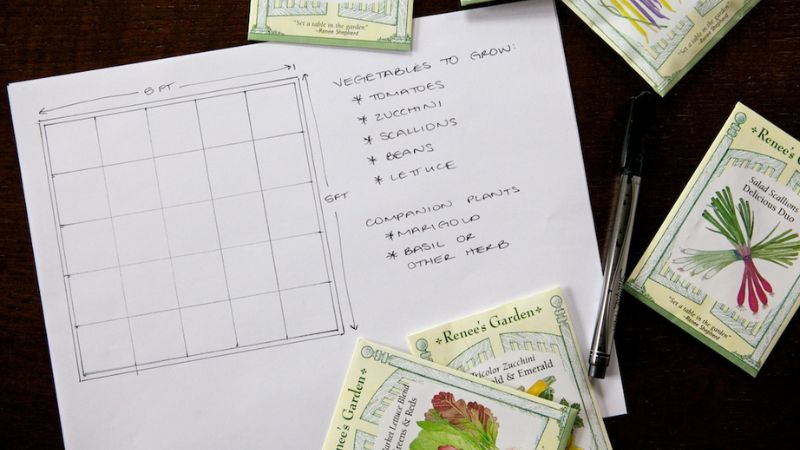
Don't lose the variety name. The most common regret we heard wasn't skipped weights. It was forgetting which variety was which. Keep the seed packets, label every plant with something weatherproof, and sketch a rough map of where each one grows.
One gardener labels with strips cut from old window blinds, written on with UV-resistant ink. Even so, one "imposter" plant still slipped through. The map is what caught it.
Why Most Harvest Logs Die in August (and How to Keep Yours Going)
If your log goes quiet by late summer, you're in good company. One gardener told us their paper calendar journal is blank for all of August, and September never even gets printed.
The reasons are always the same. The harvest peaks just as watering, preserving and fall sowing pile up. Weighing becomes one more chore, and the first one to go.
Some gardeners found it takes the joy out, too. One weighed every harvest for a year and gave it up. They couldn't eat a few strawberries or cherry tomatoes straight off the plant, because everything had to reach the scale first.
The gardeners who stick with it don't try harder. They track less. Here's what works:
- Pick your "serious" crops. Many keep careful records only for tomatoes, or for the five or six crops they care about, and don't bother tracking herbs or radishes.
- Let the snacks go. Estimate the berries and cherry tomatoes you eat in the garden. A rough guess is better than a lost habit.
- One line per variety. Three Cherokee Purple plants can share a single row in your log. You'll still know which variety won.
- Switch, don't stop. When the peak hits, drop from weights to counts or "a basket." The season total stays intact.
- Take photos. A quick photo of the day's picking takes two seconds. Several growers rely on photos and short calendar notes once things get busy.
- Skip a year if you must. Life happens. One gardener tracked every tomato one season, then skipped the next to plan a wedding. Next year's log is still worth starting.
Weigh, Count or Guess? How to Measure Your Harvest
You have three options, and all of them work. Pick by crop, not by rule.
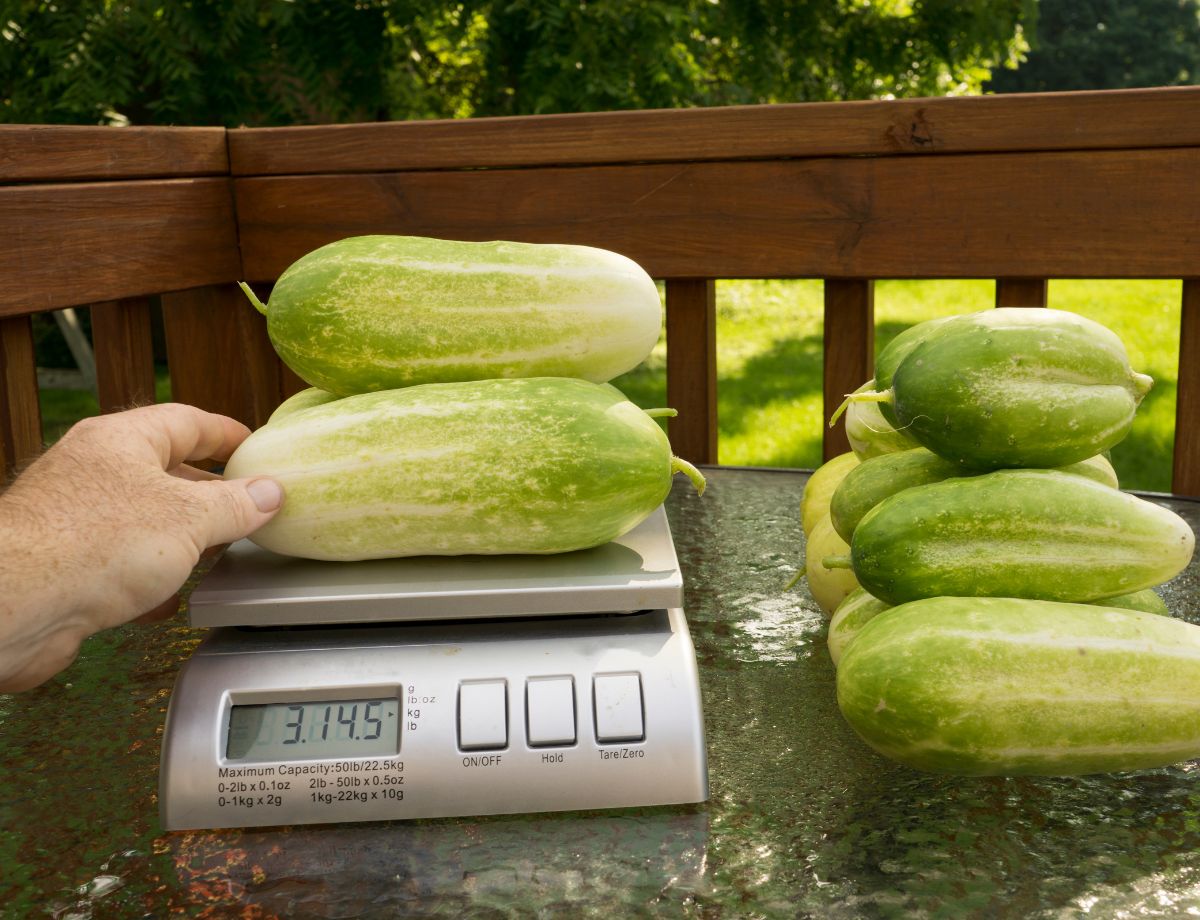
Weigh when the harvest is loose or uneven: beans, peas, greens, herbs, cherry tomatoes. A cheap digital kitchen scale is the single best tool a harvest tracker can own.
Count when the harvest comes in clear units: zucchini, cucumbers, peppers, heads of lettuce, big tomatoes. Counting is faster, and a count can be turned into a weight later.
Guess when you don't have a scale nearby. "A handful" or "a basket" sounds vague, but a consistent guess still adds up to a useful season total.
You're in good company there. One grower who sold at farmers' markets for years said they never weighed anything. Everything went out by the basket, bundle, bushel or piece. Another gardener with no scale logs tomatoes by the piece and adds up totals after the final harvest.
Here are rough sizes to turn guesses and counts into pounds. These are the same figures the EdenVatika app uses.
| If you picked… | It weighs about |
|---|---|
| 🤏 A handful | 5 oz (⅓ lb) |
| 🥣 A bowl | 1.1 lb |
| 🧺 A basket | 4.4 lb |
| 🪣 A bucket | 11 lb |
| 🍅 1 tomato (slicer) | 5 oz |
| 🫑 1 pepper | 6 oz |
| 🥒 1 cucumber | 9 oz |
| 🥒 1 zucchini | 11 oz |
| 🍆 1 eggplant | 12 oz |
| 🥬 1 head of lettuce | 11 oz |
| 🥔 1 potato | 6 oz |
| 🥕 1 carrot | 2½ oz |
| 🧄 1 head of garlic | 2 oz |
| 🍓 1 strawberry | ½ oz |
Your own sizes will vary. A heirloom slicer can top a pound on its own. If a crop matters to you, weigh a few once and use your own average from then on.
A Simple Harvest Log You Can Copy
You don't need a printable to start. Draw these columns in any notebook, or type them as the header row of a spreadsheet.
| Date | Crop | Variety | Amount | Quality | Used for | Note |
|---|---|---|---|---|---|---|
| Jul 14 | Bush beans | Provider | 0.8 lb | Excellent | Cooked | First picking |
| Jul 16 | Zucchini | Black Beauty | 3 fruit | Good | Shared | One too big |
| Jul 18 | Tomato | Sungold | 1 bowl | Fair | Ate fresh | Split after rain |
Keep the log where the harvest lands, not where you plan. A clipboard by the kitchen door gets filled in. A binder on the office shelf doesn't.
Using a spreadsheet? Add a second tab with crops down the left and weeks across the top. Sum each week into it, and you'll see every crop's peak at a glance.
Notebook, Spreadsheet or App: Which Tracker Fits You?
The best garden harvest tracker is the one you'll still be using in September. Here's how the three options compare.
| 📓 Notebook | 📊 Spreadsheet | 📱 App | |
|---|---|---|---|
| Cost | Free | Free | Free to paid |
| Logging in the garden | Easy if it's nearby | Fiddly on a phone | A few taps |
| Season totals | Add up by hand | Formulas you build | Automatic |
| Grocery value | Look up prices yourself | Add a price column | Depends on the app |
| Comparing years | Flip between notebooks | Possible, with effort | Usually built in |
| Best for | Small gardens, paper lovers | Number fans who like to tinker | Busy gardeners, bigger plots |
A notebook is the fastest way to start. It never needs charging, and it's fine in a small garden. The catch comes in January, when you're adding up 80 lines by hand.
A spreadsheet does the math once you set it up. It's great at a desk, but awkward to update with dirty hands. Many gardeners scribble outside and type it in on Sunday.
An app saves the step in between. You log on your phone at the bed, and the totals build themselves. Choose one that ties harvests to the plants and beds you grew, so the numbers mean something.
What Your Harvest Numbers Tell You
The log is only half the job. The other half is reading it once the season winds down. Look for these four things.
1. Which varieties earned their space
Divide each crop's total by the space it used. A 4×4 bed of bush beans and a 4×4 bed of pole beans can end the season very differently.
Compare varieties of the same crop side by side. If one tomato gave twice the pounds and better quality, that's next year's seed order sorted.
2. What your harvest was worth
Multiply each crop's weight by what it costs at the store. Here are typical US grocery prices, from the price list behind EdenVatika's harvest value.
| Crop | Store price per lb |
|---|---|
| 🌿 Basil | ~$11.00 |
| 🧄 Garlic | ~$4.50 |
| 🍃 Spinach | ~$4.00 |
| 🍓 Strawberries | ~$3.20 |
| 🫑 Peppers, lettuce, kale, chard | ~$2.70 |
| 🍅 Tomatoes | ~$2.00 |
| 🍆 Eggplant | ~$1.80 |
| 🥒 Cucumber, zucchini, squash | ~$1.40 |
| 🥕 Carrots, onions | ~$1.10 |
| 🥔 Potatoes | ~$0.90 |
So a 1.1 lb bowl of tomatoes is worth about $2.20. A small handful of basil, about $3.60. Prices vary by region and season, so treat these as a fair middle, not a receipt.
That number is your grocery value, not your profit. To see true return, subtract what you spent on seeds, soil and supplies. The free Garden Profit Calculator does that math for you.
3. How many plants to grow next year
Look at the "used for" column. Lots of "shared" or "composted" means you grew more than you could eat. Weeks with nothing to pick mean you ran short.
Then divide each crop's total by the number of plants. That's your real yield per plant. It beats any chart, because it comes from your soil and your summer.
Our guide to how many vegetable plants per person gives you a starting point. Your own log will tune it.
4. When your crops really produce
Compare your first-harvest date with the "days to harvest" on the seed packet. If your peppers are always two weeks late, start them earlier or choose a faster variety.
The last-harvest date matters too. It shows when a crop gave up, so you can plan a fall crop for that space.
Some gardeners care more about dates than pounds. As one put it, they don't really care about radish yield. They just need to know the radishes will be done in time to plant zucchini in the same spot.
"But the weather is different every year"
This is the most common argument against tracking, and it's a fair one. One skeptic said logging felt pointless, since next year will be completely different anyway. Their only metric: which winter month the frozen tomatoes run out.
Honestly, that freezer test is a pretty good harvest tracker. But weather is also the reason to keep notes, not a reason to skip them. Write down the heat waves, the wet spells and the late frost next to your harvests.
One gardener noted that a rainy year brought rust to their garlic. With a similar season forecast, they'll space the plants wider and spray preventively. Another saw how rising summer heat hurt flowering and ripening, and is planning shade cloth.
One year of numbers can mislead you. Two or three show you what's normal for your garden, and which bad results were the weather's fault rather than the variety's.
How EdenVatika Tracks Your Garden Harvest
We built the harvest log in EdenVatika around everything above, so the tracking takes seconds and the math happens on its own.
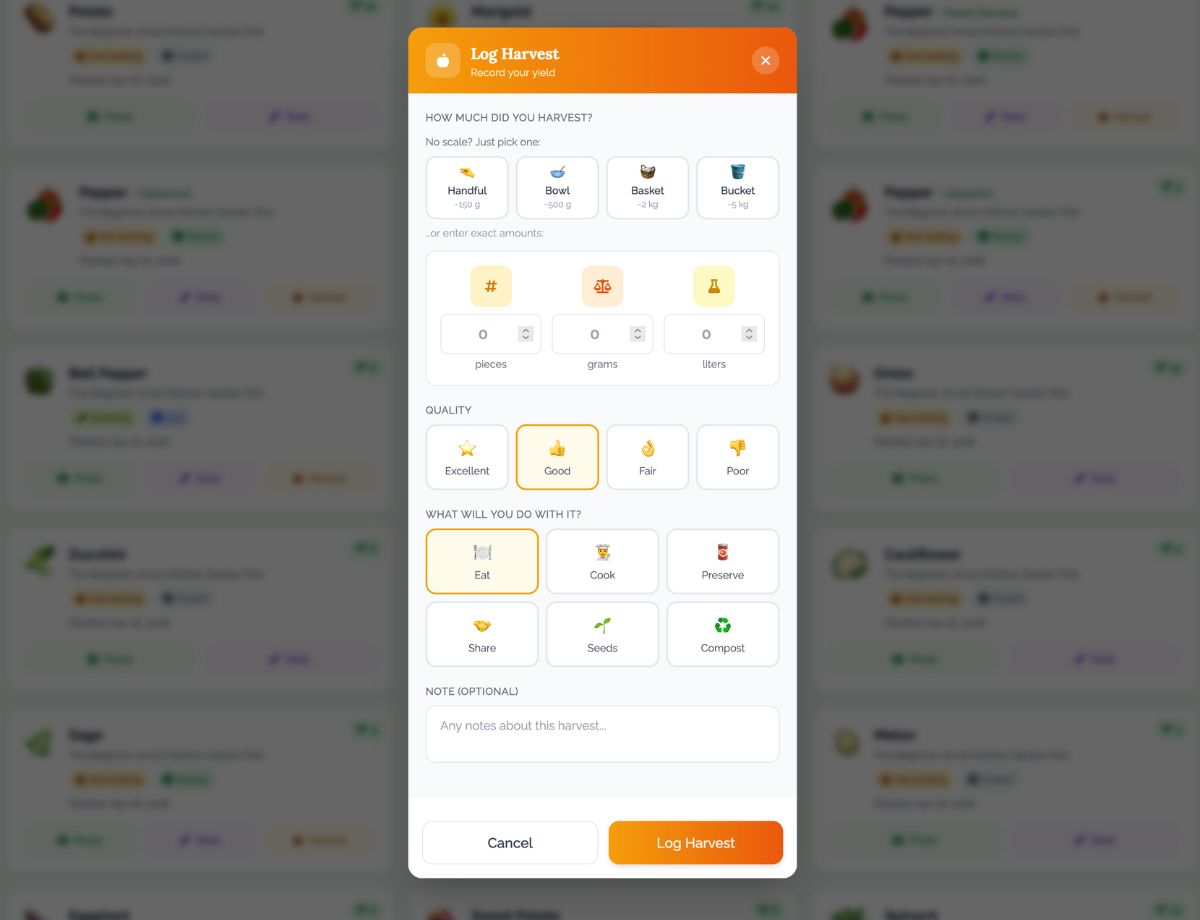
Logging a harvest. Open My Plants, tap the plant, then tap Log Harvest. The crop, bed and date are already filled in, because the app knows what you planted and where.
No scale needed. Tap Handful, Bowl, Basket or Bucket for a rough weight. Or type an exact count, weight (lb, oz, g or kg) or volume. Counts are turned into weight from the crop's average size.
Quality and use. Rate it Excellent, Good, Fair or Poor. Then pick what you'll do with it: Eat, Cook, Preserve, Share, Seeds or Compost. For cut flowers it asks for stems, with Bouquet and Dry options.
Value every time. Each log shows its grocery value right away, with your running total for the year. For example: "Harvest logged — $2.21 of groceries."
Prices show in your own currency. If food costs more or less where you live, set Grocery Prices Near You to Lower or Higher in Settings.
Timing, tracked for you. On a planting's first harvest, the app tells you if it came early or late compared with the expected date. When a planting finishes, it asks one quick question: grow it again?
Seeds, too. Choose Seeds as the use, and the app offers to save them as a seed packet in My Seeds. Your bought packets live there as well, so the variety names don't get lost.
Photos for the busy weeks. When August gets hectic, tap Photo on any plant instead of writing notes. Each planting keeps its own photo gallery, and you can play it back as a timelapse.
A season review without a scale. For the crops you never logged, Season Review asks three quick questions per crop: how much it produced (Lots, Some, A little or None), would you grow it again, and did you enjoy eating it?
The review also sums up your season's weather: hot days, rain, dry spells and frost, compared with the same weeks over the past five years. That helps you tell whether a crop let you down, or the weather did.
All of this is free, with no limit on how many harvests you log. Every log also lands in your Garden Journal, where you can filter to just harvests.
Garden Analytics on Pro turns the log into the season review from the last section:
- Harvest by crop and a monthly harvest trend
- Harvest value: groceries grown this year and all time, crop by crop
- Yield per square foot for your beds
- Variety performance: yield by variety, quality breakdown, and days to harvest, estimated vs actual
- Season and year-over-year comparisons
- Harvest usage: how much you ate, preserved, shared or composted
Free accounts can export the last 15 days of the journal. Pro exports your full history.
5 Harvest Tracking Mistakes to Avoid
1. Waiting until evening to log. By dinner, "about a pound" has become "some." Log at the bed or the kitchen counter, right after picking.
2. Recording the crop but not the variety. "Tomato, 2 lb" tells you nothing about which seed to buy again. The variety is the most useful word in the log.
3. Making it all-or-nothing. Weighing every berry burns you out by midsummer. Estimate the small pickings instead of skipping them. A handful of herbs logged as "a handful" still adds up to pounds, and often dollars, over a season.
4. Only tracking the good crops. A failed crop is data too. Write down "lettuce bolted, nothing picked," so you don't repeat it next spring.
5. Never looking back at the log. A tracker only pays off when you read it. Block an hour in late fall or winter to total things up before you order seeds.
Frequently Asked Questions
What is a garden harvest tracker?
A garden harvest tracker is any record of what you pick from your garden: a notebook, spreadsheet, printable sheet or app. It logs the date, crop, variety and amount of each harvest, so you can see totals, value and which crops did best.
What should I record when I harvest vegetables?
At minimum, record the date, the crop and variety, and the amount (weight, count or a rough measure like "one bowl"). If you have time, add quality, what you used it for, and a short note about pests or weather.
Do I need to weigh my harvest?
No. Counting works well for crops like zucchini, peppers and cucumbers. For loose crops, a consistent guess like "a handful" or "a bowl" still gives a useful total. A kitchen scale just makes the numbers more exact.
Is there a free garden harvest tracker?
Yes. A notebook or a free spreadsheet works fine. EdenVatika's harvest log is also free, with unlimited harvests and a grocery value for each one. Charts and season comparisons are part of Pro.
How do I calculate how much money my garden saves?
Multiply each crop's harvest weight by its store price per pound, then add the crops together. That's your grocery value. Subtract what you spent on seeds, soil and supplies to see your real savings.
Why do most gardeners stop tracking their harvest?
Usually because the harvest peaks just as watering, preserving and fall planting pile up. Weighing everything feels like a chore. Tracking only the crops you care about, estimating the rest, and switching to counts or photos at the peak keeps the log going.
Is harvest tracking worth it if the weather changes every year?
Yes, as long as you note the weather alongside your harvests. One season can mislead, but a few seasons of numbers and weather notes show which varieties hold up in good years and bad.
How long should I keep harvest records?
Keep them for as many years as you can. One season tells you what happened. Two or three seasons show what's normal for your garden, so one bad summer doesn't fool you.
Start Your Garden Harvest Tracker This Season
You don't need the perfect system. You need the first entry. A date, a crop and an amount, written down today, is already more than most gardeners will know next January.
If you'd like the totals, the grocery value and next year's answers to build themselves, EdenVatika does that for you:
- 🧺 Log a harvest in seconds. Tap Handful, Bowl, Basket or Bucket, or enter an exact count or weight.
- 💰 See what it's worth. Every log shows its grocery value, with a running total for the year.
- 📈 Plan smarter next year. Your harvests sit next to the plants and beds that grew them, so the best performers are easy to spot.
🧺 Track every harvest, see what it's worth
Log your first pick, and watch your garden's grocery total grow all season.
Start Tracking for Free →Free plan, unlimited harvest logs. Just looking? Try a demo garden first.