How to Choose the Best Location for a Vegetable Garden
Most first gardens go in the available spot, not the best one. Here's how to pick the right place in your yard — sun, drainage, water, wind, trees, frost pockets, slope and soil — in one weekend.

Most first vegetable gardens don't go in the best spot. They go in the available spot.
That's the patch where the old swing set stood. Or the corner nobody uses. Or the bit of lawn the mower always skips.
Then July arrives. The tomatoes are leggy, the zucchini sulks, and it turns out the "sunny corner" is in the maple's shade by 2 p.m.
Here's the good news: picking a good site takes one weekend and costs nothing. Here's the bad news: it's the one decision you can't fix with fertilizer later.
So before you buy a single seed, walk the yard with this guide.
⚡ The short answer
Put your vegetable garden in the spot that gets 6–8+ hours of direct sun, drains within a day after rain, sits within reach of a hose, and is close enough to the house that you'll walk past it daily. Keep it away from tree roots and low, cold hollows. Everything else — poor soil, lawn, a gentle slope — can be fixed.
The 10-Point Garden Site Checklist
Here's every factor at a glance. The rest of the article explains each one.
| Factor | Ideal | Red flag | Fixable? |
|---|---|---|---|
| Sunlight | 6–8+ hours direct sun | Under 4 hours | Hardly — choose shade crops |
| Morning vs afternoon sun | Sun from early morning | Only late-afternoon sun | Partly — pick crops to match |
| Drainage | No puddles a day after rain | Standing water for days | Yes — raised beds |
| Water access | Hose reaches easily | Carrying cans across the yard | Yes — but costs money |
| Wind | Sheltered, still airy | Exposed hilltop or wind tunnel | Yes — windbreaks |
| Distance from house | Visible from a window | "Out back past the shed" | No — choose well |
| Trees & roots | Well clear of the drip line | Under a canopy; near black walnut | Barely — move away |
| Frost pockets | Mid-slope or level ground | Bottom of a dip | Partly — frost cloth |
| Slope | Flat or gentle sun-facing slope | Steep, shade-facing slope | Yes — terraces |
| Lawn & soil | Healthy grass = decent soil | Compacted fill, contamination | Yes — amend or build up |
Notice the pattern? Sun, closeness to the house and distance from trees are almost impossible to fix later. Everything else has a workaround.
So rank your candidate spots on those three first.
1. How Many Hours of Sunlight Does a Vegetable Garden Need?
Most vegetables need at least 6 hours of direct sun a day. Fruiting crops do best with 8 or more.
"Direct" matters. Bright shade and dappled light through leaves don't count.
We checked the growing data for every edible in the EdenVatika plant library. Here's how the common crops sort out:
| Direct sun per day | Crops that fit |
|---|---|
| 8+ hours (sun hogs) | Corn, bell peppers, peanuts, citrus, peaches, big-fruited tomatoes |
| 6–8 hours (full sun) | Tomatoes, cucumbers, zucchini, squash, beans, peas, eggplant, melons, potatoes, onions, garlic, carrots, broccoli, cabbage, basil |
| 4–6 hours (partial sun) | Lettuce, spinach, kale, Swiss chard, arugula, bok choy, collards, spring onions, coriander, parsley |
| 2–4 hours (partial shade) | Mint, chives, chervil, lemon balm, sorrel — plus salad greens as a slower, smaller crop |
| Under 2 hours | Not a vegetable spot. Use it for compost, a shed or shade flowers. |
If you only have 4–6 hours, don't give up — just grow leaves instead of fruit. Our shade garden layouts are built for exactly that.
How to measure your sun hours
Pick a clear day. Check your spot every hour from sunrise to sunset, and note whether it's in direct sun or shade.
Snap a photo from the same place each time if you like. By evening you'll have your number.
Then plug it into our free Sunlight Exposure Calculator to see exactly which crops suit that spot.
⚠️ Seasons move the shadows. The sun sits lower in spring and fall, so shadows from trees, fences and houses stretch much further. A spot with 8 hours in June may get 4 in April. If you'll grow spring or fall crops, check the site in those seasons too — or at least imagine every shadow twice as long.
2. Morning Sun vs Afternoon Sun
Not all sun hours are equal. If you must choose, morning sun wins for most gardens.
Here's why:
- It dries the dew fast. Wet leaves overnight invite blight and mildew. Early sun cuts that window short.
- It warms the soil early. Plants start growing sooner in the day.
- It's gentler. Afternoon sun is the hottest of the day and can scorch leaves and wilt plants in summer.
That said, heat-lovers like tomatoes, peppers, melons and okra happily soak up afternoon sun. In cooler climates they need it.
Leafy greens are the opposite. Lettuce, spinach and coriander bolt fast in afternoon heat. A spot with morning sun and afternoon shade can actually be ideal for them — and for ginger, which our plant data lists as preferring exactly that.
Rule of thumb: In hot climates, morning sun plus afternoon shade is a gift. In cool, short-season climates, grab every hour of sun you can get.
Which way should your garden face?
In the Northern Hemisphere, the most sun comes from the south. So the south side of your house, fence or trees is the sunny side.
If you're in Australia, New Zealand or elsewhere south of the equator, flip it: the north side is your sunny side.
Run beds north–south where you can, so both sides get sun during the day. And put tall crops like corn, pole beans and trellised tomatoes on the shady end so they don't shade the short ones.

3. Drainage: Where Does the Water Go?
Roots need air as much as water. In waterlogged soil, they suffocate and rot.
Almost every vegetable in our database asks for "well-drained" soil. Good drainage isn't optional.
The easiest test is to watch your yard after a heavy rain. Where do puddles sit? Where does the water run?
Avoid any spot where water stands for more than a day.
The 5-minute drainage test
- Dig a hole about 12 inches (30 cm) deep and wide.
- Fill it with water and let it drain completely. This soaks the surrounding soil.
- Fill it again and time how fast the level drops.
- About 1–3 inches per hour: Ideal. Plant here.
- Less than 1 inch per hour: Poor drainage, usually heavy clay. Build raised beds or work in lots of compost.
- Drains almost instantly: Very sandy soil. It'll need compost and mulch to hold moisture.
Soggy spot but perfect sun? A raised bed solves it. Even 8–12 inches of height lifts roots above wet ground. Our Raised Bed Soil Calculator tells you how much soil you'll need to fill it.
4. Water Access: The Hose Test
This one sounds boring. It's the one that quietly kills the most gardens.
Most vegetables need about 1 inch of water per week, and fruiting crops like tomatoes and melons often want 1–2 inches in summer heat.
Let's do the math. One inch of water over one square foot is about 0.6 gallons. So:
- A 4×8 raised bed (32 sq ft) needs roughly 20 gallons a week.
- A 10×10 garden (100 sq ft) needs roughly 62 gallons a week.
That's about 30 trips with a 2-gallon watering can, every week, all summer. Nobody keeps that up in August.
So stand at your chosen spot and ask: does the hose reach without a fight? If not, pick a closer spot, or budget for a longer hose, a second spigot or drip irrigation.
Bonus points if you can place a rain barrel off a nearby downspout. Want exact numbers for your crops and climate? Try the free Watering Calculator.
5. Wind: A Little Breeze, Not a Wind Tunnel
Some airflow is good. It dries leaves after rain and keeps fungal disease down.
Strong, constant wind is another story. It dries soil fast, snaps tall plants, knocks off flowers, and keeps pollinators away.
Watch out for:
- Open hilltops and exposed corners
- Gaps between houses, which funnel wind like a wind tunnel
- Coastal or prairie gardens with a steady prevailing wind
A windbreak — a hedge, a slatted fence, or a row of sunflowers or corn — protects an area several times its own height downwind.
Choose something that filters the wind, like a hedge or slatted fence, rather than a solid wall. Solid walls make the wind swirl and tumble over the top.
Just keep the windbreak on the side the wind comes from, not the side the sun comes from.
6. Distance From the House: Closer Than You Think
This is the most underrated factor on the list.
A garden you see every day gets weeded, watered and picked. A garden you have to "go out to" gets forgotten — usually right around when the zucchini turns into a baseball bat.
The best spot is often one you can see from the kitchen window or pass on your way to the car.
Being close also helps you:
- Spot pests and wilting before they get out of hand
- Grab a handful of herbs while dinner is cooking
- Reach the hose and the compost bin
One caution: house walls cast shade and reflect heat. A south-facing wall (north-facing south of the equator) can make a lovely warm spot for tomatoes and peppers. A wall on the shady side will steal hours of sun.
And if your house is older, test the soil right beside the walls before planting there — old paint can leave lead in the soil.
7. Trees and Root Competition
Trees are double trouble. They steal sun from above and water and nutrients from below.
Tree roots spread well past the drip line — the outer edge of the canopy — and often two to three times wider. Those fine feeder roots will happily move into your nice, loose, well-watered garden soil.
Where possible, keep your garden:
- Outside the drip line of any large tree, and ideally well beyond it
- On the sunny side of trees, not the shady side
- Clear of black walnut. Its roots release juglone, which is toxic to tomatoes, peppers, potatoes and eggplant. Aim for at least 50 feet from the trunk.
Stuck near a tree? A raised bed with a root barrier or a thick layer of cardboard at the bottom buys you a few seasons. But the roots usually find their way in eventually.
Also remember: that small tree will grow. Picture it 10 years from now before you build under it.
8. Frost Pockets: Where the Cold Air Settles
Cold air is heavier than warm air. On a still, clear night it flows downhill like water and pools in low spots.
Those low spots are called frost pockets. They can be several degrees colder than the rest of your yard.
That means later spring frosts, earlier fall frosts, and a shorter growing season — sometimes by a week or more at each end.
Frost pockets form in:
- The bottom of slopes and dips
- Hollows where the land is lower than its surroundings
- Spots uphill of a solid fence or hedge, which dams the cold air like a wall
How to spot one: on a frosty morning, see where the frost lingers longest. That's your pocket.
Grow on level ground or partway up a slope instead. Tender crops like tomatoes, peppers, basil, beans and squash will thank you.
Not sure when frost usually hits in your area? Look up your average first and last frost dates with our free Frost Date Lookup — then add a little safety margin if your garden sits in a low spot.
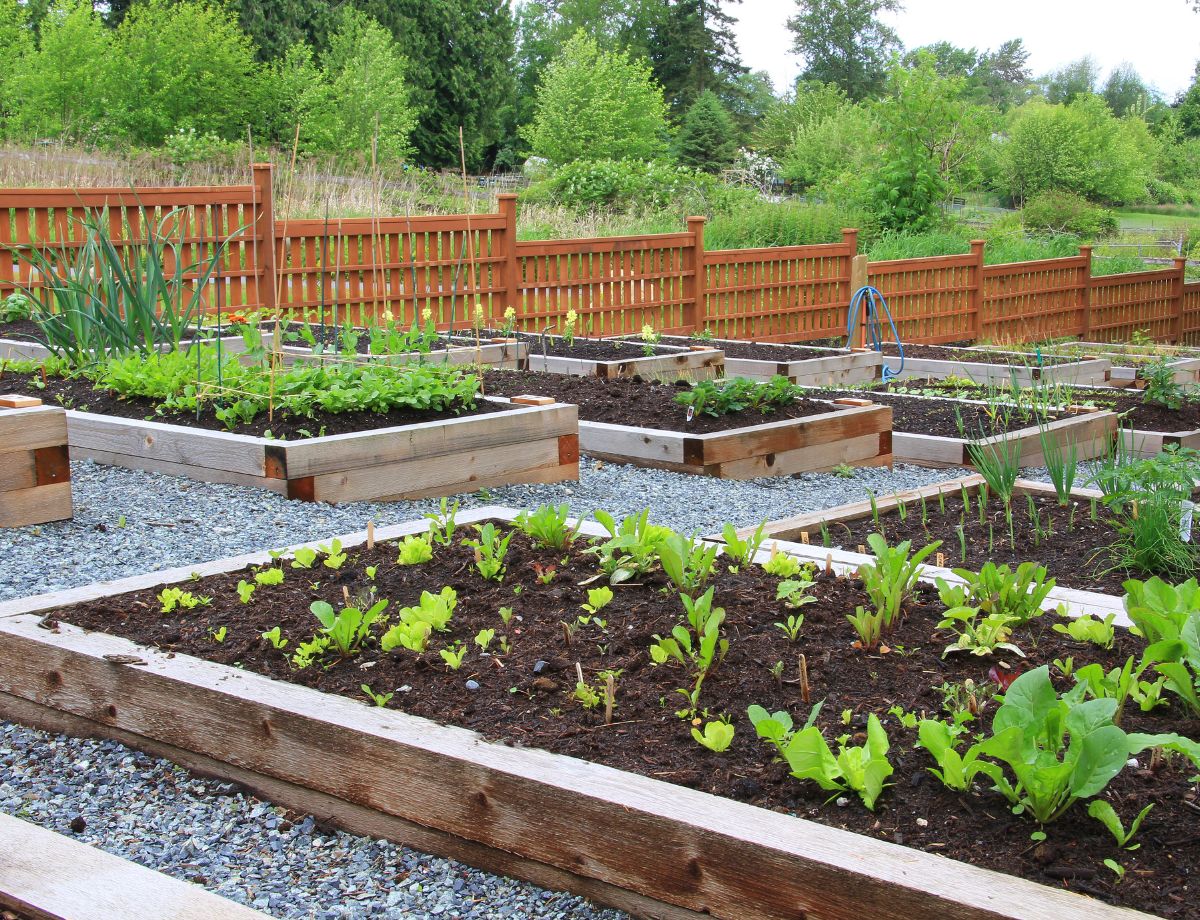
9. Slope: Friend or Foe?
A gentle slope isn't a problem. It can even be an advantage.
A slope that faces the sun (south in the Northern Hemisphere) catches light at a more direct angle. It warms up earlier in spring and drains well. A gentle 5–10° sun-facing slope can act like an extra hour or two of sun.
A slope facing away from the sun does the opposite: colder soil, later springs, fewer effective sun hours.
If you plant on a slope:
- Run rows and beds across the slope, not up and down it. This slows water and stops your soil washing away.
- Use terraces or stepped raised beds on steep ground.
- Mulch well so heavy rain doesn't carry off your topsoil.
- Plant partway up, not at the very bottom, to avoid frost pockets and soggy ground.
10. Existing Lawn and Soil
Here's the encouraging part: if grass grows well somewhere, vegetables usually can too. Healthy lawn is a sign of reasonable soil, sun and drainage.
Patchy, moss-covered or bare ground is a warning. It often means shade, compaction or poor drainage.
Most vegetables prefer loose, rich soil with a pH around 6.0 to 7.0. A cheap soil test tells you your pH and nutrients before you plant, so you're not guessing.
Getting rid of the lawn
You have three easy options:
- Sheet mulching (no-dig): Mow short, cover with overlapping cardboard, wet it, and pile 4–6 inches of compost on top. The grass dies and feeds the soil. Best done a few months before planting — fall for a spring garden is perfect.
- Solarizing: Cover the area with clear plastic for 4–8 weeks in the hottest part of summer to cook the grass and weed seeds.
- Removing the sod: Slice it off with a flat spade or sod cutter. Fastest, but hard work, and you lose some topsoil with it.
Rocky, compacted or builder's-fill soil? Skip the fight and build raised beds on top. Sun is worth more than soil — you can bring in soil, but you can't bring in sun.
Before you dig: a quick safety check
- Buried utilities: In the US, call 811 before digging. Other countries have similar services.
- Septic fields: Don't grow food over a septic drain field.
- Old building sites and painted walls: Test for lead if you're unsure.
- Treated lawns: If the grass was sprayed with weed killers, give it a season or check the product label before growing food there.
No Perfect Spot? Here's How to Decide
Almost no yard has a spot that ticks all 10 boxes. That's normal.
When you have to compromise, rank the factors like this:
- Sun — the one thing you can't add later
- Water access — the thing you'll feel every week
- Closeness to the house — the thing that decides whether you keep it up
- Drainage and trees — fixable with raised beds, but only so far
- Wind, slope, frost and soil — all manageable with the right tricks
If your sunniest spot is far away, try splitting the garden. Put sun-hungry tomatoes and squash in the sunny spot, and grow herbs and salad greens in a small bed or containers right by the back door.
And start small. A single 4×8 bed in the right spot beats a 20×20 plot in the wrong one. Our 4×8 raised bed layouts are a great first step.
Your Weekend Site-Scouting Plan
Here's how to put it all together in two days:
- Saturday morning: Walk the yard and shortlist 2–3 candidate spots. Note which are close to the house and the hose.
- All day Saturday: Check each spot every hour for sun and shade. Count the hours.
- Saturday afternoon: Dig a drainage test hole in each spot.
- Sunday: Look for trees, low spots, windy gaps and utility lines. Stretch the hose out to each spot.
- Sunday evening: Score each spot against the checklist above. The winner is usually obvious.
Frequently Asked Questions
Can I grow vegetables with only 4 hours of sun?
Yes, but stick to leafy crops. Lettuce, spinach, kale, chard, arugula and herbs like parsley and chives cope well with 4–6 hours. Fruiting crops like tomatoes and peppers will give very small harvests.
Should my vegetable garden face north or south?
In the Northern Hemisphere, a spot on the south side of buildings and trees gets the most sun. In the Southern Hemisphere, choose the north side.
How far should a vegetable garden be from a tree?
At least outside the drip line, and ideally farther, since roots often spread two to three times the canopy width. Keep at least 50 feet from black walnut trees.
Is it OK to put a garden right against the house?
Often, yes. A sunny wall gives extra warmth that heat-lovers enjoy. Just check it gets enough direct sun, keep an eye on roof drip lines and dryer vents, and test for lead near older painted walls.
Can I put a vegetable garden on top of grass?
Yes. Sheet mulch with cardboard and compost, or build a raised bed on top with cardboard underneath. The grass will break down and feed your soil.
Found Your Spot? Now Plan What Goes In It
Choosing the location is step one. Step two is making the most of it — putting the right plants in the right places, at the right time.
That's what EdenVatika is built for:
- 🌞 Know what fits your sun. Every one of the 175+ plants in our library carries its sunlight, water, soil and frost-tolerance needs — so you'll know at a glance whether it suits your spot.
- 🧭 Plan with the compass. Lay out your beds with compass orientation, so tall crops go on the shady side and never block the short ones.
- ❄️ Plant on time. Your local frost dates and hardiness zone drive the planting calendar, so you sow when your garden is actually ready.
- 🌬️ Stay ahead of the weather. Pro members get daily tasks from their local forecast — "stake tall plants" when winds top 25 km/h, "cover sensitive plants tonight" when lows dip under 8°C, "skip watering" when rain is on the way.
- 📐 Get the spacing right. Square-foot spacing and companion-planting checks are built in, so nothing crowds out its neighbour.
Want a head start? Browse our vegetable garden layout plans, pick one that fits your space, and copy it straight into your account.
🌱 You've found the spot. Let's fill it.
Map your beds, set your compass orientation, and let EdenVatika match plants to your sun, your frost dates and your space. Your plans are always saved.
Create a Free Account →Free account. No credit card. Plans stay yours forever.