How to Grow an Apple Tree From Seed That Actually Fruits
You can absolutely grow an apple tree from a supermarket core — it just won't be the apple you ate. Here's the full seed-to-fruit method: 70–90 days of cold stratification, sowing and seedling care, the five conditions that decide whether a tree ever fruits, and the grafting shortcut that cuts a decade of waiting down to two or three years.
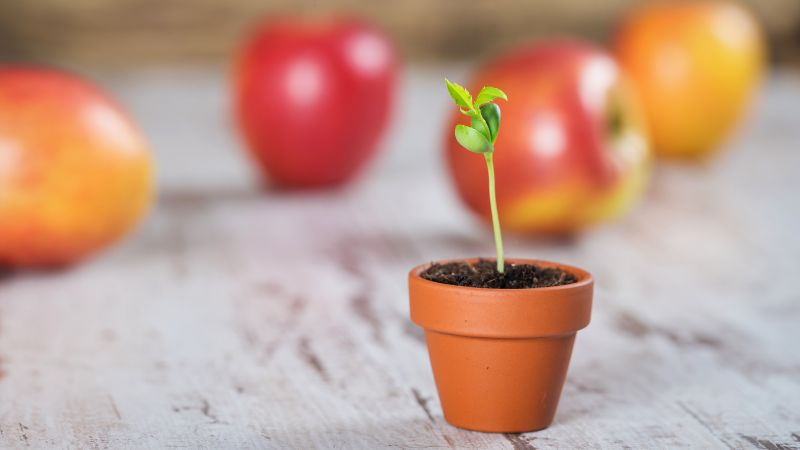
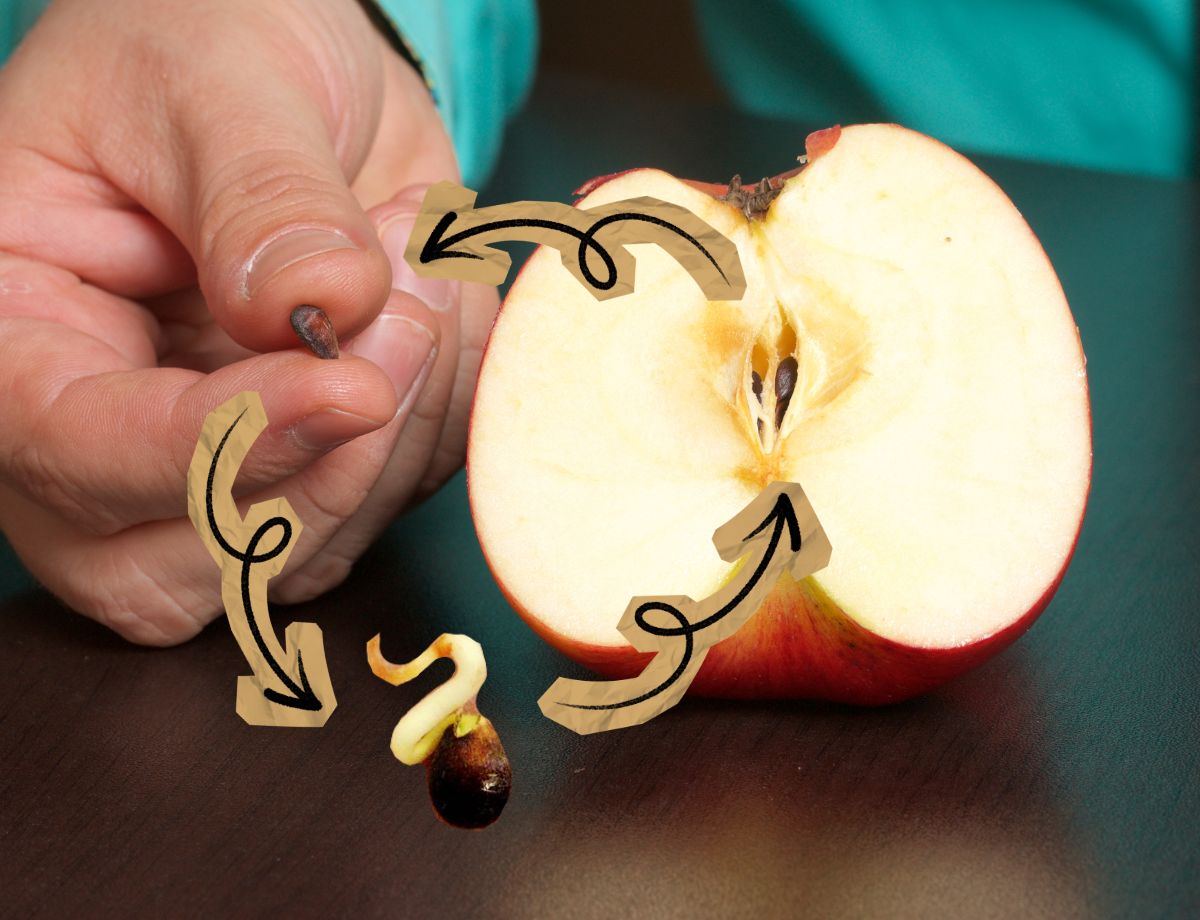
There is a specific moment, usually around 9pm, usually over the kitchen sink, when a person finishes an apple, looks at the core in their hand, and thinks: what if I just… planted this?
It is one of gardening's great gateway impulses. Free seeds. A tree. Possibly a lifetime of apples, all from something you were about to throw away.
And here's the thing — you absolutely can. Apple seeds germinate readily, seedlings are tough, and the tree that comes out the other end can live longer than you will.
There is just one catch, and nobody mentions it until you've already got six seedlings on a windowsill and a name picked out for the orchard.
So let's get it out of the way early, because it changes how you plant.
The Honest Bit: Your Seed Will Not Grow the Apple You Ate
Apple trees are heterozygous — a fancy way of saying their genetics don't stay put. Every seed inside a single apple carries a different shuffle of two parents, and none of them are a copy of the fruit they came out of.
Plant a Honeycrisp seed and you will not get a Honeycrisp. You'll get a brand-new apple variety that has never existed before, with no way to know what it will be until it fruits — which is roughly a decade away.
It might be small. It might be sour enough to make your ears ring. The tree might set 200 apples one year and 20 the next, in sizes that never match.
Seedling apples vary in absolutely everything: size, sweetness, texture, ripening date, disease resistance, even how big the tree gets.
This is why every Honeycrisp on Earth is a clone.
One seedling in Minnesota turned out spectacular, and every Honeycrisp since has been a cutting of that original tree, grafted onto rootstock. Same for Granny Smith, McIntosh, Fuji — all of them descendants-by-cutting of one lucky tree.
The old orchardist's rule of thumb is that it takes several thousand seedlings to find one apple worth naming. Johnny Appleseed knew this perfectly well, incidentally — he planted seed orchards on purpose, and most of that fruit went into cider, not lunchboxes.
So why does anyone grow apples from seed?
Three good reasons. You want rootstock — a seedling trunk to graft a known variety onto, which is what most seed-growers are really doing. You want a tree adapted to your exact yard, because seedlings raised in place are famously tough. Or you want the lottery ticket, and you're the kind of person who plants a tree for someone else to eat from. All three are legitimate. Only one of them ends with a predictable apple.
Good news: everything below gets you to fruit either way. Grow the seedling well, and you can let it ride or graft it — that decision waits until year two.
Apple From Seed: The Spec Sheet
| Basics | |
| Botanical name | Malus domestica |
| Plant family | Rosaceae — the rose family, alongside pear, plum, cherry and strawberry |
| Ease of growing | Seedling: easy. Getting fruit: patient. |
| Hardiness zones | 3–8 for most apples; low-chill types stretch to zone 9–10 |
| Chill requirement | 500–1,000 hours below 45°F (7°C) each winter; low-chill varieties need ~300 or fewer |
| Sowing & Timing | |
| Cold stratification | Required — 70–90 days at 33–41°F (0.5–5°C) |
| Sowing depth | ½ inch |
| Germination | 2–4 weeks at 60–70°F, after stratification |
| Best time to start | Seeds into the fridge in December–January; sow in early spring |
| Size, Space & Payoff | |
| Mature size (seedling) | 20–30 ft — seedlings grow full-size trees, not dwarfs |
| Spacing | 25–30 ft between standard trees |
| Sun | Full sun — 8+ hours. Shade is the quiet reason many apple trees never fruit |
| Pollination | Needs a second, different apple variety flowering at the same time, within about 50–100 ft |
| First fruit (seedling) | 6–10 years |
| First fruit (grafted) | 2–5 years |
Step 1: Choosing Seeds Worth Planting
Any ripe apple will do, but a few choices tilt the odds.
- Use a fully ripe apple. Immature seeds are pale and soft. You want plump, dark brown, fully filled-out ones.
- Take more seeds than you need. Germination from seed is genuinely hit-and-miss — plan on planting 10–20 to raise 3–5 seedlings.
- Prefer local apples. A farmers-market apple grown in your climate has parents that already survive your winters. A supermarket apple shipped from 2,000 miles away doesn't.
- Rinse off the flesh and let seeds air-dry for a day. Leftover fruit sugar is an invitation to mold in the fridge.
Step 2: Cold Stratification (The Step Everyone Skips)
This is the whole ballgame — and it's a step that gets skipped mostly because nobody explains what it's for. Apple seeds carry a dormancy lock, and only a winter opens it.
Think about where an apple seed normally ends up. The fruit drops in autumn, rots into the soil, and the seed spends the cold months lying in damp ground under a layer of leaves before anything happens in spring. That wait isn't wasted time; it's a safety catch.
A seed that sprouted the week it landed would meet its first hard frost at a fortnight old, and that would be the end of the family line. So the fridge isn't really a gardening trick — it's an impression of that winter, done indoors.
And the seed doesn't merely happen to sit still through it. It is actively held shut. Inside the embryo and its coat sits a dormancy hormone, abscisic acid — a chemical handbrake that keeps the seed asleep no matter how warm, damp and inviting the soil around it gets.
Warmth on its own can't release it, which is exactly the point: a mild spell in October is the trap the seed evolved to see through.
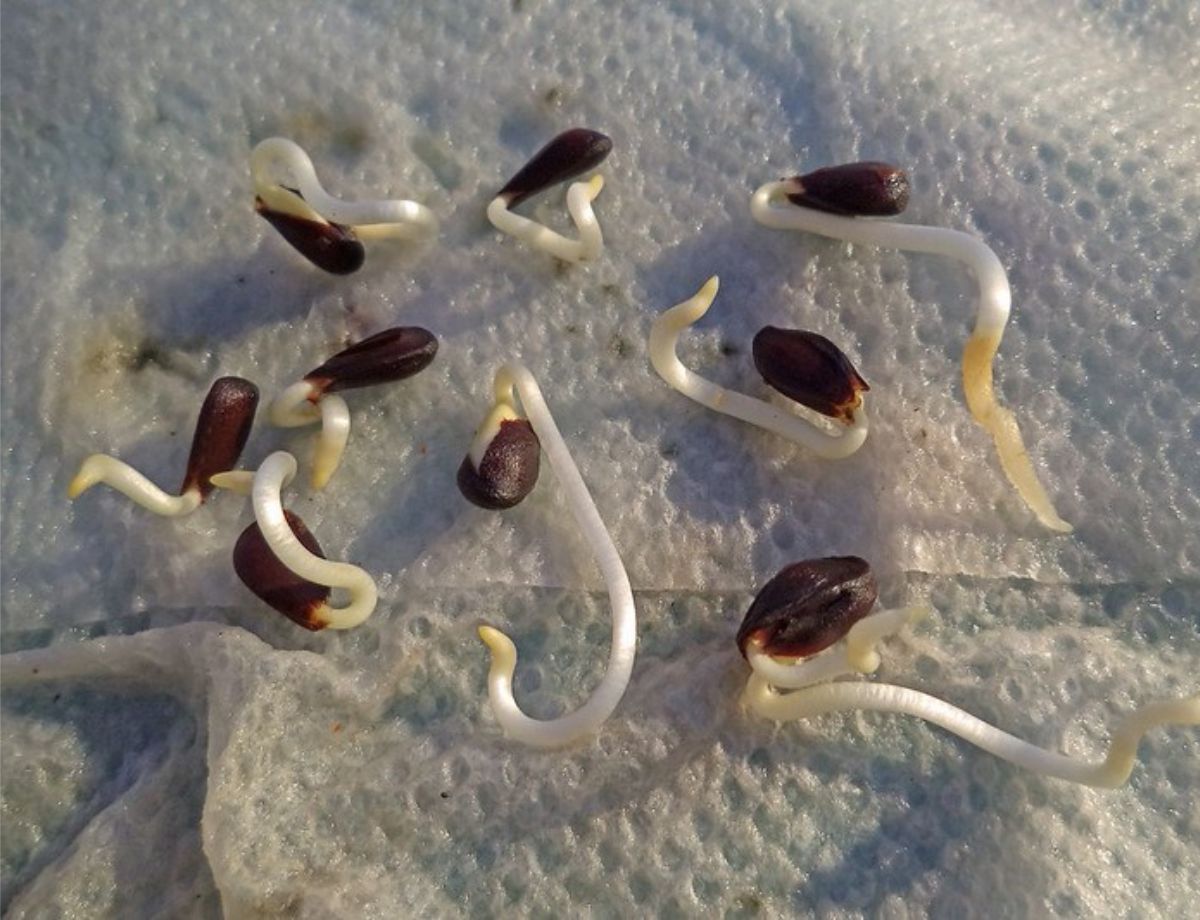
What does release it is a long stretch of cold while the seed is moist. Over those weeks the abscisic acid steadily breaks down and a second hormone, gibberellin, builds up in its place — the go signal: swell, soften the coat, push out a root.
Meanwhile the embryo finishes maturing and the fats packed into the seed convert into sugars it can burn on the way up. None of it shows from the outside. The seed just looks like a seed.
Which means it isn't really waiting in there so much as counting, and cold days are the only thing that moves the count along. Once enough have stacked up, the seed draws the obvious conclusion — winter has been and gone, so whatever comes next must be spring. Then, and only then, does warmth mean germinate.
So seventy to ninety days at 33–41°F is simply a crisper drawer impersonating three months of cold, damp ground: the same winter the seed is already expecting, on your schedule rather than nature's, indoors where you can keep an eye on mould and catch the early sprouters.
It also explains the two things people get wrong. Damp, not dry — the hormone swap is chemistry, and chemistry needs water, so a packet of dry seeds in the fridge just gets cold and comes out as dormant as it went in, the clock never having started.
And cold, not frozen — freezing halts the process rather than hurrying it along, and can damage a hydrated embryo outright. You're copying soil under a winter mulch, not a snowdrift.
Skip the chilling altogether and your seeds sit in the pot doing nothing, which is the number one reason people conclude apple seeds "don't work."
They work fine. They're just still waiting for January.
The routine itself takes about five minutes.
- Dampen a paper towel or a handful of peat, coir or sand — damp, not dripping. Squeeze out every drop you can.
- Fold the seeds inside and seal them in a zip bag or small container. Label it with the date, because you will not remember.
- Refrigerate at 33–41°F (0.5–5°C) for 70–90 days. The crisper drawer is fine. The freezer is not.
- Check every couple of weeks for mould. Wipe any fuzzy seeds, swap the towel, carry on.
- Watch for early sprouters. Some seeds crack open and push a white root out inside the bag — plant those immediately, don't wait for the calendar.
Start seeds in the fridge around December or January and they come out ready to sow in early spring, right on nature's schedule.
Step 3: Sowing
Sow stratified seeds ½ inch deep in moist, well-drained potting mix — one seed per 4-inch pot, or a few spaced out in a tray to prick out later.
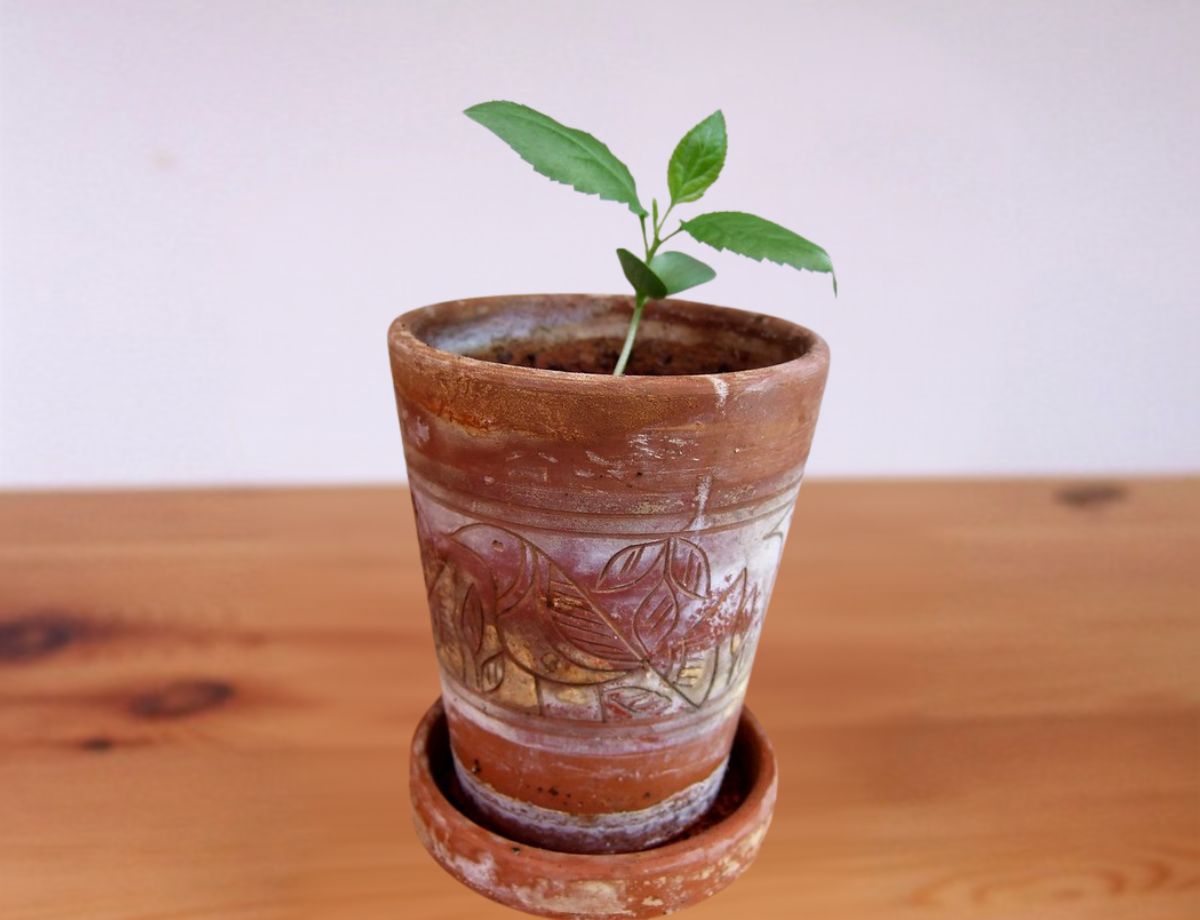
Keep them at 60–70°F in bright light. Seedlings appear in 2–4 weeks, first as a pair of oval seed leaves, then true leaves that look convincingly apple-ish surprisingly fast.
Water when the top inch dries. Apple seedlings hate sitting wet — damping-off takes more of them than drought ever will.
Step 4: The First Two Years
Your seedling now needs to become a small tree before it goes anywhere near open ground.
- Pot up gradually as roots fill each container. Jumping straight into a huge pot leaves cold, soggy soil around a small root ball.
- Harden off before any move outdoors — a week of increasing outdoor time, starting in shade.
- Feed lightly. A balanced fertilizer at half strength through the growing season. Heavy nitrogen makes soft, sappy growth and, later, a tree that grows leaves instead of fruit.
- Protect the stem. Voles, rabbits and string trimmers have ended more young apple trees than any disease. A spiral guard costs almost nothing.
- Let it go dormant. Seedlings need real winter chill. Leave them outside in a sheltered spot rather than babying them indoors.
By the end of year one or two you'll have a whip 2–4 feet tall and roughly pencil-thick. That's your decision point.
Step 5: Planting Out
Plant in early spring or autumn, into full sun and soil that drains. Apples tolerate a lot but not wet feet.
Dig a hole twice the width of the root ball and no deeper than it was in the pot. Keep the graft union — if you grafted — a good 2–4 inches above the soil line, or the scion roots and you lose the point of grafting entirely.
Give a standard seedling 25–30 feet of room. It feels absurd around a 3-foot whip and completely reasonable fifteen years later.
Water deeply once a week through the first two summers, mulch in a ring (never touching the trunk), and otherwise leave it alone.
Not sure when your ground thaws — or how much sun that corner really gets?
Two free tools do the maths for you: the Frost Date Lookup gives your local spring and autumn frost dates, and the Sunlight Calculator tells you whether a spot clears the 8-hour bar an apple tree needs.
Browse the Free Tools →The Part Where It Actually Fruits
A seedling apple will flower when it's good and ready — but plenty of trees reach that age and still produce nothing. Five things separate a fruiting tree from a very large ornamental.
- A pollination partner. This is the big one. Apples are largely self-unfruitful: your tree needs pollen from a different apple variety blooming at the same time, within about 50–100 feet. One lonely apple tree in a big garden is the most common no-fruit story there is. A neighbour's tree counts. So does a flowering crab apple.
- Enough winter. Apples need 500–1,000 chill hours below 45°F to break dormancy properly. Too little chill and you get scattered, weak bloom. If you garden somewhere mild, this is the factor to check before anything else.
- Eight hours of direct sun. Fruit buds are formed the summer before they bloom. A shaded tree quietly decides not to set any.
- Restraint with the nitrogen. A well-fed apple tree grows wood. A slightly hungry one grows fruit. Once the tree is established, ease off.
- Time, and light pruning. Prune in late winter to open the centre to light and air — but keep it modest. Hard pruning resets a young tree into vegetative growth and pushes fruiting further away.
Get those five right and a seedling apple fruits somewhere in years 6–10. That's the honest number.
The Shortcut: Graft It and Skip Five Years
Here's where the seedling earns its keep — and what most experienced growers are doing all along.
Once your seedling is pencil-thick, it makes an excellent rootstock. In late winter, take a dormant cutting from a known apple variety — one you've actually tasted and want — and whip-and-tongue graft it onto your seedling.
The roots stay yours: vigorous, locally raised, deeply established. The top becomes a variety you chose. And because grafted wood is already mature, it skips the juvenile phase entirely.
Fruit in 2–5 years instead of 6–10, and you know exactly what you're getting.
One trade-off worth knowing: seedling rootstock makes a full-size tree, 20–30 feet, because dwarfing rootstocks are themselves clones and can't be grown from seed. If you want a compact tree you can pick from the ground, that's a bought rootstock, not a seed one.
The Apple Timeline
| Stage | When | What you'll see |
|---|---|---|
| Stratification | 70–90 days | Seeds chilling in the fridge; some crack open early |
| Germination | 2–4 weeks after sowing | Seed leaves, then true leaves |
| Seedling | Year 1 | 6–18 in of growth; potting up |
| Whip | Year 2 | 2–4 ft, pencil-thick — graft now or plant out |
| Establishment | Years 3–5 | Framework branches; first blossom on grafted trees |
| First fruit | Year 2–5 grafted / 6–10 seedling | Blossom, then a handful of apples |
| Full bearing | Year 8–15 | Bushels, and a tree that outlives the gardener |
Frequently Asked Questions
Can I plant apple seeds straight from the apple?
You can, but most won't sprout. Without 70–90 days of cold, the seed's dormancy lock stays shut. Sowing outdoors in autumn works too — you're just letting winter do the stratifying.
How long until my seed-grown apple tree fruits?
6–10 years for a seedling on its own roots. Graft a known variety onto that seedling at year two and you're looking at 2–5 years instead.
Do I need two apple trees?
Almost always yes. Apples need cross-pollination from a different variety flowering at the same time. A neighbour's apple or a flowering crab within 50–100 feet will do the job.
Why hasn't my apple tree ever flowered?
Run the list: not enough sun, not enough winter chill, too much nitrogen, too much pruning, or simply not old enough. Those five cover the overwhelming majority of cases.
Aren't apple seeds poisonous?
They contain a trace of amygdalin, which releases tiny amounts of cyanide when chewed. The dose in a few swallowed seeds is nothing to worry about — you'd need to deliberately crush and eat well over a hundred. Planting them is entirely safe.
Can I grow a dwarf apple tree from seed?
No. Dwarfing comes from the rootstock, and dwarfing rootstocks are clones propagated by cuttings. A seed always gives you a full-size tree.
Plant the Seed. Plan the Tree.
An apple from seed is a genuine gamble and a genuinely good time — a free tree from a discarded core, with a small chance of something nobody has ever tasted.
Just plant it knowing what it is: a rootstock, a lottery ticket, or a very long-term gift. And leave room for the second tree, because without a partner nothing ripens no matter how well you grow it.
Give your tree the right spot the first time
A tree you'll live with for thirty years deserves better than a guess. EdenVatika maps your garden to scale so you can place an apple with its full 25–30 ft spread, check the sun it actually gets, park a pollination partner in range, and get frost dates and watering reminders built around where you garden. Free to start.
Plan My Garden Free →