Types of Peas and When to Harvest Peas: 21 Varieties and 3 Picking Rules
Snow, snap or shelling — the type you planted decides the day you pick. All 21 pea varieties from EdenVatika's plant library, sorted by pod type and days to harvest, plus the shape test that tells you when each one is ready (peas never change colour).
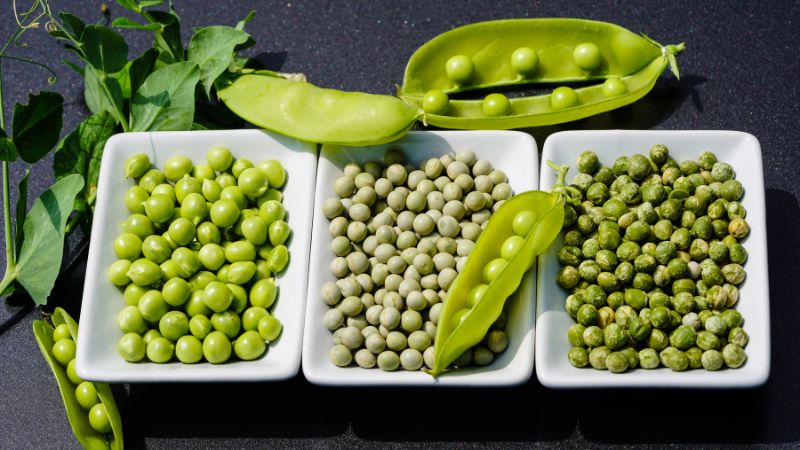
There is a rule about peas that nobody tells beginners, and it explains almost every disappointing pea anyone has ever eaten: the moment a pea is picked, its sugar starts turning into starch. That is the entire reason supermarket peas taste like tiny green potatoes and garden peas taste like candy.
Which puts a lot of weight on one small decision — when you walk out with the colander.
Pick a snow pea three days late and you get a leathery pod full of lumps. Pick a shelling pea three days early and you get sweet nothing, because the peas inside are still the size of a grain of rice. And unlike a tomato, a pea gives you no colour change to work with. Green before, green during, green after.
The good news: peas are one of the easiest crops in our plant library — rated easy, direct-sown, frost-hardy, no transplanting, no pruning — and the picking rules are genuinely simple once you know which of the three types you planted.
That's the whole guide, and all of it comes straight from the plant data that powers the EdenVatika app: 21 varieties, three pod types, and the numbers that tell you when to pick each one.
The Three Types of Peas
Every pea in our library is the same species — Pisum sativum, a member of the Fabaceae (legume) family. What separates them is one question: do you eat the pod, or throw it away? Answer that and the harvest rule falls out of it.
| Type | What you eat | Days in our library | Pick when… |
|---|---|---|---|
| Shelling (English/garden) peas | The seeds only — the pod is compost | 55–75 | The pod is round, firm and bumpy end to end |
| Snow peas | The whole flat pod, seeds barely formed | 58–70 | The pod is full length but still flat |
| Snap peas | The whole pod and the plump peas inside | 52–65 | The pod is fat and glossy but still snaps clean |
Notice the direction of travel. A snow pea is picked before the seeds swell, a snap pea as they swell, and a shelling pea after they've filled out. Same plant, same pod, three different stop signs — which is why "when do I pick peas?" has no single answer until you name the type.
Shelling Peas: 10 Varieties Worth Growing
The traditional garden pea, and still the sweetest thing in the bed. You get maybe a third of the pod weight back as food, which sounds like a bad deal until you eat one raw off the vine. Days below are from sowing to first pick, straight out of our variety library.
| Variety | Days | Why grow it |
|---|---|---|
| Alaska | 55 | Very early smooth-seeded shelling pea; the classic short-season variety |
| Progress No. 9 | 60 | Large-podded early shelling pea; heavy yields on short vines |
| Mr. Big | 60 | Large sweet shelling peas; AAS winner; 9–10 peas per pod |
| Maestro | 61 | High-yield, disease-resistant shelling; sweet, uniform pods |
| Little Marvel | 63 | Compact bush shelling pea; early, sweet, great for small spaces |
| Lincoln | 65 | Shelling pea; large, sweet seeds, heirloom favourite |
| Green Arrow | 68 | Heavy yielding shelling pea; 9–11 peas per pod; disease resistant |
| Wando | 68 | Heat-tolerant shelling pea; extends the season into warmer weather |
| Purple Podded | 70 | Heirloom shelling pea; vivid purple pods, easy to spot when picking |
| Blauwschokkers | 75 | Dutch heirloom soup pea; purple pods, bicolour flowers |
Two of these solve specific problems rather than just tasting good. Wando is the one to sow if your spring turns hot early — it's the only heat-tolerant shelling pea in the library, and it buys you weeks at the back end of the season.
Purple Podded solves a different problem: green pods on a green vine are genuinely hard to see, and a missed pod is a pod that goes starchy. Purple pods on green foliage are impossible to miss, which is a real advantage on a crop you're picking every couple of days.
Snow Peas: 5 Flat-Podded Varieties
Snow peas are the type most likely to be picked wrong, because the pod keeps growing after it's ready. You are harvesting an unfinished pod on purpose.
| Variety | Days | Why grow it |
|---|---|---|
| Snowbird | 58 | Compact snow pea; pods in clusters; no trellis needed |
| Oregon Sugar Pod | 60 | Flat, tender pods; the go-to for stir-fries |
| Dwarf Grey Sugar | 60 | Heirloom snow pea; purple flowers, edible pods, very ornamental |
| Golden Sweet | 65 | Heirloom with bright yellow pods and purple flowers; striking |
| Mammoth Melting Sugar | 70 | Large tender pods; tall vines need support |
Golden Sweet deserves a special mention for the same reason Purple Podded does — yellow pods against green leaves make the "is it ready?" question a two-second glance instead of a hunt. And Dwarf Grey Sugar with its purple flowers is genuinely pretty enough to plant where you'd otherwise put an ornamental.
Snap Peas: 5 Varieties You Eat Whole
The best of both worlds and, for most gardeners, the highest-value pea in the bed: nothing is wasted, no shelling labour, and the yield is the whole pod rather than a third of it. This is also the fastest group in our library — every snap pea here comes in under 65 days.
| Variety | Days | Why grow it |
|---|---|---|
| Sugar Ann | 52 | Earliest snap pea; compact 2 ft vines; AAS winner; ideal for containers |
| Cascadia | 60 | Bush snap pea; thick sweet pods; resists enation and powdery mildew; no trellis needed |
| Sugar Snap | 60 | Edible pod; sweet, crunchy, eat whole — the most popular pea there is |
| Super Sugar Snap | 64 | Improved Sugar Snap; taller, sweeter and more disease resistant |
| Sugar Daddy | 65 | Stringless snap pea; no de-stringing needed; compact bush habit |
If you grow exactly one pea, grow a snap pea. Sugar Ann at 52 days is the fastest thing in the entire pea library and needs no trellis; Sugar Daddy removes the one genuine annoyance of snap peas, which is pulling the string off every pod before it hits the pan.
No Trellis? These Six Still Work
Climbing peas hit 4–6 ft and want netting or a trellis in that range. Bush types top out at 12–24 in and hold themselves up. If you're growing in pots, on a balcony, or in a bed you'd rather not build a frame over, the library has five varieties that are explicitly described as compact, dwarf or trellis-free:
- Tom Thumb (50 days) — dwarf 8-inch plants; ideal for pots and window boxes. The smallest and fastest pea we list.
- Sugar Ann (52) — compact 2 ft snap pea, ideal for containers
- Snowbird (58) — compact snow pea, pods in clusters, no trellis needed
- Cascadia (60) — bush snap pea with disease resistance built in, no trellis needed
- Little Marvel (63) — compact bush shelling pea for small spaces
- Sugar Daddy (65) — compact bush habit, and stringless besides
Even self-supporting bush peas do better leaning on something — a few twiggy sticks pushed in at sowing time keeps the pods off the soil, which is also the cheapest slug defence available.
When to Harvest Peas: The Timeline
Here's the part everyone actually searches for. Our plant data gives peas three checkpoints, and the gap between the second and third is the number to memorise:
| Stage | Days from sowing | What you'll see |
|---|---|---|
| Germination | 7–14 | Seedlings push through; no thinning drama, peas come up evenly |
| Vegetative growth | 30–45 | Leaf and tendril growth; vines find the trellis |
| First flowers | 40–60 | White (or purple) blossoms — start the clock |
| First harvest | 60–80 | First pods ready; earliest varieties land at 50–55 |
| Harvest window | 4–6 weeks | Continuous picking until heat or frost ends it |
Flower to pod is about three weeks. First flowers at 40–60 days, first harvest at 60–80 — so the day you spot blossoms, put a reminder about 20 days out and start checking daily from there. That single habit is worth more than any amount of variety research, because peas do not wait.
And then it's over faster than you'd like. The harvest window is 4–6 weeks, not a whole summer. Peas are a sprint crop, which is exactly why gardeners with a bit of space sow two or three batches two weeks apart instead of one big row.
How to Tell Each Type Is Ready
No colour change, no softening, no smell. Peas ripen by shape, and you read them with your fingers:
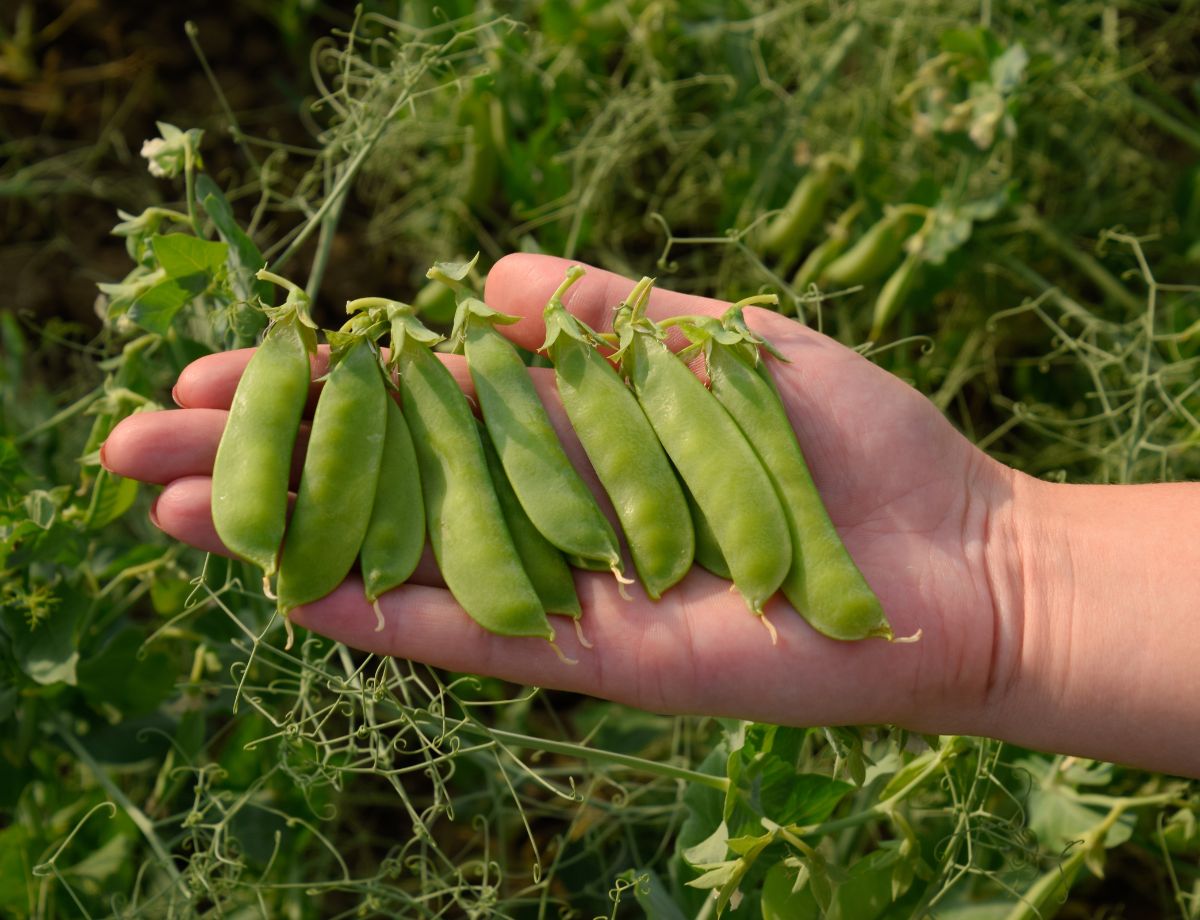
- Snow peas — pick when the pod has reached full length but is still flat, with only the faintest outline of seeds inside. Hold one up to the light: if you can see distinct round bumps, you're a few days late and the pod will be fibrous. Varieties like Oregon Sugar Pod and Mammoth Melting Sugar go from perfect to leathery in about 48 hours in warm weather.
- Snap peas — pick when the pod is plump and glossy but still crisp. The test is audible: bend one, and a ready snap pea snaps like a green bean. If it bends without breaking, it's past. Sugar Snap and Super Sugar Snap are at their sweetest right at that snapping point.
- Shelling peas — pick when the pod is rounded, firm and bumpy from end to end, with no flat gap at the tip. A pod that's turning dull, pale or waxy has already converted its sugar to starch — leave those on the vine to dry and save them for seed instead. Green Arrow and Mr. Big pack 9–11 peas per pod, so a fully filled pod is unmistakably lumpy.
Two habits apply to all three. Use two hands — pea vines are shallow-rooted and brittle, so hold the stem with one hand and pull the pod with the other, or you'll tear away next week's harvest along with today's. And pick constantly: a pea plant's biological goal is mature seed, and the moment it succeeds it stops flowering. Every pod you take is a vote for more pods.
The Harvest Window Closes at 24°C
Peas are a cool-season crop, and our data is blunt about it. Ideal growing temperature is 60–75°F (15–24°C), with a heat-stress threshold of 24°C — the lowest of any common vegetable in our library. Above it, flowering slows, pods stop filling, and the sugar in whatever's on the vine turns starchy while you watch.
Which means the real answer to "when do I harvest peas?" has two parts: the pod test above, and the calendar isn't yours to choose. Your harvest ends when your weather crosses 24°C, whether the vines are finished or not. Plan backwards from that.
What it looks like in practice:
- Spring sowing (March–April): peas are rated frost hardy and germinate at 65–75°F, so they go in the ground as soon as it's workable — earlier than almost anything else. Sow early enough that the 4–6 week harvest window finishes before summer heat arrives.
- Fall sowing (September–October): the mirror image, and often the better crop. Sow into warm soil for fast germination, and harvest as the weather cools — peas keep going through light frost, when the tomatoes are long gone.
- Squeezed by heat? Sow Wando, the one heat-tolerant variety in the library, or lean on the 50–58 day sprinters — Tom Thumb, Sugar Ann, Alaska, Snowbird — that can finish the whole cycle before summer lands.
Our library marks March, April, May, September, October and November as the ideal months for peas, with January, February, June, August and December as tolerable depending on your climate. In a mild-winter or tropical garden, that flips the crop into a winter vegetable entirely.
Want the pea window worked out for your garden?
Tell EdenVatika where you grow and it builds the schedule from your local frost dates — sow date, expected flowering, first harvest, and a reminder when the picking window opens so nothing goes starchy on the vine.
Get My Pea Dates Free →The Full Pea Spec Sheet
Everything else you need, from the same plant record the app uses to place, schedule and water peas in your beds.
| Basics | |
| Botanical name | Pisum sativum |
| Plant family | Fabaceae — the legumes, alongside beans and peanuts |
| Ease of growing | Easy |
| Grown as | Annual |
| Hardiness | Hardy — tolerates frost; one of the first crops in the ground each spring |
| Hardiness zones | 1–13 — grown almost everywhere; only the season shifts |
| Rotation group | Legumes — nitrogen fixers; follow them with a hungry leaf crop |
| Nutrition (per 100 g raw) | 81 calories, 5.4 g protein, 5.1 g fibre, 14.5 g carbs, 0.4 g fat — plus 40 mg vitamin C, 24.8 µg vitamin K, 65 µg folate and 0.27 mg thiamine |
| Sowing & Timing | |
| Planting method | Direct sow — peas resent root disturbance, so skip the seed trays |
| Planting months | March–April and September–October (ideal: Mar, Apr, May, Sep, Oct, Nov) |
| Planting depth | ½ inch |
| Germination | 7–14 days at a soil temperature of 65–75°F |
| Growing temperature | 60–75°F; heat stress begins above 24°C (75°F) |
| First flowers | 40–60 days |
| First harvest | 60–80 days from sowing (50–55 for the earliest varieties) |
| Harvest window | 4–6 weeks of continuous picking |
| Size, Space & Support | |
| Square-foot gardens | 8 plants per square — one of the densest crops you can plant |
| Row spacing | 12–18 inches between rows or trellis lines |
| Mature height | 12–24 in (bush); 4–6 ft (climbing) |
| Mature spread | 12–18 inches |
| Support needed? | Yes for climbing types — trellis or netting 3–6 ft. Bush types are self-supporting |
| Vertical growing? | Yes — climbing types thrive on a trellis or netting |
| Position & Care | |
| Light | Full sun, 6–8 hours daily |
| Soil | Well-drained, fertile garden soil |
| Soil pH | 6.0–7.0 |
| Water | 1 inch per week — most critical while pods are filling |
| Good companions | Carrot, cucumber, spinach, radish, turnip, parsnip, rutabaga, corn, beans, cabbage, mustard greens, oats, mint |
| Bad companions | Onion, garlic, spring onion, potato, gladiolus |
What a Row of Peas Is Actually Worth
Peas look like a low-value crop because each pod weighs almost nothing. The density is what changes the maths. From our economics data:
- A single pea plant yields about 0.35 kg over the season.
- An average pod weighs 5 g — so that's roughly 70 pods per plant.
- At 8 plants per square foot, one square foot returns around 2.8 kg of peas — call it 560 pods.
- At this summer's shelf price of $5.95/kg (₹80/kg), that's about $16.60 (₹223) of peas from a single square foot.
And that's before the part that doesn't show up on a receipt. Peas are legumes: they fix nitrogen, which is why the companion data lists carrot, spinach, cucumber and cabbage as beneficiaries — the note against each one is literally "nitrogen benefits".
Leave the roots in the ground when you pull the vines, follow with a leafy crop, and the pea bed pays a second dividend to whatever goes in next.
The only neighbours to keep away are the alliums — onion, garlic and spring onion all inhibit pea germination and growth — and potato, which shares disease problems.
The Two Pests and Two Diseases to Watch
| Problem | How to spot it | Treat | Prevent |
|---|---|---|---|
| Aphids | Small soft-bodied insects clustered on shoot tips | Insecticidal soap or neem oil | Companion planting — mint nearby deters pea aphids |
| Slugs | Slimy mollusks; ragged holes in seedlings and low pods | Beer traps or diatomaceous earth | Remove garden debris; keep pods off the soil |
| Powdery mildew | White powdery coating on leaves — the classic end-of-season pea disease | Remove affected leaves; fungicide if it spreads | Good air circulation — grow vertically, don't crowd. Cascadia carries resistance |
| Root rot | Wilting plants, yellowing leaves, no obvious pest | Improve drainage; remove affected plants | Well-draining soil; don't overwater cool spring beds |
Powdery mildew is the one that usually ends a pea patch, and it tends to show up right as the weather warms — the same heat that's already shutting down pod fill. Treat its arrival as the signal to take the last picking, pull the vines and hand the bed to a summer crop.
Frequently Asked Questions
What are the three main types of peas?
Shelling peas (also called English or garden peas), where you eat only the seeds; snow peas, where you eat the whole flat pod before the seeds swell; and snap peas, where you eat the whole plump pod, seeds and all. All three are Pisum sativum — the difference is the pod wall and therefore the moment you pick.
How long do peas take to grow?
60–80 days from sowing to first harvest for most varieties, with first flowers around 40–60 days. The 21 varieties in our library range from 50 days (Tom Thumb) to 75 days (Blauwschokkers), and the harvest window lasts 4–6 weeks once it opens.
How do I know when peas are ready to pick?
It depends on the type. Snow peas are ready when the pod is full length but still flat. Snap peas are ready when the pod is plump and glossy but still snaps when bent. Shelling peas are ready when the pod is round, firm and bumpy end to end. Peas don't change colour when ripe, so you judge by shape and feel, not by looks.
What happens if I pick peas too late?
Sugar converts to starch, and the pod wall turns fibrous. Late snow peas go leathery, late snap peas go tough and mealy, and late shelling peas go starchy and dull. Nothing is wasted, though — leave over-mature pods to dry fully on the vine and save the seed for next season's sowing.
Which peas can I grow in a pot without a trellis?
Tom Thumb (50 days, 8-inch dwarf plants made for pots and window boxes) is the smallest. Sugar Ann (52, compact 2 ft snap pea), Snowbird (58, compact snow pea), Cascadia (60, bush snap pea) and Little Marvel (63, compact bush shelling pea) all grow without support. Climbing varieties, by contrast, reach 4–6 ft and need netting or a trellis.
When should I plant peas?
March–April for a spring crop and September–October for a fall crop. Peas are frost hardy and germinate at 65–75°F, so they go in as early as the soil can be worked. The deadline that matters is the other end: heat stress starts at 24°C, so sow early enough that the 4–6 week harvest window finishes before summer.
Do peas need full sun?
Yes — full sun, 6–8 hours a day, in well-drained fertile soil at pH 6.0–7.0, with about 1 inch of water per week. Water matters most while pods are filling; a dry spell at that stage costs you sweetness directly.
Pick the Type First, Then the Date
Peas reward one thing above all: showing up at the right moment. Choose your type by how you want to eat it — flat pods for the wok, plump pods for the hand, fat pods for the pot — then read the pod, not the calendar, and pick every couple of days for four to six weeks straight.
The part that's genuinely hard to hold in your head is the timing: sow date, the ~20 days from flower to pod, and the 24°C wall at the far end. That's exactly the part software is good at.
Plan your pea season in five minutes
EdenVatika turns this guide into a plan for your garden: sow and harvest dates from your local frost dates, 8-per-square spacing in the Garden Designer, trellis height flagged for climbing types, companion and rotation warnings as you place plants, and reminders when the picking window opens. Free to start.
Start Growing Free →